Performance Fabrics Guide
Moisture-Wicking Fabrics
Capillary action, channel-shaped fibers and push-pull knits: the science of moving sweat from skin to air.
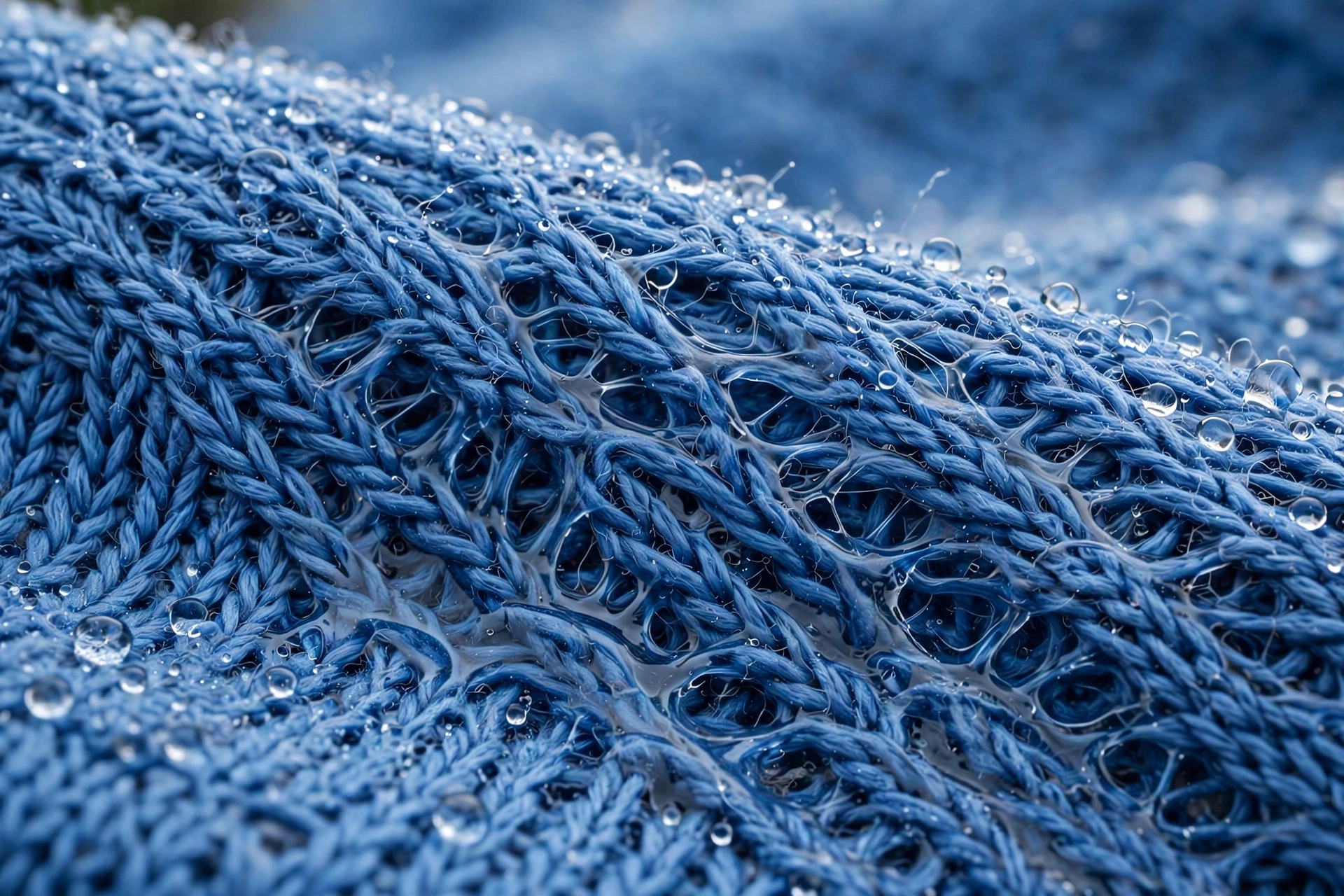
Sweat itself is not the problem — it is the body's cooling system, and it only cools when it evaporates. The trouble starts when liquid sweat sits on the skin or soaks into a garment: in heat it feels clammy and heavy, and in cold air a wet layer drains body heat dangerously fast. Moisture-wicking fabric exists to shorten the time sweat spends on your skin. As part of the Apparel Search Performance Fabrics Guide, this page explains the physics and the fabric engineering behind that simple promise.
Capillary Action: The Engine of Wicking
Wicking runs on capillary action, the same force that draws water up a narrow glass tube or into the corner of a paper towel. Where fibers sit close together, they form tiny channels, and surface tension pulls liquid along those channels from the wetter side toward the drier side. The finer and more consistent the channels, the stronger and faster the pull. A performance knit is, in effect, a manufactured network of thousands of these channels wrapped around the body.
Three factors control how well it works. First, the fabric must touch the skin, because liquid cannot jump a gap — one reason base layers fit close. Second, the liquid must reach a large outer surface where air can evaporate it; spreading a drop across a wide area of knit multiplies its evaporation rate. Third, the channels must stay open, which is why finishes and laundry products that coat fibers can switch the whole system off.
The movement of liquid moisture along fiber surfaces and through the capillary spaces of a fabric, from the skin side to the outer side, where it spreads and evaporates. Wicking moves liquid; breathability, a separate property, moves vapor.
Fiber Cross-Sections: Channels Built Into the Yarn
A plain round fiber gives liquid few places to travel. Performance polyester is often spun through shaped spinnerets so each filament carries grooves along its length — cross, four-channel and trilobal cross-sections are common. Those grooves act as permanent capillary channels that work even when the fabric is stretched or compressed, and they add surface area for evaporation. Fine filaments help twice over: a yarn made of many microfibers contains far more channels than the same weight of coarse yarn.
The fiber polymer matters as much as its shape. Polyester and nylon are hydrophobic — they absorb very little water into the fiber itself (polyester takes up well under one percent of its weight) — so moisture stays mobile on surfaces instead of being locked away. Polypropylene absorbs essentially none and is lighter still, though it is more heat-sensitive in the wash.
Why Cotton Fails at This Job
Cotton does the opposite of everything wicking requires. Its fibers are hydrophilic: they absorb water into the fiber structure, swelling as they fill, and a cotton garment can hold a large amount of water before it drips. That water sits in and on the fabric rather than spreading to evaporate, so a soaked cotton shirt stays heavy, cold and stuck to the skin for a long time. Cotton is comfortable for dry, low-output wear precisely because it absorbs — but absorption without transport is exactly what an athlete, hiker or worker in protective clothing cannot afford.
Wool sits between the two camps. Merino fibers absorb water vapor into their inner structure, buffering humidity next to the skin and releasing a small amount of heat as they do, which is why merino base layers feel dry and regulate temperature well in stop-and-go activity. But liquid sweat in quantity will eventually saturate wool, and it dries more slowly than a synthetic knit, so the highest-output garments still favor polyester and nylon.
Constructions: Push-Pull Knits and Ventilation Zones
Fiber choice is only half the design. Many base layers use a push-pull construction: a hydrophobic inner face that refuses to hold moisture against the skin, paired with a more absorbent outer face that pulls liquid outward and spreads it. A denier or yarn-size gradient — finer channels inside, larger spreading surface outside — biases the flow in the right direction. Mesh panels and engineered ventilation zones take a different approach to the same problem, opening larger holes where heat and sweat peak, such as the center of the back.
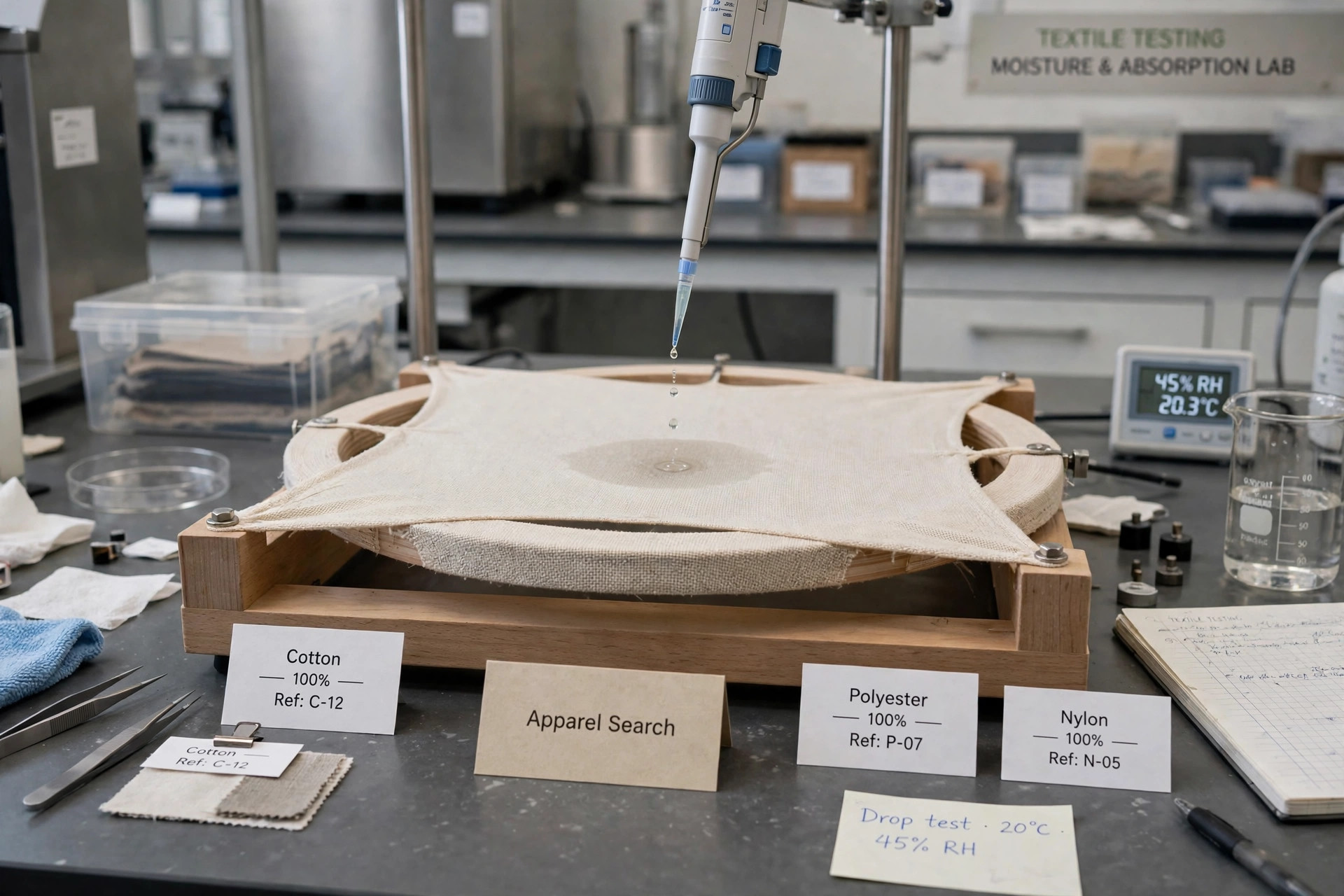
Wicking finishes add a chemical assist: hydrophilic treatments applied to synthetic fabric encourage droplets to spread into a thin film instead of beading, speeding evaporation. Durable versions survive many washes; cheaper ones fade, which is one reason an inexpensive shirt may wick well for its first month and poorly afterward. How these claims are measured is covered in our Textile Testing & Quality Standards Guide, and readers who want the research-level picture can continue into our industry overview of moisture management fabrics.
Keeping Wicking Alive
Most wicking failure is laundry failure. Fabric softener and dryer sheets deposit a coating that plugs capillary channels and makes fibers water-repellent in the worst way — droplets sit on the surface instead of traveling through it. Body oils and detergent residue do the same job more slowly. Wash performance knits cool, skip the softener, use enough detergent to lift oils (sport detergents exist for exactly this), and dry on low heat or on the line. The garment technologies interact, too: wicking is the first layer of the moisture system that waterproof breathable shells and insulation depend on, and the finishes that support it are part of technical fabric finishes.
Performance Fabric Topics
References & Further Reading
This page is one part of the Apparel Search Performance Fabrics Guide — return to the hub for the full map of moisture management, weather protection, stretch, warmth and fabric finishes.
Common Questions
How does moisture-wicking fabric work?
It works by capillary action. Sweat on the skin touches thousands of fine channels between the fibers of the knit. Surface tension pulls the liquid along those channels, away from the skin and across a much larger area of fabric, where it can evaporate. The fabric does not push sweat out; it gives liquid a path and a wide surface to leave from.
Why does cotton stay wet while polyester dries?
Cotton fiber absorbs water into its own structure and swells, holding liquid against the skin and releasing it slowly. Polyester absorbs almost no water into the fiber itself, so moisture stays on fiber surfaces and in the capillary spaces, where airflow can evaporate it quickly.
Why did my wicking shirt stop working?
The usual cause is fabric softener, which coats fibers with a waxy layer that blocks the capillary channels, followed by body oils and detergent residue building up in the knit. Washing with a sport detergent, skipping softener and avoiding high dryer heat restores most wicking fabrics.