Men's Performance Apparel Guide
Performance apparel is clothing engineered for training and sport: synthetic and blended garments built to move sweat away from the skin, stretch through a full range of motion, dry fast, and survive hard use and frequent washing. Where ordinary casual clothes are cut for appearance and judged sitting still, performance pieces are cut for movement and judged in the tenth repetition or the tenth mile. This guide explains the technologies that are real - wicking, compression, four-way stretch, flatlock seams - the ones that are mostly marketing, and how to build a training kit that earns its drawer space.
Shop Men's Performance Apparel Now
Shop Men's Performance Apparel on Amazon Shop Men's Performance Apparel on eBayThe Amazon and eBay links on this page are affiliate links. If you make a purchase through them, Apparel Search may earn a commission.
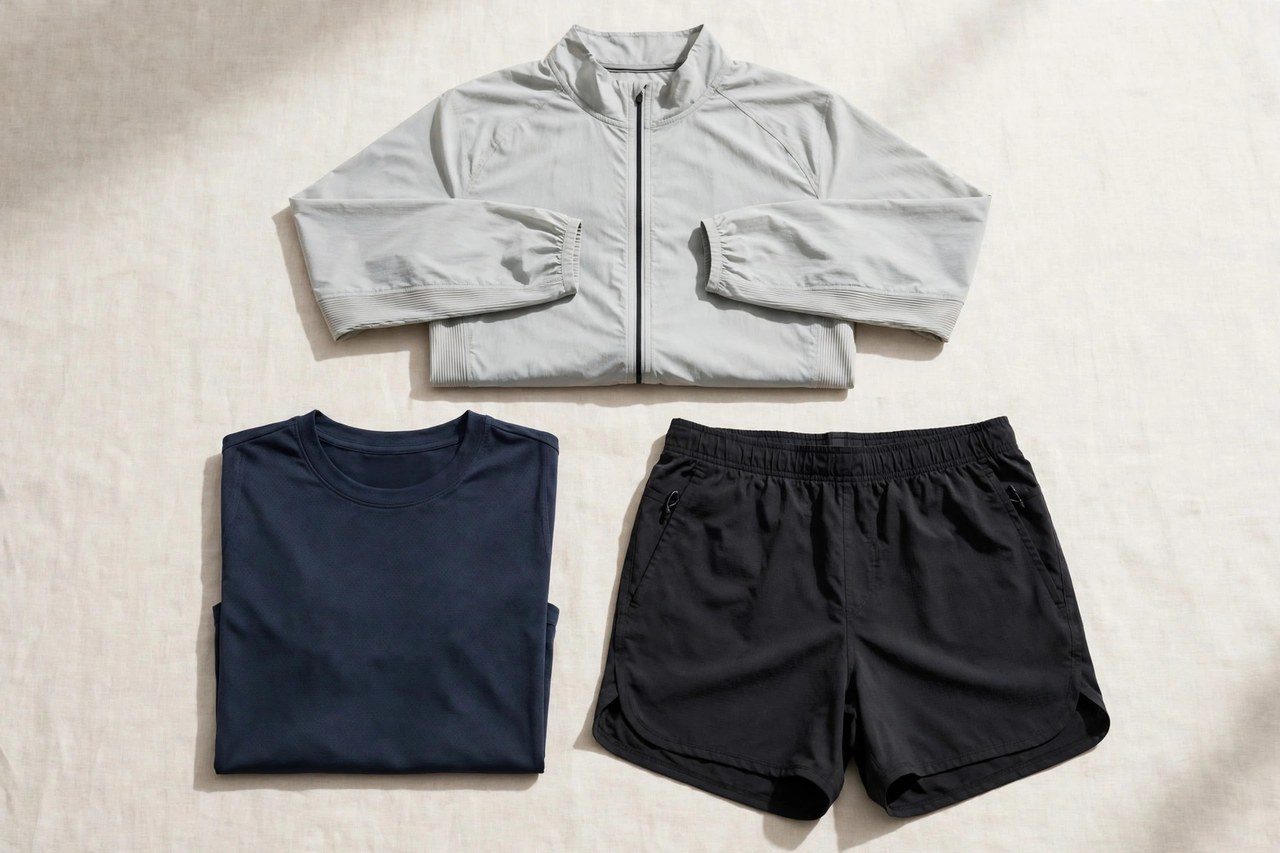
Performance apparel is clothing engineered for training and sport: synthetic and blended garments built to move sweat away from the skin, stretch through a full range of motion, dry fast, and survive hard use and frequent washing. Where ordinary casual clothes are cut for appearance and judged sitting still, performance pieces are cut for movement and judged in the tenth repetition or the tenth mile. This guide explains the technologies that are real - wicking, compression, four-way stretch, flatlock seams - the ones that are mostly marketing, and how to build a training kit that earns its drawer space. This guide covers the styles worth knowing, the fit points that decide comfort, the fabrics and construction that separate a good buy from a regret, and the simple care that makes the garment last.
Wicking, Stretch and Flat Seams
Start with moisture management, the category's founding claim. Wicking fabrics - polyester and nylon knits with channelled fibers - pull sweat off the skin and spread it to evaporate; cotton does the opposite, absorbing and holding water, which is why a soaked cotton tee is heavy and cold. Fit tunes the system: close athletic fits wick best because fabric must touch skin to pull moisture, while loose training cuts trade some wicking for airflow. Compression is the second technology, graduated pressure claimed to support muscles and circulation; the honest summary is that well-made compression feels supportive and reduces chafing and vibration, whatever the stronger claims. Construction details separate gear from merchandise: flatlock seams that cannot ridge under straps or on skin, gussets at crotch and underarm, bonded hems, and reflective elements placed where drivers actually see them. UPF ratings, odor treatments and four-way stretch are real but secondary - buy the moisture and the seams first.
The durable buying order is job, specification, budget - in that sequence. Decide what the garment must do, translate that into fiber, weight, construction and size numbers, and only then shop price. Read labels as specifications, inspect the garment inside out where finishing is unposed, and prefer the maker who publishes measurements to the one who publishes adjectives. A garment that matches your measurements, climate and laundry will be worn; one that misses any of the three becomes expensive storage.
Fit for Your Movement
Performance fit is sport-specific, so fit for your movement. Runners need shorts that clear the stride and tops that do not ride up at mile three; lifters need stretch through squat and press without seams at the pressure points; court and field sports need cuts that survive reaching, twisting and contact. The universal tests: raise both arms and see what the hem does, squat and lunge to the seams' limits, and twist as your sport twists. Compression pieces should feel like a firm handshake everywhere and a tourniquet nowhere - numbness or color change in hands or feet means a size up. Base layers size close by design; outer training layers should still close over them without binding. When a maker publishes garment measurements and intended fit, trust those over your casual size - athletic lines run a full size different from street clothes in both directions.
Measure yourself once a year and keep the numbers - chest, waist, inseam, foot, head - because bodies drift gradually while size habits never do. Shop from measurements, try garments under real conditions (over layers, in your own shoes, late in the day for footwear), and be honest about alterations: lengths and small waist changes tailor beautifully; shoulders, rises and patterns are the garment you bought forever.
Softener Is the Enemy
Performance gear dies in the wash more often than in the workout. The killers are fabric softener and heat: softener coats wicking fibers and switches the wicking off, and dryer heat tires the elastane that gives stretch and compression their life. Wash cool, inside out, with ordinary detergent - sport detergents that strip odor buildup are worth it when regular washing stops freshening the kit - skip softener entirely, and hang dry, which synthetics do in hours anyway. Odor that survives washing lives in the fabric's biofilm, not your hygiene; a vinegar soak or an enzyme sport wash usually resets it. Rotate two or three core pieces rather than washing one daily, inspect flatlock seams and waistband elastic monthly, and retire compression when it stops compressing - spent elastane is the category's true end of life.
Five minutes when a garment comes off - shake it out, hang or fold it correctly, note the stain and the loose button - prevents most of the damage later blamed on quality. Keep a small kit where the clothes live: brush, lint roller, conditioner suited to your leathers, black, navy and grey thread. Clothing rarely dies at once; it fades by small neglects, and small attentions reverse the process at the same pace.
Common Questions
What makes apparel 'performance' apparel?
Engineering for activity: moisture-wicking synthetic knits that move sweat off the skin, stretch that follows full ranges of motion, flatlock seams that do not chafe, and cuts tested in movement rather than at rest. Compression, UPF protection and odor treatments layer on top. The founding difference from casual clothes is the fabric's job - a cotton tee absorbs sweat and stays wet and heavy, while a wicking polyester knit spreads it to dry, which is why the categories are not interchangeable for training.
Is compression clothing worth it?
For comfort and chafing control, often yes; for the strongest performance claims, the evidence is thinner. Well-made compression supports soft tissue, reduces vibration and rubbing, and many athletes simply train better in it. Fit decides everything: firm and even everywhere, never numbing or restrictive at joints. And compression has a lifespan - when the elastane tires and the garment stops feeling firm, its main benefit is gone and it is time to replace it.
Why does my performance gear still smell after washing?
Synthetic knits hold onto body oils and odor-causing biofilm in a way cotton does not, and fabric softener makes it worse by coating the fibers. Wash cool with a sport or enzyme detergent, skip softener completely, and hang dry. For gear that smells straight out of the drawer, a soak with a cup of white vinegar before washing usually resets it. Persistent odor in a years-old piece whose stretch is also gone is the garment telling you it is done.
More in Men's Clothes Guide P
Helping Athletes Improve Performance
One of the goals of performance apparel is to help athletes improve performance — an athlete being a person who competes in one or more sports. Related topics include compression shirts and compression shorts, copper anti-microbial clothing, performance fabrics and compression clothing, and the athletic apparel, MMA apparel and workwear guides.
Looking for Men's Clothing Stores?
This guide explains men's performance apparel. To browse where to buy, visit our men's clothing store directory, where you can find retailers that carry them.