Performance Fabrics Guide
Technical Fabric Finishes
Odor control, UPF sun protection, water repellency and durability: the chemistry applied after the fabric is made.
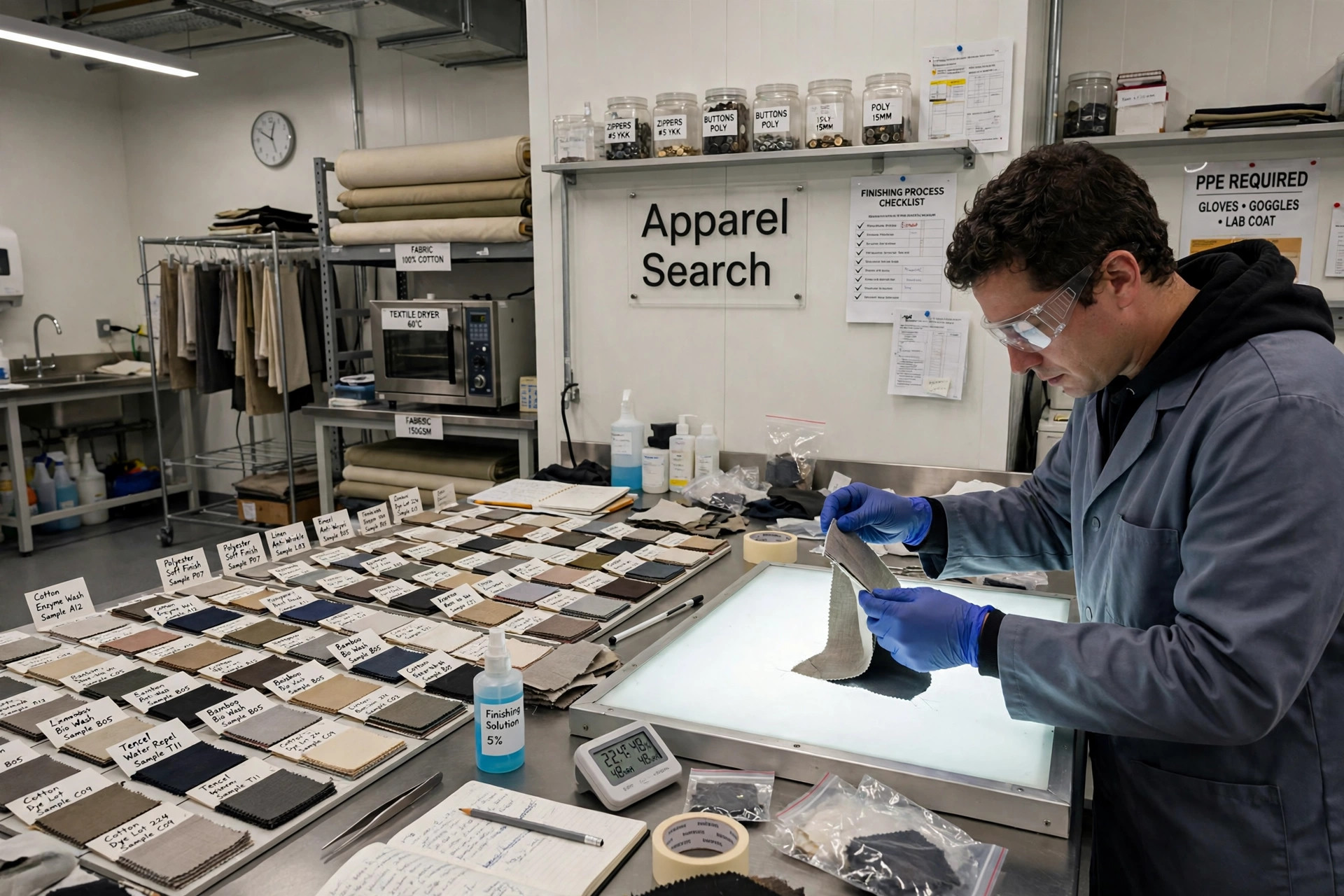
A fabric leaves the loom or knitting machine as a promising blank. Much of what makes it "performance" is applied afterward, in the finishing plant, where chemical and mechanical treatments are padded, coated, cured or printed onto the cloth. This final page of the Performance Fabrics Guide covers the finishes that matter most in active and outdoor clothing: odor control, sun protection, water repellency and abrasion resistance — what each one is, how long it lasts, and how to keep it working.
Antimicrobial and Odor-Control Finishes
Sweat itself is nearly odorless. The smell of a workout shirt is produced by bacteria living in the fabric, feeding on sweat and skin oils and excreting the compounds we recognize as body odor. Antimicrobial finishes attack that colony: silver-based treatments release silver ions that disrupt bacterial cell function; zinc-based and other mineral treatments work similarly; and a second family of finishes does not kill bacteria at all, instead adsorbing odor molecules into activated carbon or mineral particles so the smell never reaches the air. Both approaches buy extra wears between washes and slow the permanent "permastink" that haunts synthetic gym wear. Their limits are real: finishes fade with laundering, they cannot compensate for oils already ground into the knit, and regulators in many markets restrict exactly what antimicrobial claims a garment may make.
UPF: Sun Protection Woven and Finished In
Ultraviolet protection factor (UPF) is the fabric equivalent of SPF, measured for both UVA and UVB. The scale is simple: a fabric's UPF is the fraction of UV it blocks, so UPF 50 transmits no more than 1/50th — blocking about 98 percent of ultraviolet radiation. Standard rating bands run from UPF 15–24 (good, blocking roughly 93–96 percent), through 25–39 (very good), to 40–50+ (excellent).
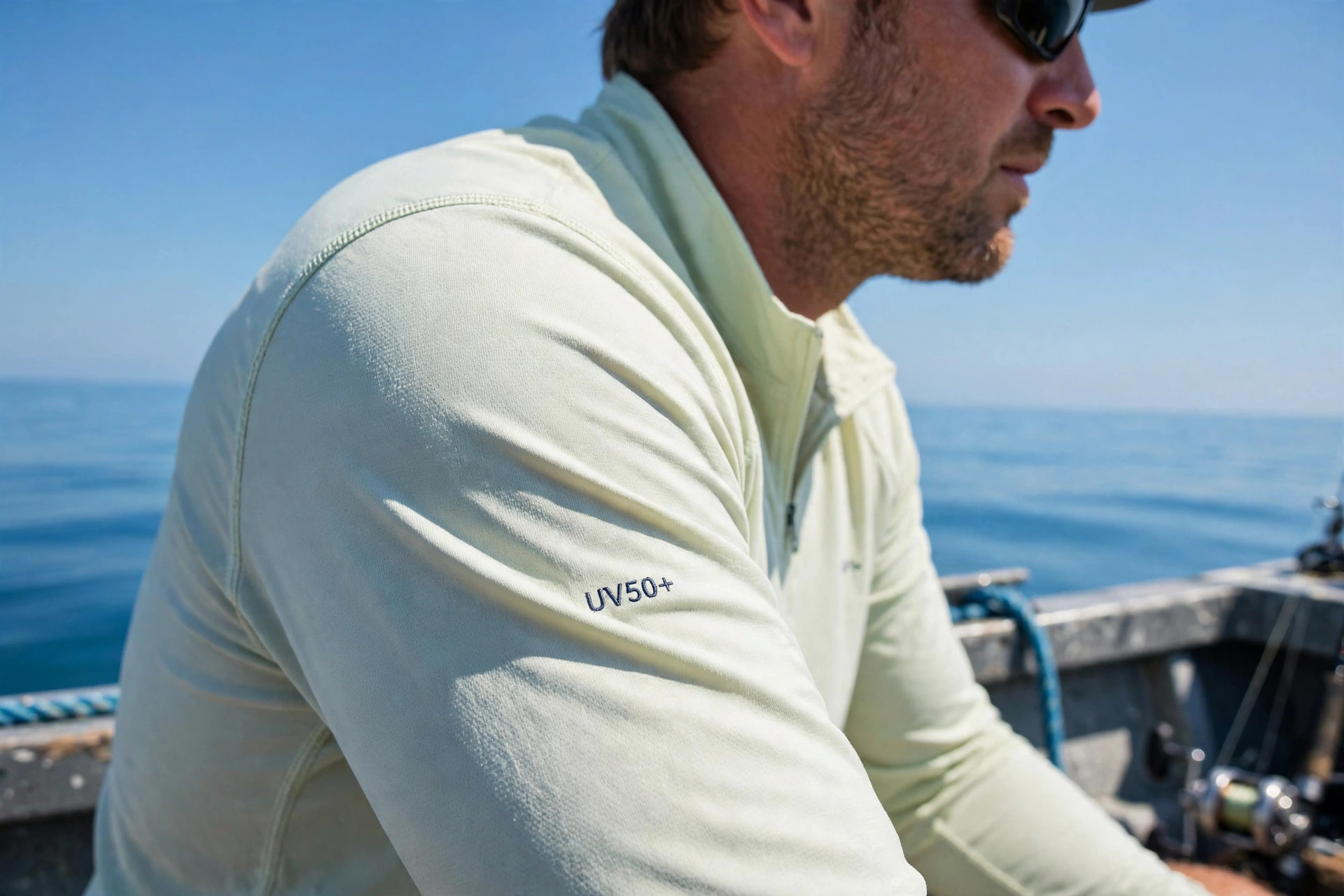
Most of a fabric's UPF comes from its construction — tight weaves and knits, darker or richer colors, and polyester's natural UV absorption all raise it, while a thin white cotton tee may rate below UPF 10 and drops further when wet. Finishes add the rest: UV-absorbing compounds applied in finishing can lift a light fabric into rated territory. Two cautions apply to all UPF clothing: stretching a fabric opens its structure and lowers protection, and a rating applies only to skin the garment actually covers.
Water Repellency: The DWR Story
Durable water repellent (DWR) finishes make water bead and roll off a fabric's face instead of soaking in. They are the working partner of every waterproof breathable membrane and just as valuable on softshells, trousers and footwear that carry no membrane at all. DWR chemistry is mid-transition: the industry is retiring long-chain fluorocarbons in favor of shorter-chain and fluorine-free (C0) finishes that shed water well but resist oils less and need more frequent renewal. Either way, DWR is a surface, and surfaces wear: packs abrade it, dirt masks it, and each wash thins it.
Abrasion Resistance: Built In, Then Helped Along
Honesty requires a note here: abrasion resistance is mostly not a finish. It is earned by fiber choice (nylon outlasts polyester surface for surface), yarn size, and tight, flat constructions, and it is measured in Martindale rub cycles, where heavy-duty upholstery and serious workwear fabrics rate in the tens of thousands of cycles. Finishes play a supporting role — resin and coating treatments can bind surface fibers and improve rub counts, and silicone or softener finishes trade a little durability for hand feel. When a garment claims abrasion resistance, ask whether the claim rests on the fabric or on a coating; the fabric will be there long after the coating is gone. Abrasion is one of the properties verified in the test programs described in our Textile Testing & Quality Standards Guide.
Making Finishes Last
Every finish in this page is a layer with a lifespan, and care is what stretches it. Wash technical garments with cleaners made for them (harsh detergents and softeners strip or mask finishes), use low heat, and reproof water-repellent gear when beading fades. The full care routine for technical clothing — including DWR renewal, elastane protection and odor resets — is laid out in our Garment Care Guide. Chosen well and maintained, finishes are the cheapest performance in the garment: a few grams of chemistry doing the work of a much heavier fabric.
Performance Fabric Topics
References & Further Reading
This page is one part of the Apparel Search Performance Fabrics Guide — return to the hub for the full map of moisture management, weather protection, stretch, warmth and fabric finishes.
Common Questions
Do antimicrobial finishes wash out?
Gradually, for most of them. Silver-based and other bonded treatments are engineered to survive dozens of washes, but every finish loses strength over time, and abrasion wears it faster than water does. Odor control also depends on washing the garment often enough to remove the body oils bacteria feed on — no finish makes a shirt self-cleaning.
What is the difference between UPF and SPF?
SPF rates sunscreens on skin, and measures mainly UVB protection. UPF rates fabrics, and measures protection against both UVA and UVB. A UPF 50 fabric transmits no more than one fiftieth of ultraviolet radiation — about 98 percent blocked — and unlike sunscreen it does not need reapplying, though stretching, wetting and wear can lower a fabric's rating.
Can I restore a jacket's water repellency at home?
Usually, yes. First wash the garment with a technical cleaner to remove the dirt and oils masking the finish, then tumble dry on low heat, which revives most factory DWRs. If water still fails to bead, apply a wash-in or spray-on re-proofer made for the fabric type. The waterproof membrane under the finish is unaffected by any of this — you are restoring the surface, not the barrier.