Performance Fabrics Guide
Thermal & Insulation Fabrics
Fleece, synthetic fill, down and phase-change finishes: four strategies for trapping warm air and buffering cold.
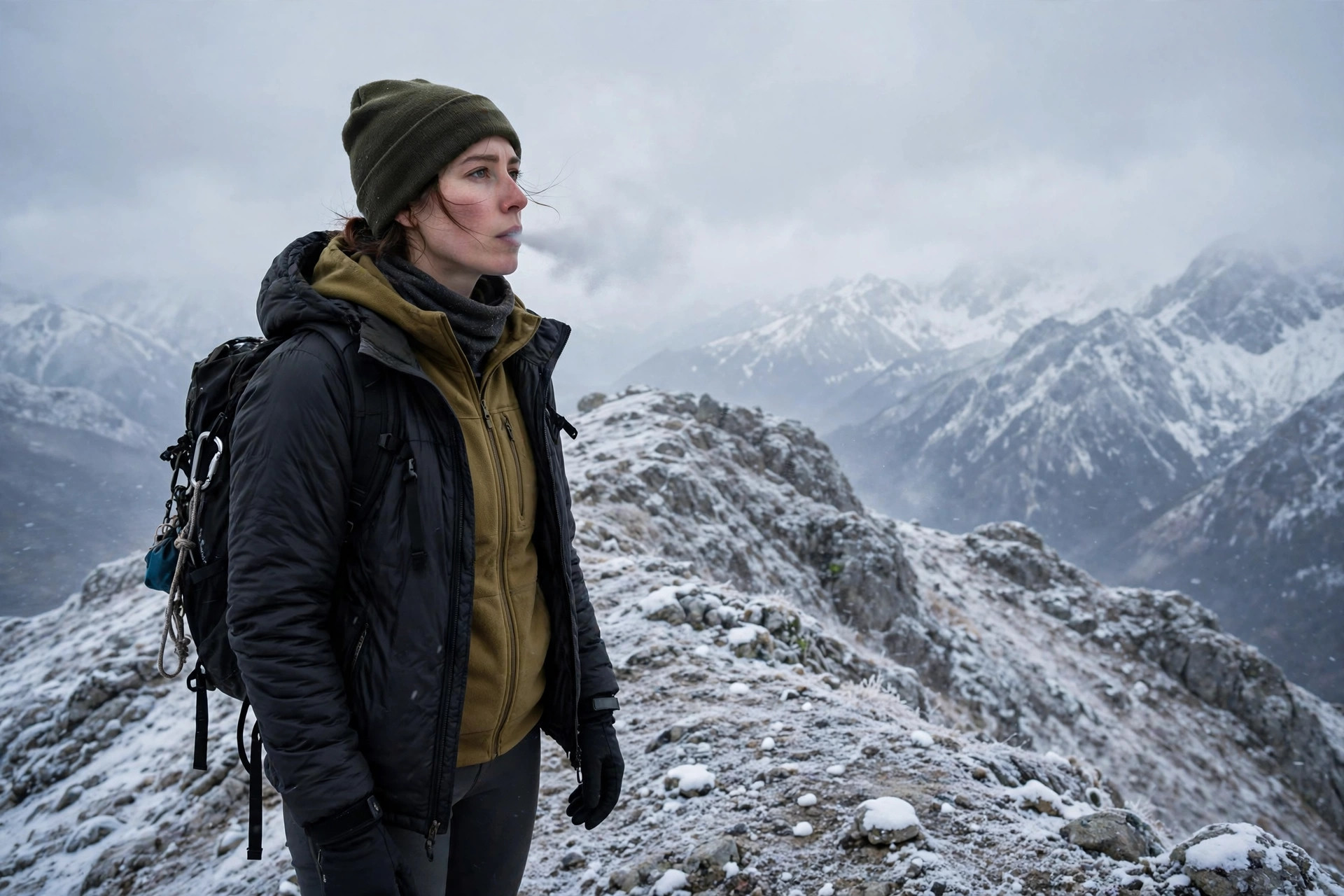
No fabric generates heat. Warmth in clothing is an exercise in air management: the body warms a layer of air, and insulation's job is to hold that air still, close to the skin, for as long as possible. Every thermal technology in this page of the Performance Fabrics Guide — fleece, synthetic fill, down and phase-change finishes — is a different strategy for trapping air or buffering its temperature.
Fleece: Warmth From a Brushed Knit
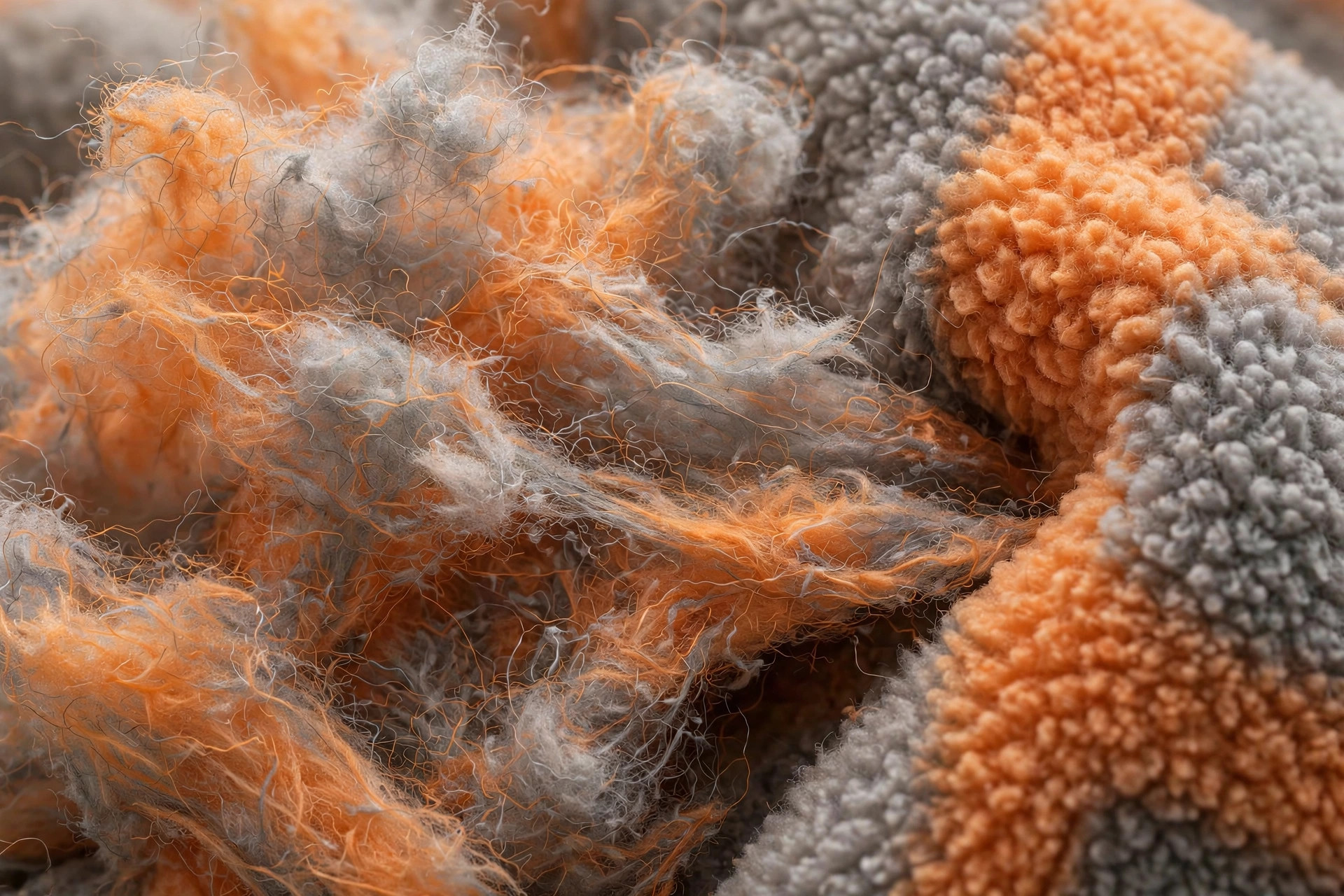
Fleece is a knitted polyester fabric whose surface is brushed or sheared to raise a deep pile of tiny fibers. The pile holds a thick layer of still air, and because polyester absorbs almost no water, fleece keeps most of its insulation when damp and dries quickly. Fleeces are conventionally grouped by weight — lightweight or micro fleeces around 100 g/m², midweight around 200, and heavyweight around 300 — with warmth rising with weight and pile depth. Variations tune the trade-offs: grid fleece channels the pile into squares, cutting weight and improving breathability for active use; hard-face fleece adds a smooth, abrasion-resistant outer surface that sheds light weather and slides easily under a shell. Fleece's weakness is wind, which passes through the open knit and strips the warm air away — the reason fleece is a mid-layer by design.
Fleece is a knit before it is anything else, and its warmth begins in stitch structure and finishing. Readers who want that foundation can explore how knitted fabrics are built in our Knitwear Construction Guide.
The thickness of an insulating layer when uncompressed. Loft is trapped air made visible: the higher the loft for a given weight, the warmer the insulation. Anything that crushes loft — water, compression in a pack, years of storage — directly removes warmth.
Synthetic Insulation: Loft That Survives Water
Synthetic fills imitate down's architecture with polyester fibers arranged to trap air. Short-staple fills use short, crimped fibers carded into soft, down-like batts; they feel supple and compress well but need careful quilting to stay in place. Continuous-filament fills use long unbroken fibers in resilient sheets that hold their loft through years of compression and don't migrate through shell fabrics. Both share the decisive advantage over down: polyester loft barely notices water, so a synthetic jacket stays usefully warm in rain, wet snow and damp camps, and dries overnight. The costs are bulk and weight — warmth for warmth, synthetic insulation is heavier and packs larger than quality down.
Down: The Loft Champion With One Weakness
Down clusters — the soft, three-dimensional under-feathers of ducks and geese — trap more air per gram than any manufactured fill, and spring back after compression for decades. Quality is measured as fill power: the cubic inches one ounce of down occupies, running from roughly 550 for serviceable jacket fills to 800 and above for premium fills, with the very best exceeding 900. A high-fill-power jacket achieves a given warmth with less weight and packs to a fraction of its worn size. The weakness is water. Wet down clusters collapse onto each other, loft disappears, and the garment goes cold — a failure mode that has driven hydrophobic down treatments, which coat clusters with a water-repellent finish to slow the collapse, and careful shell design. In reliably dry cold, down remains unbeaten; in wet cold, it is a calculated risk.
Phase-Change Finishes: Buffering, Not Insulating
Phase-change materials (PCMs) take a different approach. Microcapsules of wax-like substances, engineered to melt at temperatures near skin comfort, are printed or embedded into a fabric. When the wearer heats up, the capsules absorb heat as they melt; when the wearer cools, they release it as they solidify. The effect is real but bounded: a PCM layer buffers temperature swings for a limited time, smoothing the hot-cold cycle of stop-and-go activity. It does not add steady-state warmth the way loft does, so PCMs appear as complements to insulation and base layers rather than replacements — one of several treatments in the wider world of technical fabric finishes.
The Layering System
Thermal fabrics reach their rating only inside a system. A wicking base layer keeps the skin dry, because damp skin and damp insulation both conduct heat away; the thermal layer supplies loft; and a shell protects the loft from wind and rain. Buy the layer for the coldest, wettest hour of the day, not the average one — and remember that fit matters: insulation needs room to loft, and a jacket compressed tight by a smaller shell gives back much of its warmth.
Performance Fabric Topics
References & Further Reading
This page is one part of the Apparel Search Performance Fabrics Guide — return to the hub for the full map of moisture management, weather protection, stretch, warmth and fabric finishes.
Common Questions
Which is warmer, down or synthetic insulation?
Weight for weight, high-fill-power down is warmer and far more compressible, which is why it dominates expedition and backpacking gear. Synthetic insulation is warmer when wet, keeps working in damp climates, dries faster and costs less. Down loses most of its loft — and therefore its warmth — when soaked, unless it has a hydrophobic treatment, and even treated down underperforms in sustained wet conditions.
What does fill power mean?
Fill power measures down quality: the number of cubic inches one ounce of down fills in a standard test. Common jacket fills run from about 550 to 800 fill power, with 850 to 900 and above at the premium end. Higher fill power traps the same warmth with less weight, but total warmth also depends on how much fill the garment contains — a thick 650-fill jacket can be warmer than a thin 800-fill one.
Why does wind cut straight through my fleece?
Fleece traps warm air in its brushed pile, but the knit structure is open to moving air, so wind strips that warm layer away. That is why fleece works best as a mid-layer under a windproof or waterproof shell, and why wind-blocking fleece variants add a membrane or a tight hard-face finish for exposed conditions.