Performance Fabrics Guide
Stretch Fabrics & Recovery
Elastane, two-way and four-way stretch, mechanical stretch — and why some garments snap back while others bag out.
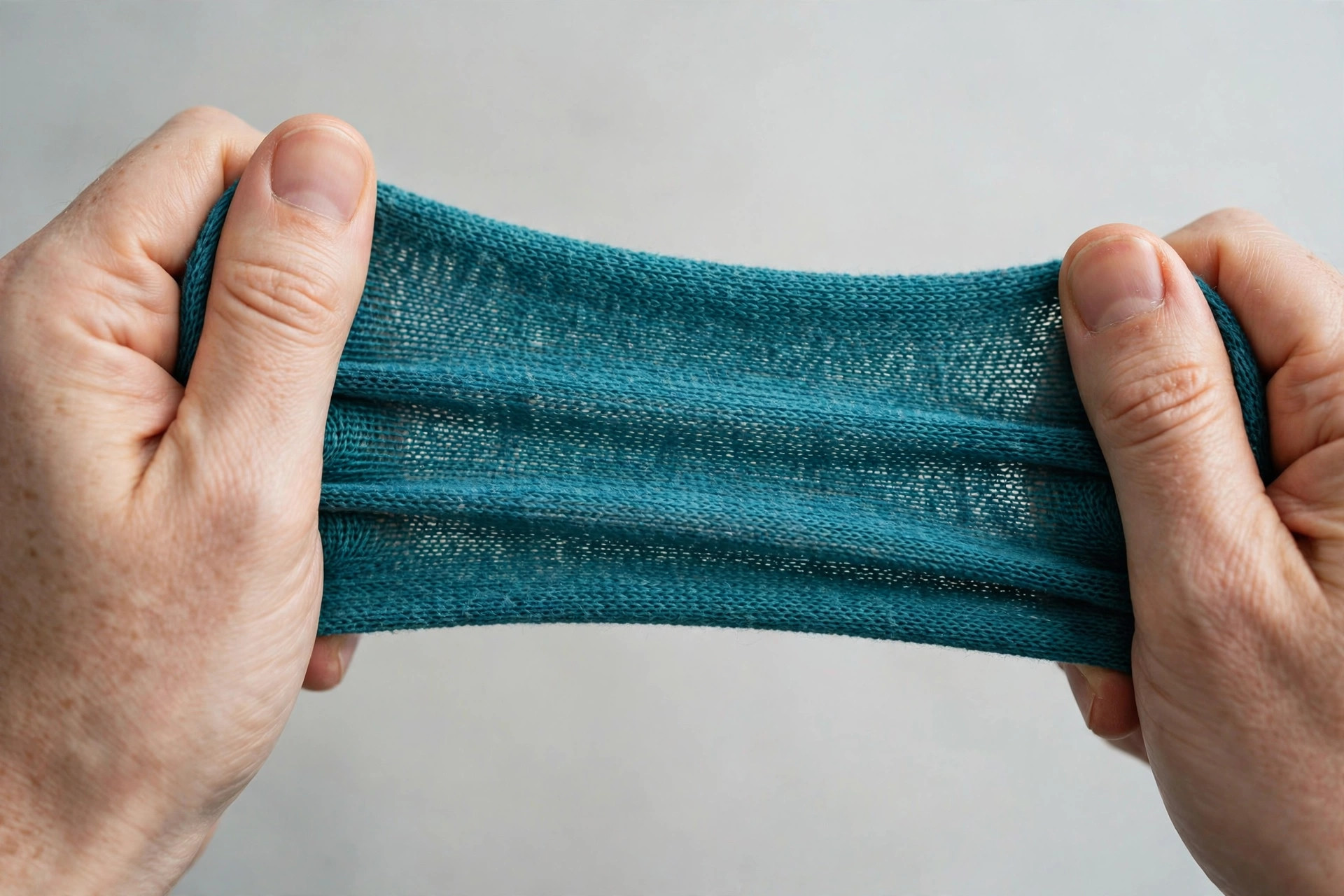
Stretch is the performance property you feel first, and the one most often misdescribed on a label. A fabric can stretch a long way and still be a poor stretch fabric if it does not come back. This page of the Performance Fabrics Guide explains the fibers and constructions behind stretch, what recovery really means, and how to read an elastane percentage like a specification instead of a slogan.
Elastane: The Fiber That Comes Back
Nearly all modern stretch comes from elastane — called spandex in North America, and sold under brand names such as Lycra (a trademark of The Lycra Company) in many garments. Elastane is a segmented polyurethane yarn that can be stretched to several times its length — typically 400 to 600 percent elongation — and still return to its original size, thousands of times over. It is almost never used alone: a small proportion of elastane is combined with polyester, nylon, cotton or wool, and it is that small proportion that transforms the host fabric. One to two percent changes how a pair of jeans feels by the end of the day; twenty percent turns a knit into a second skin.
Three related measurements describe a stretch fabric: stretch is how far it extends under a standard load; growth is how much of that extension remains after the load is released and the fabric rests; recovery is the proportion of the extension the fabric gives back. Great stretch fabrics pair high stretch with low growth.
2-Way Versus 4-Way Stretch
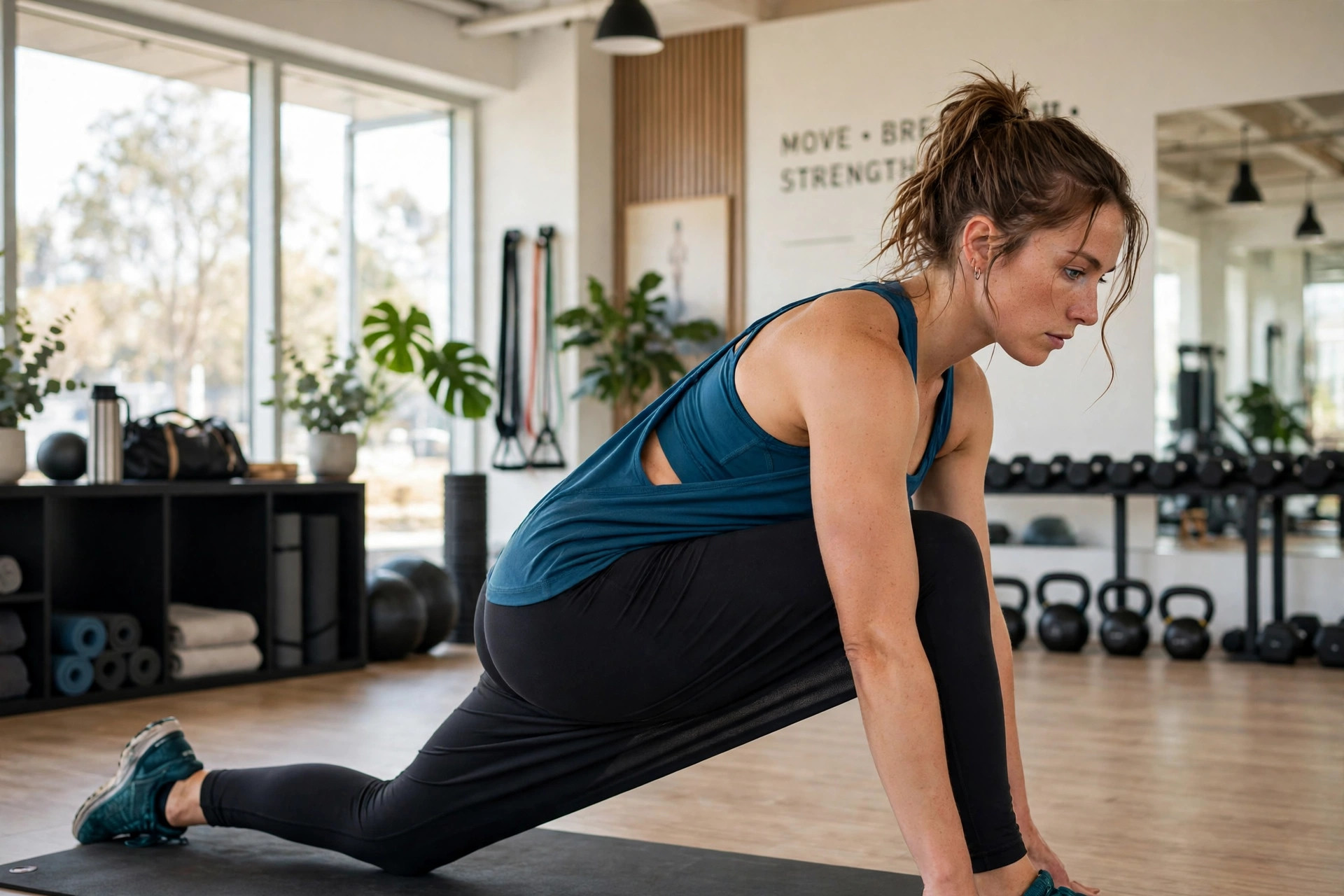
In a 2-way stretch fabric, the give runs in one direction. Woven fabrics with elastane in the weft stretch across the body — enough for trousers, shirts and fitted jackets, where the other direction is held stable for structure and drape. Most 4-way stretch fabrics are knits with elastane laid in so the fabric extends both across and along its length. Four-way stretch is the default for leggings, swimwear, base layers and anything worn tight against a moving joint, because a knee or elbow demands length as well as width. The same elastane system, driven much harder, is what produces measured pressure in compression fabrics.
Elastane Percentages by Garment
The percentage on the label is a useful spec when read against the garment type. Comfort-stretch denim usually carries 1 to 2 percent elastane (our Denim Fabric Guide covers stretch denim in its own right); woven trousers and shirts, 2 to 5 percent; athletic knits, 10 to 20 percent; swimwear, around 15 to 20 percent for fit that survives water and chlorine; and compression garments, 15 to 30 percent or more. Higher is not better by default: elastane adds cost and weight, slows drying, and is the first component to fail when a garment is abused.
Mechanical Stretch: Give Without Elastane
Elastane is not the only route. Mechanical stretch comes from structure: textured yarns that behave like tiny springs, crimped fibers, and knit constructions that extend by straightening their loops. Some polyester yarns are engineered with a built-in helical crimp that stretches and recovers on its own. Mechanical stretch is usually gentler than elastane stretch, but it shrugs off the things that kill elastane — chlorine, high heat and UV — which is why it appears in workwear, uniforms and garments that face industrial laundering or constant sun.
Bagging, Sagging and Elastane Failure
Every stretch fabric keeps a small permanent record of its hardest day. Held stretched for hours, elastane slowly yields — the growth behind baggy knees and sagging seat seams. Heat accelerates the damage: hot washes and tumble dryers age elastane quickly, chlorine in pools attacks it, and UV degrades it over a season of sun. Washing cool, drying flat or on the line, and rotating garments so each rests a day between wears keeps recovery close to its as-new state. Makers engineering these fabrics for production can follow the sourcing and sewing side in our guide to manufacturing activewear, and mills are listed in the stretch fabric directory. Stretch rarely works alone: it is paired with wicking in base layers and with brushed, air-trapping structures in thermal fabrics.
Performance Fabric Topics
References & Further Reading
This page is one part of the Apparel Search Performance Fabrics Guide — return to the hub for the full map of moisture management, weather protection, stretch, warmth and fabric finishes.
Common Questions
What is the difference between 2-way and 4-way stretch?
Two-way stretch fabric stretches in one direction only — usually across the body in a woven, or along the knit in some jerseys. Four-way stretch extends in both directions, length and width, which is why it is standard for leggings, swimwear and other close-fitting activewear that has to follow a joint through its full range of motion.
Why do my leggings bag out at the knees?
Bagging is a recovery failure. When a fabric is held stretched — at a bent knee, for example — its elastane and knit structure gradually take a set, a property called growth. Quality fabrics keep growth low and snap back between wears; tired elastane, heat damage and low elastane content make the set permanent, and the knees stay baggy.
Is more elastane always better?
No. More elastane gives more power and a firmer fit, but it also makes fabric heavier, harder to sew, and more vulnerable to heat and chlorine damage. A 2 percent elastane jean and a 25 percent elastane compression tight are both correctly engineered — the right percentage is the one matched to the garment's job.