Moisture Management Fabrics: Performance Apparel Markets, Issue 20
The in-depth topic report of Issue 20: the fabrics that move moisture away from the skin, and the companies competing to supply them
One of the key performance criteria in modern sports and active outdoor wear is moisture management — the ability of a garment to transport moisture away from the skin to the garment's outer surface. The market is dominated by Invista's portfolio of moisture management fabrics, which include CoolMax, Tactel Aquator, ThermaStat, Thermax and Thermolite Base. However, the pace of development has accelerated over the past ten years, and a growing number of other companies have started to compete. This report, the detailed topic report of Issue 20 of Performance Apparel Markets (1st quarter 2007), surveys the field. Performance Apparel Markets is published four times a year by Textiles Intelligence. Readers interested in the underlying textile term can also follow the link on this page to learn more about wicking.
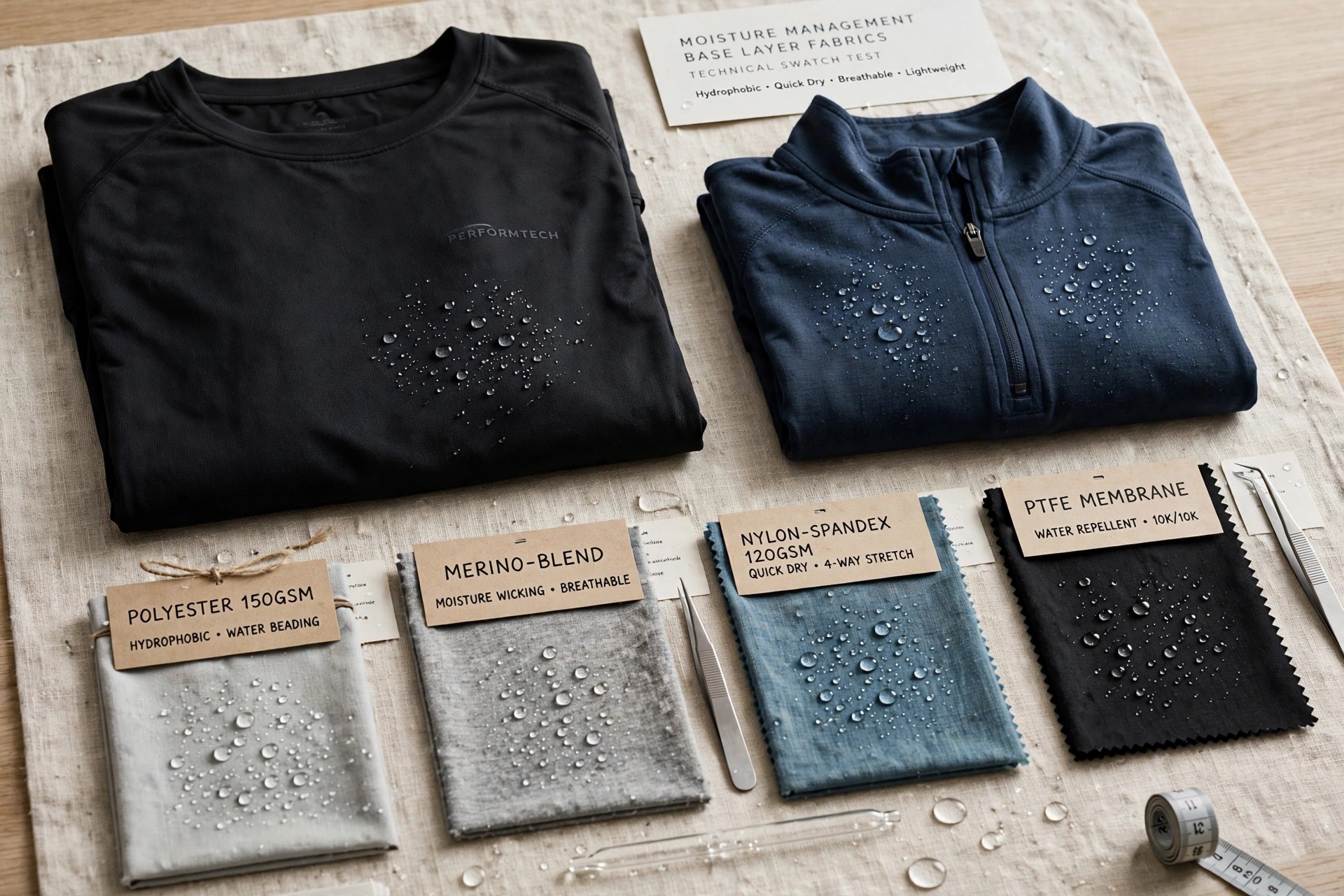
The Invista Portfolio and Its Challengers
The competing companies named in the report show how wide the contest had become: American Fibers and Yarn, Comfort Technologies, Hind, Honeywell, Intera, Intex, Lenzing, Marmot, Milliken, Mitsui, Nano-Tex, Nike, Patagonia, Pearl Izumi, Polartec, Reebok, Rhovyl, Schoeller, Tomen, USA-Pro and Wellman, alongside Invista itself. Fibre producers, fabric mills, finish specialists and apparel brands all appear on the same list, because moisture management can be engineered at every level — in the fibre, in the fabric construction, or in a finish applied to it.
Materials: Polyester, and the Alternatives
For applications in which wicking is essential, such as base layer garments, the most commonly used material is polyester. It is often chemically modified to create a fabric in which the fibres encourage moisture to migrate through it. However, fabrics made from modified wool, cotton and polyamide (nylon) may provide similar or superior properties to polyester — a qualification that matters to brands choosing base layers on comfort as well as transport speed. The number of moisture management fabrics on the market has increased dramatically in recent years, and the report expects the trend to continue as manufacturers strive to boost the comfort of their offerings, with applications spreading beyond sportswear and active wear: there is growing interest in the use of moisture management fabrics in the flame retardant apparel market, where comfort under protective layers is a safety issue as well as a preference.
Next Generation: Nanotechnology and Smart Fabrics
The next generation of textiles is likely to incorporate nanotechnology, as it has already been proven that extremely fine fibre surfaces have beneficial properties. In addition, the near future could see the development of smart fabrics which are able to respond to changes in the environment by adjusting their pore size or thickness at a given moment to facilitate moisture transmission — fabrics that manage moisture actively rather than passively. Set inside Issue 20 of Performance Apparel Markets, the report gives fabric specifiers the market's structure — one dominant portfolio, a long field of challengers, and the material choices between them — in a single independently-researched account.
Reading the Report as a Specifier
For a garment technologist, the report's value lies in its comparisons. The dominant Invista brands set the benchmark names buyers ask for; the challenger list shows where equivalent performance can be sourced from fibre producers such as Lenzing and Wellman, mill specialists such as Milliken and Schoeller, or brand-owned developments from Nike, Patagonia and Reebok. The materials discussion then separates the claims by fibre — chemically modified polyester, modified wool, cotton and polyamide — so a base layer can be specified on measured moisture behaviour rather than on brand familiarity alone.
Common Questions
What is moisture management in a garment?
The ability of a garment to transport moisture away from the skin to the garment's outer surface — one of the key performance criteria in modern sports and active outdoor wear.
Which fabrics dominate the moisture management market?
Invista's portfolio dominates, including CoolMax, Tactel Aquator, ThermaStat, Thermax and Thermolite Base, though companies such as Milliken, Nike, Patagonia, Polartec and Schoeller compete in the same field.
Which material is most commonly used for wicking base layers?
Polyester, often chemically modified so the fibres encourage moisture to migrate through the fabric — though modified wool, cotton and polyamide (nylon) fabrics may provide similar or superior properties.
More to Explore
- Performance Apparel Market Reports
- Textiles Intelligence Reports
- Apparel Research
- Apparel Industry Guides
- Fashion
- fabric
- fibers
- Fashion News
- Apparel Industry Jobs
- Trend Forecasting
- Business Updates
- Fast Track: ISPO Winter 2007 - a platform for innoviation
- Product Developments and Innovations
- Profile of Ronhill Sports: a leading UK Supplier of Running Apparel
- Belinda Carp
- wicking