Fashion Industry Guides and Directories
Guides for the fashion industry — apparel directories and textile directories for international use
Welcome to the Apparel Search guide to fashion guides and directories. This hub gathers the guides, directories, databases and research publications of the fashion industry in one place, with resources both online and offline — from in-depth manufacturing guides to industry directories, databases and research publications. The directory navigation directly below this introduction carries every link on this page, in the order of the sections that follow it: the featured guides for manufacturing, fabric, womenswear, menswear and childrenswear; the industry and textile directories; the business databases, including Fashiondex, the National Register titles, the fabric Marketing Research directories and the salesman's guide to retailers and buyers; education and research resources; the consumer and market guides for clothes, jewellery, designers, beauty and brands; and reports and industry media from Global Sources, Textiles Intelligence, the Apparel Strategist and Briefings Media Group. Start with the featured guides if you want to learn a subject in depth, and with the directories and databases if you need to find companies, buyers, manufacturers or sales representatives.
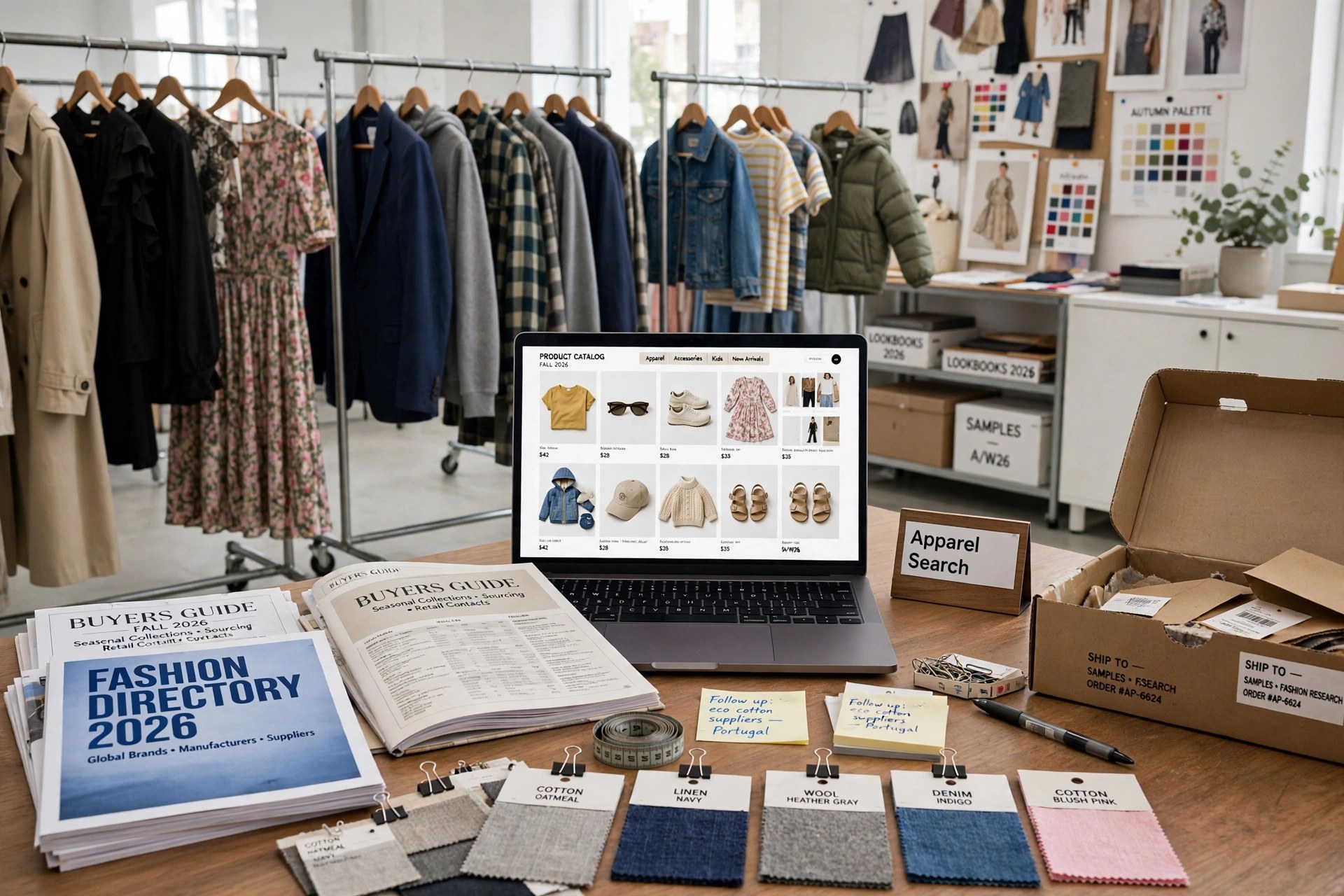
Featured Guides, Industry Directories, Databases, Education, Market Guides and Reports
- Apparel Manufacturing Guides
- Fabric Guides
- Womenswear Guides
- Menswear Guides
- Children's Wear Guides
- Fashion Industry Directories
- Textile Industry Directories
- Clothing Industry Directory
- Fashion Industry Buyers
- Fashion on Facebook Directory
- Fashion Week Directory
- Clothing Model Directory
- Find Clothing Industry Directories
- Database List
- Fashiondex Directories — Apparel fabrics, Services & Trims
- The Directory of Brand Name Apparel Manufacturers and Trademark Holders
- National Register — Apparel Manufacturers
- National Register — The Apparel Marketplace: Wholesalers, Importers, Exporters
- National Register — Fashion Accessories
- The National Register of Independent Sales Reps
- fabric Marketing Research
- fabric Marketing Research — Apparel Retail Directories
- "2006-07" The Apparel Salesman's Guide to Retailers & Buyers
- How to Fashion Industry
- Fashion Education
- fashion research
- Fashion Industry Statistics
- Clothing Book Publishers
- Apparel Books
- Fashion Book Stores
- Fashiondex
- Employment Guides
- Women's Clothes Guide
- Men's Clothes Guide
- Children's Clothes Guide
- Jewelry Guide
- Fashion Designers Guide
- Beauty Products Guide
- Fashion Brand Guide
- Fashion Industry Guide
- Clothing B2B
- Global Sources Apparel & Textile Sourcing Reports & Magazines
- Textiles Intelligence Reports
- Salesman Buyer Guides
- Apparel Strategist
- Briefings Media Group LLC
- Fashion News Directory
- Apparel Link
Featured Guides: Manufacturing, Fabric and the Three Clothing Audiences
Six guides lead this hub, and each one goes deep on a single subject. The Apparel Manufacturing Guides are the largest set: 40 in-depth guides covering OEM production, costing, sourcing, quality and wholesale strategy, for anyone who makes clothing or has it made. The Fabric Guides cover textiles and fabric for designers, sourcing professionals and manufacturers — the people who choose cloth before a garment exists. The other three featured guides divide the clothing market by audience. The Womenswear Guides cover women's fashion categories, retailers and industry resources; the Menswear Guides do the same for men's fashion categories, retailers and resources; and the Children's Wear Guides cover children's fashion categories, retailers and industry resources in the same way. Keeping the three audiences in separate guides matters, because their categories, sizes, retailers and buyers are genuinely different trades.
The sixth featured guide, Fashion Industry Directories, is the bridge from learning to finding: directories of fashion businesses, including manufacturers, wholesalers, retailers and more. A reader who has worked through a manufacturing or fabric guide and is ready to act on it — to find a factory, a wholesaler or a store — moves naturally from the featured guides into the directory sections below.
Industry Directories and Textile Directories
The industry directory section lists directories by the kind of company or event they cover. The Fashion Industry Directories page itself leads onward to women's fashion directories, boutiques, men's clothing, childrenswear and more, while the Textile Industry Directories page covers the supply side of the trade, including fabric manufacturers and textile machinery distributors. The Clothing Industry Directory, the Fashion Industry Buyers page and the Fashion on Facebook Directory serve three different habits of research: a general clothing directory, a directory centred on the buyers who purchase for stores, and a directory of fashion companies on the Facebook social network.
Two entries widen the section beyond company lists. The Fashion Week Directory is a directory of the international fashion week events, useful for following where collections are shown. ClothingModel.com, the Clothing Model Directory, is an online guide for fashion models, modeling agencies, stylists, fashion photographers and others in that part of the industry — a reminder that a complete fashion directory has to cover the people and events of the trade as well as its manufacturers and stores.
Business Databases: Fashiondex, the National Register and the Salesman's Guides
Behind the free online directories sit the commercial databases, and this hub lists the main ones together so they can be compared. The Find Clothing Industry Directories page explains how to choose among them, and the Database List gives a partial list of what is available. Fashiondex appears twice in the database list: the Fashiondex Directories covering apparel fabrics, services and trims, and The Directory of Brand Name Apparel Manufacturers and Trademark Holders. The National Register titles divide the market four ways — Apparel Manufacturers; The Apparel Marketplace, covering wholesalers, importers and exporters; Fashion Accessories; and The National Register of Independent Sales Reps, for the representatives who sell lines to stores.
Two further database families serve particular jobs. The fabric Marketing Research directories include an apparel retail directories volume alongside the main fabric Marketing Research listing, and the salesman's guide entry — the 2006-07 Apparel Salesman's Guide to Retailers & Buyers — is built for sales representatives who need retailer and buyer contacts. Read together with the Salesman Buyer Guides in the reports section below, these databases are the selling tools of the hub: directories tell you which companies exist, while databases of this kind tell you who buys, who sells and how to reach them.
Education, Research, Statistics and Books
For learning the industry rather than finding a company in it, the education and research section is the starting point. How to Fashion Industry collects how-to guidance, Fashion Education covers fashion education itself, and the fashion research page leads into research resources, including Fashion Industry Statistics for the numbers behind the trade. Books have a cluster of their own: Clothing Book Publishers, Apparel Books and Fashion Book Stores, plus the Fashiondex book store for fashion, apparel and textiles books. The section closes with Employment Guides, a directory of fashion industry career guides for people planning a career or a career change in fashion.
These resources pair naturally with the featured guides at the top of the page. A student can read a fabric or manufacturing guide for the subject, check the statistics for the size of the market, find books for deeper study and then use the career guides to see which jobs use that knowledge — all without leaving this hub's link list.
Consumer and Market Guides: Clothes, Jewellery, Designers, Beauty and Brands
Not every guide here is a business tool. The consumer and market guides organise fashion by what a shopper or researcher wants to find. The three clothes guides — the Women's Clothes Guide, the Men's Clothes Guide and the Children's Clothes Guide — are the audience guides to clothing itself, category by category. Around them sit the Jewelry Guide, the Fashion Designers Guide organised by designer name, the Beauty Products Guide, the Fashion Brand Guide and the broader Fashion Industry Guide, with Clothing B2B covering the business-to-business side of clothing. A reader researching a purchase, a designer or a brand family will usually start in this section, while a reader sourcing production will start with the featured and database sections — the hub keeps both doors open on one page.
Reports and Industry Media
The final section covers published research and industry media. Global Sources contributes apparel and textile sourcing reports and magazines, and Textiles Intelligence contributes research reports on the textile industry. The Apparel Strategist and Briefings Media Group represent industry publishing and briefing services, the Fashion News Directory organises fashion news sources, and Apparel Link collects further apparel links. Together with the Salesman Buyer Guides — the practical companion to the salesman's database listed above — these entries serve readers who follow the industry continuously rather than looking up a single company: sourcing intelligence, textile research and trade commentary, refreshed as the market moves.
Used as a whole, this hub works in layers. The featured guides teach a subject, the directories name the companies in it, the databases supply the buyers, manufacturers and representatives, the education section supports study and careers, the consumer guides organise the product market, and the reports keep a working reader current. Whichever layer you need, the full link list at the top of this page is the fastest route to it.
Common Questions
How do I choose between a guide and a directory on this page?
Choose a guide when you want to learn a subject in depth — the manufacturing guides, for example, cover OEM production, costing, sourcing, quality and wholesale strategy across 40 guides, and the fabric guides explain textiles for designers and sourcing professionals. Choose a directory or database when you need to find companies or people: manufacturers, wholesalers, retailers, buyers or independent sales representatives.
Where should I start if I need buyers, manufacturers or sales representatives?
Start with the business databases. Fashiondex covers apparel fabrics, services, trims and brand name manufacturers; the National Register titles cover apparel manufacturers, the apparel marketplace of wholesalers, importers and exporters, fashion accessories and independent sales reps; the fabric Marketing Research directories cover apparel retail; and the salesman's guide and Salesman Buyer Guides are built for reaching retailers and buyers.
Is this hub only for clothing manufacturers?
No. Manufacturers are one audience among several. Designers and sourcing professionals use the fabric guides, retailers and buyers use the directories and databases, students and job seekers use the education, research, statistics, books and employment guides, and shoppers and researchers use the clothes, jewellery, designer, beauty and brand guides — the hub organises resources for the whole fashion industry, for international use.