Find a Clothing Industry Directory or Textile Industry Guide
How to choose the right buyers guide, fabric directory or manufacturers directory for your company
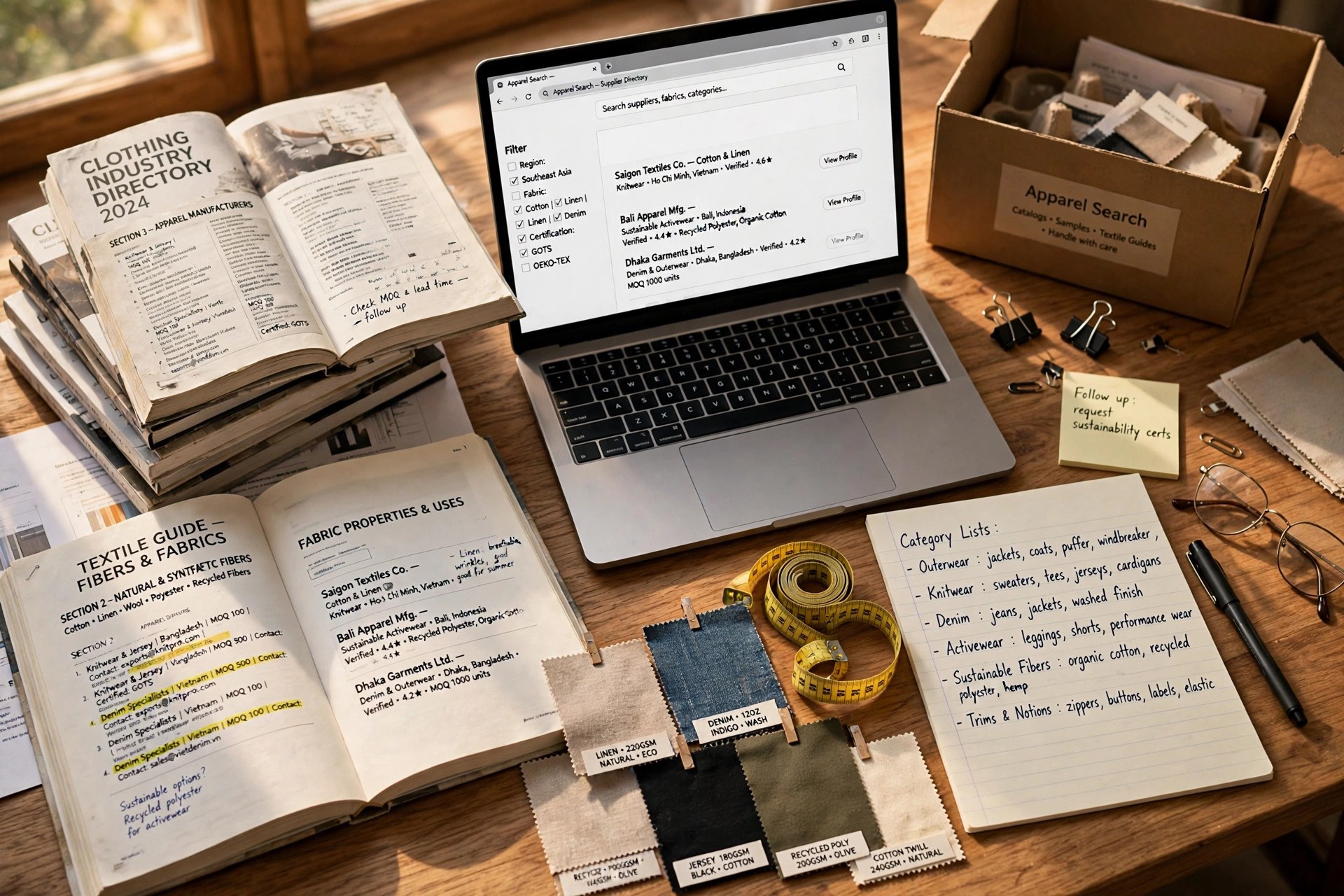
When you are searching for apparel industry guides and databases, the Apparel Search online directory is the place to begin. It is a business-to-business guide for the clothing industry, and the directories gathered here serve garment importers, fashion and textile exporters, clothing manufacturers, apparel wholesalers and clothing retail stores alike. If you are a buyer or seller of fiber, fabric or fashion, start by deciding exactly what you need to find: store buyers to sell to, fabric mills to buy from, factories to make your garments, or suppliers of a particular product category. The directory navigation directly below this introduction leads to the fashion industry and textile industry directory sections, the buyers guides, the wholesaler and manufacturer directories, and the related education, research and publishing resources. The sections that follow explain what each kind of directory contains and how to check that a guide matches your market before you order it.
Clothing Industry Directories, Textile Guides and Related Resources
- Fashion Industry Directory
- Textile Industry Directory
- clothing wholesalers
- clothing store buyer
- clothing manufacturers
- Fashiondex
- Fashion Industry Guide
- Fashion Industry How to Guides
- Clothing Industry Directory
- Fashion Education
- Clothing Book Publishers
- Employment Guides - fashion industry career guides
- Salesman Buyer Guides
- ClothingModel.com
- Research
- Apparel Link
- apparel directory
Start With the Kind of Company You Need to Find
Directories are organized by the job they do, so the first choice is between selling, sourcing and making. If you sell clothing, you need a retail buyers guide: the most popular are the clothing retail directories for women's wear, men's wear and children's wear, which give information about stores selling activewear, swimwear, surfwear, sportswear, dresses, lingerie, jeans, t-shirts, outerwear and much more. Those directories also show retail classifications such as department stores, specialty stores, mass merchandisers and fashion boutiques. If what you need is buyer contact details — a buyer's name, phone number and the merchandise that buyer purchases — a retail store buyers guide is the appropriate choice, and the Fashion Industry Buyers and Salesman Buyer Guides links in the navigation cover that need.
If you buy fabric, investigate the textile manufacturer directories instead, and if you need garments made, use a manufacturer directory. Clothing industry manufacturer directories include contractors and factories that handle tasks such as screen printing, embroidery, dyeing and finishing, sewing garments, cutting fabrics and heat transfer work. Jobbers, production resources and buying offices are also covered in the directory sections linked on this page, so a production search and a selling search should begin in different places even though both are called directories.
Check the Country Coverage Before You Order
The most expensive mistake in buying a directory is choosing the right kind of book for the wrong country. Some textile directories specialize in a particular country. If you are searching for fabric mills in the USA, you do not want to mistakenly purchase a fabric mill directory for China, Taiwan or Korea. Before ordering any fashion guide or directory, ask which countries are represented in the book or database. Some databases combine countries: a textile directory for fabric mills in the USA may also contain fabric mill information for Canada. Read the cover and the description of the publication carefully to make sure you are buying the type of book you need for your market, and if you are not sure, contact the directory sales representative by phone or by e-mail. Sales representatives can confirm the countries, categories and data fields a publication actually contains, and using their experience before purchase is far cheaper than discovering a mismatch afterwards.
What a Typical Fashion Industry Directory Covers
Typical fashion industry directories provide information across a long list of merchandise categories: off price apparel, pants, suits, belts, ties, sweaters, uniforms, blouses, tenniswear, shoes, westernwear, bridal gowns, golfwear, shirts, vests, skirts, intimatewear, jackets, outerwear, sleepwear, beachwear, shorts, blazers, robes, knitwear, bottoms, private label, tailored clothing, neckwear, tops, footwear, hats and caps, skiwear, dress shirts, designer fashion, socks and hosiery, underwear and dresses. A directory that is strong in your category — and weak in categories you do not sell — is usually more useful than a general volume, because its listings are organized around the buyers and companies in that trade.
Textile directories narrow the focus further. Some specialize in suppliers such as converters, textile mills and fabric shops, or in fabrics such as wovens, velour, screenprint fabric, leather, dyed fabric, nonwovens, terry, twill fabric, corduroy, knits, denim and fleece. If you are not looking for fabric mills at all, you may instead want a directory customized to textile fiber classifications: silk, cotton, wool, linen, nylon and rayon. Matching the directory's specialization to the fiber, fabric or garment you actually work with is the main test of a good purchase.
Online Directories and Printed Guides Work Together
In today's marketplace, clothing wholesalers, clothing store buyers and clothing manufacturers must have many resources at their fingertips. Online business-to-business directories such as ApparelSearch.com are fast, searchable resources for daily work. A printed guide still has its place alongside them: fashion news is read online all the time, yet many in the trade also enjoy holding a newspaper such as WWD, California Apparel News or DNR in their hands on occasion, and in the same way a copy of a salesman's guide kept in a desk drawer is a handy reference during calls and market weeks. Use the online directories linked here for current searching, and a printed or database guide for the structured, category-by-category coverage a book provides.
Ask About a Customized Directory
If you cannot find the directory you are searching for, ask the publishers about custom directories. Leading publishers such as Fashiondex, Douglas, Infomat and The National Register may be able to create customized directories based on specific requirements. A production manager sourcing trimming for garment production who cannot find a zipper, button, brand label or hangtag supplier — and cannot find a single trim supplier directory to cover the need — can ask whether a customized directory can be built for that purpose. Ask also about special sizes: petites, maternity clothes, plus sizes, big and tall, missys and juniors are all segments a publisher may be able to isolate.
That customization is a standard feature of the larger databases. Leading fashion, textiles, home furnishings and accessories guides, databases and directories are available as hard copy directories, on computer disk, as PDF files and electronically by e-mail, compiled by database publishers in the USA. Their category resources include manufacturers, importers, wholesalers, retailers, mass merchandisers and sales representatives for apparel, textiles, home furnishings and accessories firms in the USA and Canada, and a lot of the databases can also be customized geographically, by sales volume and by types of garments handled — the features needed to find the appropriate firms in the USA and Canada.
Choose Carefully: No Single Directory Is Best for Everyone
Apparel Search does not make specific recommendations about which directory is best for you; it points you toward where you can research the resources on the market. Spend time educating yourself so you can make the proper decision, because each publishing company provides different levels of data. If you are searching for a specific piece of data, discuss it with the publishing company or one of its sales agents before purchase. A seller who needs a salesman's guide for locating clothing store buyers, for example, does not want to accidentally buy a guide to lingerie factories. The navigation on this page also leads onward: Salesman Buyer Guides help sales people find clothing buyer names, addresses and contact details; ClothingModel.com is an online guide for fashion models; many additional business guides are in the Research area of the Education section; and clothing industry and textile industry online directories — fashion industry portals — are listed in the Apparel Link section.
Common Questions
How should I choose between a buyers guide, a textile directory and a manufacturers directory?
Choose by the job you need done. A buyers guide lists retail stores and their buyers, with contact details, for sellers of women's, men's and children's wear. A textile directory lists fabric mills and suppliers for companies that purchase fabrics. A manufacturers directory lists contractors and factories that sew, cut, print, embroider, dye and finish garments.
Why does the country coverage of a directory matter so much?
Many directories specialize in one country, and some combine countries, such as a USA fabric mill directory that also includes Canada. Buying a directory for the wrong country wastes the purchase, so ask which countries are represented, read the cover and description carefully, and confirm with the publisher's sales representative before ordering.
Can a directory be customized to my company's needs?
Yes, many databases can be customized geographically, by sales volume and by types of garments handled, and publishers such as Fashiondex, Douglas, Infomat and The National Register may create customized directories on request, including for special needs such as trim suppliers or special sizes like petites, maternity, plus sizes and big and tall.