Fashion Week Guide
The guide to fashion week events worldwide — how the runway weeks work and where they happen.
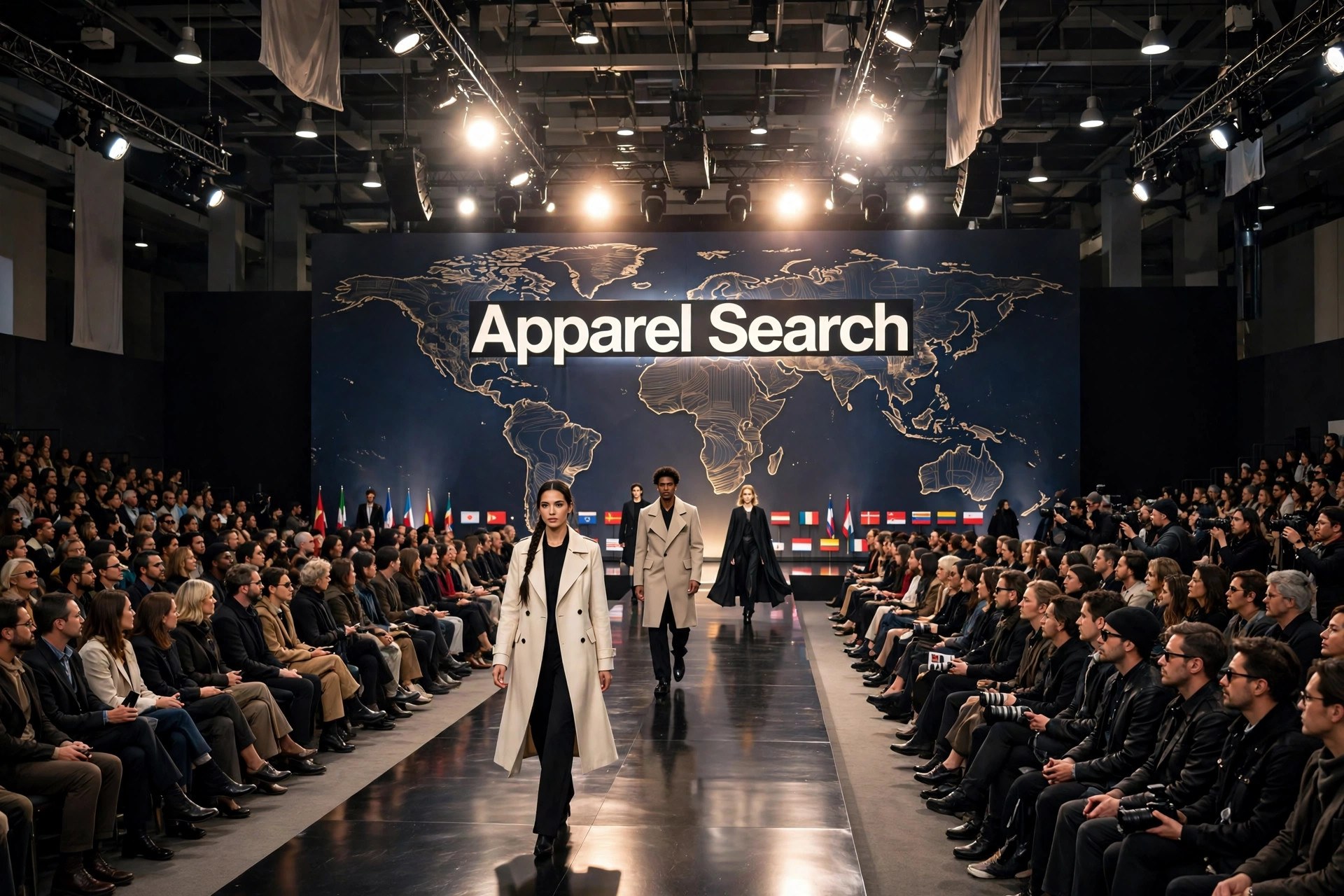
A fashion week is a fashion industry event, lasting approximately one week, which allows fashion designers and brands to display their latest collections. During the runway shows, buyers, celebrities, guests and the media review the latest offerings from various designers, and the week becomes the industry's preview of the season to come.
This guide is the top of the Apparel Search fashion week directory. The series pages linked above lead to the second page of the guide, the fashion week directories, photos, resources and schedules, and the country guides below lead into the events themselves — from Paris, Milan, London and New York to Montreal, Zagreb and Beijing. The guide's own account of fashion week, its history and its working parts is kept below.
Search Apparel Search
Fashion Week Guide — Series
How a Fashion Week Works
Fashion week events run approximately six months ahead of the season they dress: shows presented in the fall feature clothes for the next spring, and clothes shown in the spring are to be worn in the fall. That lead time is the industry's supply chain made visible — buyers place orders at the shows, production follows, and the garments reach stores as the season they were designed for begins.
Inside the week, the runway show is the centre, but it is not the whole event. Designers also use presentations, where models show a collection in a static setting so buyers and press can inspect garments closely; showrooms and exhibitions, where collections are displayed for orders in a quieter room; and the networking events where the business of fashion — partnerships, investors, collaborations — actually gets done. The benefits guide in this directory, on why designers participate in fashion week, works through that business case in detail.
From the Couture Salons to the Livestream
When the haute couture industry began in the 1850s, it was exclusive and largely private: top designers held shows in their own ateliers for their most important clients. As fashion weeks became common, their audiences were trade audiences — buyers for major department stores and high-end boutiques, working with models, stylists and set coordinators. Critics and celebrities followed, then the general public through magazine and newspaper photographs, and finally, with the internet, everyone at once, through photos, interviews and videos published as the shows happen.
That widening audience changed what a fashion week is for. It remains a trade event — orders are still placed, trends are still set for the industry — but it is also a public spectacle and a media platform, and the country and city guides in this directory show both faces: the established capitals defending their status, and emerging fashion cities from Nairobi to Vancouver using a fashion week to declare themselves.
What the Guide's Country Pages Show
The country guides below this page are the argument made concrete. France shows the format at its most institutional: a federation scheduling hundreds of shows a year in Paris. Canada shows it at regional scale, with Montreal's designer-promotion mission, Toronto's market weight, Vancouver's emerging-city ambition and Western Canada's community subsidy model all running the same basic instrument in different keys. China shows it at industrial scale, more than twenty events inside a single week, twice a year, since 1997. Croatia and Germany show the European middle: a single-city international week in Zagreb, and Berlin's pairing of runway with trade fair.
Read together, they also show what a fashion week is not. It is not a trade show, though trade happens all around it; it is not a retail event, though everything in it is ultimately for sale; and it is not a party, though the parties are famous. It is a scheduled concentration of attention — the industry's scarcest resource — and every page in this guide documents one city's way of concentrating it. The schedules page in this series is where that concentration becomes a calendar, and the directories page is where the publications that report it are collected.
More About Fashion Week
A fashion week is a fashion industry event, lasting approximately one week, which allows fashion designers and brands to display their latest collections. During the runway shows, buyers, celebrities, guests, and the media review the latest offerings from various designers. Fashion Week is an excellent resource for scouting out the latest trends.
New to how these weeks actually work? Our Fashion Week Explained guide covers the four fashion capitals, the twice-yearly calendar, and who attends each week and why — part of the Apparel Search Fashion Show & Runway Production Guide .
Overall, international fashion weeks are a great way for designers, models, and fashionistas to showcase their latest collections and engage with potential customers. These events provide a great platform for the fashion industry to connect and promote their collections to a global audience.
These events help the apparel industry and consumers know what's hot and what's not. Retail buyers attend the events as a preview for making purchases. Celebrities attend the runway shows to gaze upon couture designs and to be seen by the media.
Fashion Week events run approximately six months ahead of time, so shows presented in the fall feature clothes for the next spring, and clothes shown in the spring are to be worn in the fall.
When the haute couture industry first started in the 1850′s, it was exclusive and for the most part secretive to some extent. The top designers of the time held fashion shows in their ateliers specifically for their most prized clients.
As fashion week events became common place in the apparel industry they were primarily attended by buyers for major department stores and high end specialty boutiques. Utilizing models, stylists and set coordinators, fashion designers were able to develop fascinating presentations to intrigue and inspire the retail buyers to select their garments for their stores.
Don't forget to check out our new Fashion Week Designers section above. If you enjoy fashion week photos or fashion week videos, you would most likely love to attend a live fashion event.
As years past, fashion critics and a-list celebrities attending events. The general public became part of the action by viewing photos in the most popular magazines and newspapers.
Since the birth of the internet, the world has full access to fashion week events via photos, live interviews, and videos.
As the leading source for information in the fashion industry, the Apparel Search guide is dedicated to providing insights into the dynamic and ever-evolving world of fashion. One of the pivotal events that the guide extensively covers is "Fashion Week," a phenomenon that plays a crucial role in shaping the industry.
Fashion Week is a semi-annual event where the fashion industry comes together to showcase upcoming collections for the upcoming seasons. It is a week-long series of runway shows, presentations, and events hosted by major fashion capitals around the world, such as New York, London, Milan, and Paris. These events are organized to highlight the latest designs from renowned designers, emerging talents, and established fashion houses.
Runway Shows: Runway shows are the heart of Fashion Week, where designers unveil their latest creations on the catwalk. These shows are attended by industry professionals, celebrities, and fashion enthusiasts, setting the tone for upcoming trends.
Presentations: In addition to traditional runway shows, designers may opt for presentations where models showcase the collection in a static environment, allowing for a closer inspection of the garments.
Showrooms and Exhibitions: Fashion Week often includes showrooms and exhibitions where designers can display their collections to buyers, retailers, and the press in a more intimate setting.
Networking Events: Fashion Week provides ample opportunities for networking, collaboration, and forging partnerships. Industry professionals, including designers, retailers, buyers, and influencers, converge to discuss business and share ideas.
Trendsetting and Forecasting: Fashion Week is a trendsetting platform where designers showcase their vision for the upcoming season. The trends presented on the runway often influence the entire industry, setting the tone for fashion in the months to come.
Business Opportunities: Fashion Week serves as a critical business platform, offering designers the opportunity to secure orders from retailers, attract investors, and establish partnerships. It is a key moment for the commercial success of a collection.
Global Exposure: Fashion Week garners extensive media coverage, providing designers with global exposure. The runway shows and presentations are attended by international press, fashion magazines, and digital media, amplifying the reach of the showcased designs.
Networking and Collaboration: The event facilitates networking among industry professionals. Designers, retailers, buyers, and influencers connect, fostering collaborations and partnerships that drive the business forward.
Cultural and Creative Exchange: Fashion Week is a melting pot of creativity, bringing together designers from diverse backgrounds and cultures. This exchange of ideas contributes to the richness and diversity of the global fashion landscape.
Consumer Engagement: Fashion Week has evolved to engage not only industry insiders but also consumers. With live streams, social media coverage, and consumer-facing events, fashion enthusiasts worldwide can participate in the excitement.
In conclusion, Fashion Week is a pivotal moment in the fashion industry, influencing trends, driving business, and fostering a global community of creative minds. The Apparel Search guide is committed to providing comprehensive coverage of Fashion Week events, ensuring that industry professionals and enthusiasts alike stay informed about the latest developments in fashion.
Learn about this years important fashion weeks from our fashion week events list.
Thank you for using the Apparel Search website to learn about this special aspect of the clothing industry.
Photos


Common Questions
What is a fashion week?
A fashion week is a fashion industry event, lasting approximately one week, in which fashion designers and brands display their latest collections in runway shows for buyers, celebrities, guests and the media.
Why do fashion weeks run six months ahead of the season?
Shows presented in the fall feature clothes for the next spring, and clothes shown in the spring are to be worn in the fall, so buyers can order and production can follow before the season begins.
What else happens at a fashion week besides runway shows?
Presentations where collections are inspected at close range, showrooms and exhibitions where buyers place orders, and networking events where designers, retailers, buyers and influencers form partnerships.
More to Explore
- Fashion Week News
- Top Fashion Designers
- Fashion Event News
- fashion designers
- Fashion Week Explained
- Fashion Show & Runway Production Guide
- apparel industry
- Africa Fashion Weeks
- Australia Fashion Weeks
- Canada Fashion Weeks
- Croatia Fashion Weeks
- France Fashion Weeks
- Germany Fashion Weeks
- Hong Kong Fashion Weeks
- India Fashion Weeks
- Indonesia Fashion Weeks
- Italy Fashion Weeks
- Japan Fashion Weeks
- Mexico Fashion Weeks
- Netherlands Fashion Weeks
- New Zealand Fashion Weeks
- Russia Fashion Weeks
- Scotland Fashion Weeks
- Singapore Fashion Weeks
- Spain Fashion Weeks
- United Kingdom Fashion Weeks
- United States Fashion Week
- haute couture
- Fashion Week Designers section
- a-list celebrities
- why fashion designers participate at fashion week events
- Runway shows
- Fashion Calendar