France Fashion Weeks
A guide to the fashion week events of France — Paris, the capital of the fashion week world.
A fashion week is a fashion industry event, lasting approximately one week, which allows fashion designers and fashion houses to display their latest collections in runway shows for buyers and the international fashion community — and the most prominent fashion weeks in the world are held in France, in Paris.
This guide covers the French events in the Apparel Search fashion week directory, linked above: Mode à Paris, the Paris fashion week organized through the French fashion federation, and the Paris Fashion Week page, which walks through the event's haute couture and ready-to-wear segments, its venues and its designers in depth.
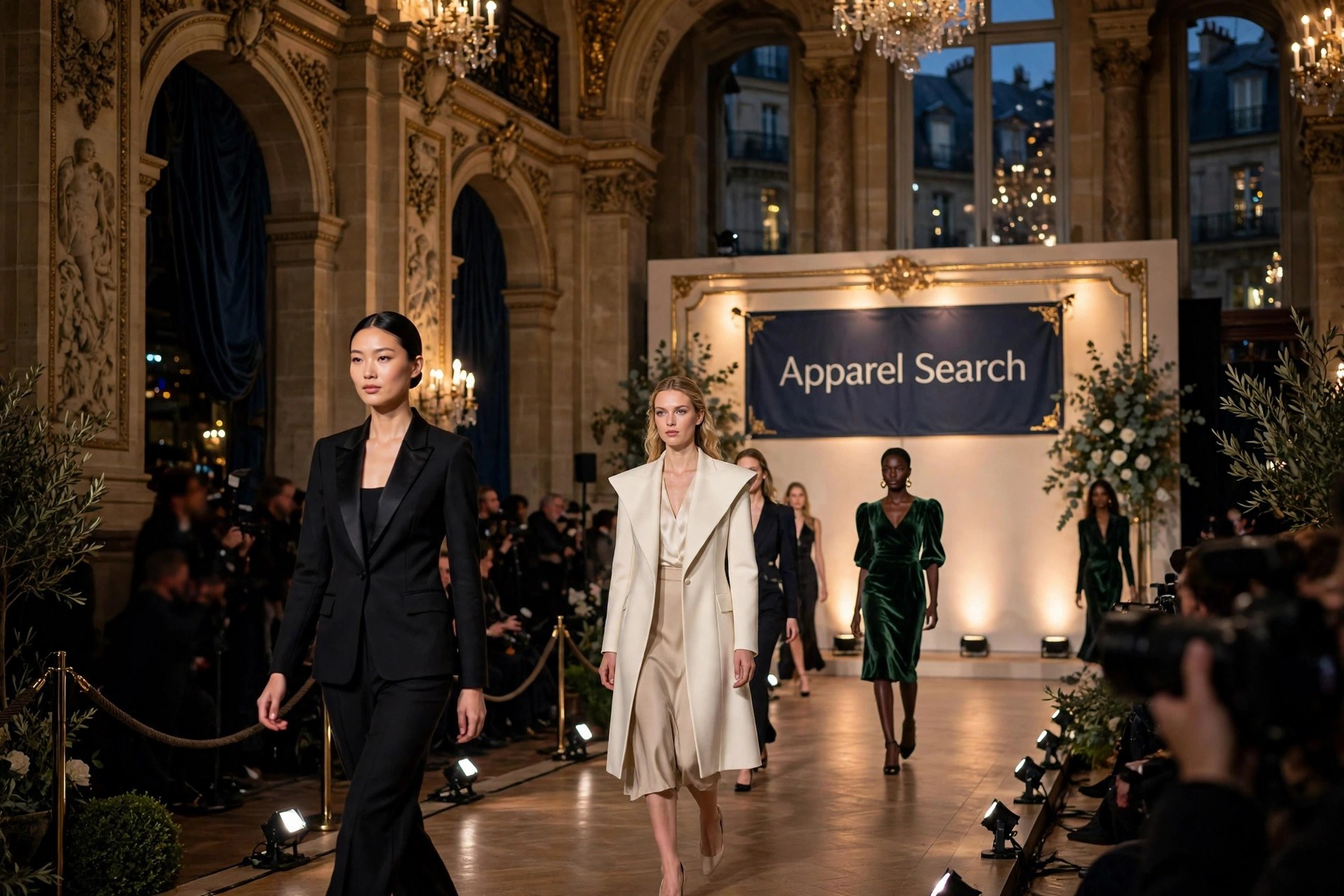
Illustrative image created for this guide — an artistic impression, not photographs from these shows.
Search Apparel Search
Fashion Week Events in France
Paris Sets the Calendar
France's claim on fashion week is structural, not sentimental. Paris is where the format was born — in the couture houses of the nineteenth century — and the French federation still runs the most demanding schedule in the business: in January and July, about thirty haute couture and thirty men's wear shows, and in March and October, over a hundred women's ready-to-wear shows, all scheduled by the federation so that press and buyers can cover the entire season without conflicts.
The Mode à Paris page in this guide gives that system its full record: the federation's history since 1973, the Carrousel du Louvre years, and the coordination with Milan that keeps the European presentations in sequence. The Paris Fashion Week page gives the event itself: the couture and ready-to-wear segments, the Grand Palais and Louvre venues, and the roll of designers — Chanel, Dior, Louis Vuitton, Givenchy and the rest — whose shows define the week.
France in the World Directory
In the full directory kept below, France stands at the head of the country list, and the other country guides in this series are best read as variations on the Paris model: an organizing body, a set of scheduled weeks, a home industry to promote. Germany and Croatia, linked above, run smaller versions of the same instrument; Montreal, Toronto and Vancouver run the Canadian versions. Paris remains the reference — the week every other week is measured against, and the last and largest stop of each international season.
The Federation Behind the French Pages
Both French records in this guide run through one institution. The federation established in 1973 — today the Fédération de la Haute Couture et de la Mode — schedules the Paris shows, manages the venue geography around the Carrousel du Louvre and its neighbouring locations, coordinates with Milan, and sends the resulting schedule to some 2,000 journalists and to buyers in France and abroad. Paris Fashion Week's prestige can look like a natural resource, something the city simply has; the federation's record shows it is better understood as an administered one, renewed each season by scheduling discipline.
That administration is also what the other country guides in this directory imitate at their own scale. Every fashion week that works has an organizer performing the same functions — fixing dates, sequencing shows, gathering the audience — whether it is a national federation in Paris or a liaison organization in Montreal. The French pages are the fullest record of that machinery in this guide, which is why they anchor the European section of the directory.
The Record
A fashion week is a fashion industry event, lasting approximately one week, which allows fashion designers or fashion houses to display their latest collections . The fashion collections are displayed via runway shows for buyers and the international fashion community to take a look at latest trends. The most prominent fashion weeks are held in locations such as France.
Common Questions
What is a fashion week?
A fashion week is a fashion industry event, lasting approximately one week, in which fashion designers and fashion houses display their latest collections in runway shows for buyers and the international fashion community.
Which French fashion week events does this guide cover?
Mode à Paris, the federation-organized Paris fashion week, and Paris Fashion Week itself, with its haute couture and ready-to-wear segments.
How many shows does Paris host in a season?
In January and July, Paris hosts about 30 haute couture and 30 men's wear fashion shows, and in March and October over a hundred women's ready-to-wear fashion shows.
More to Explore
- Fashion News
- Fashion Jobs
- Fashion Event News
- Fashion Calendar
- Fashion Week News
- Paris Fashion News
- French Fashion Houses
- fashion industry in France
- Africa Fashion Weeks
- Australia Fashion Weeks
- Canada Fashion Weeks
- Hong Kong Fashion Weeks
- India Fashion Weeks
- Indonesia Fashion Weeks
- Italy Fashion Weeks
- Japan Fashion Weeks
- Mexico Fashion Weeks
- Netherlands Fashion Weeks
- New Zealand Fashion Weeks
- Russia Fashion Weeks
- Scotland Fashion Weeks
- Singapore Fashion Weeks
- Spain Fashion Weeks
- United Kingdom Fashion Weeks
- United States Fashion Week Events
- Fashion Week Videos
- Fashion Shows
- Runway Shows
- Latest Fashion Trends
- Fashion Designers by Name
- Fashion Industry