Fashion Week Schedules
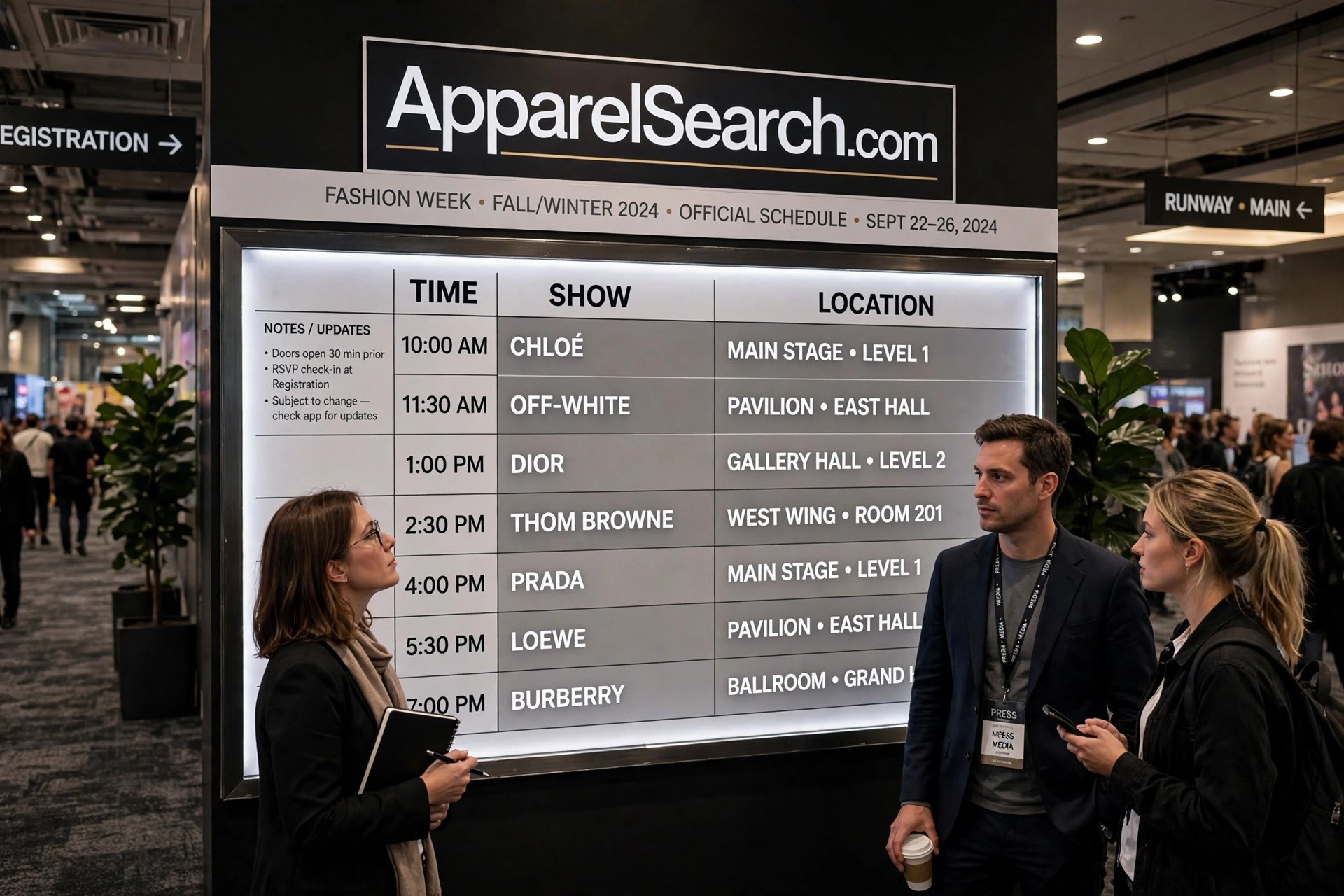
Fashion week schedules and calendars — the official dates for the major fashion weeks.
Fashion weeks are the heartbeat of the global fashion industry, where designers showcase their latest creations, setting trends that ripple through the world of style for seasons to come. Keeping tabs on these international fashion week events is not just a pastime for fashion enthusiasts; it is a vital part of staying relevant in the ever-evolving world of fashion.
This page collects the official schedules: the New York, London, Milan and Paris fashion week calendars, linked below, the CFDA fashion calendar, and the Hong Kong Fashion Week schedule — plus the guide's own account, kept below, of why the calendar matters and how to follow it effectively.
Search Apparel Search
Fashion Week Guide — Series
The Calendar Is the Industry's Clock
Every fashion week runs on somebody's official calendar. In Milan it is the Camera Nazionale della Moda Italiana; in Paris, the Fédération de la Haute Couture et de la Mode; in New York, the CFDA's fashion calendar; in London, the British Fashion Council's London Fashion Week schedule. Those bodies do the invisible work that makes a week a week: setting the dates, sequencing the shows so press and buyers can physically reach them, and publishing the schedule everyone else plans around.
The stakes of the schedule are set out in the account below. Fashion weeks serve as trend incubators, offering a glimpse into the future of fashion; they give insight into the creative minds behind the brands; and for the industry, they are the season's networking concentrated into days. Missing a week is not missing a party — it is missing the moment the next season's colours, silhouettes and orders are decided.
Following the Schedules
The working method is the one the account below lays out: start with the official fashion week websites, which publish dates, times, locations and designer line-ups; follow the fashion media outlets, whose dedicated fashion week sections track changes; use fashion apps that aggregate event schedules; and follow the weeks and designers on social media for real-time updates and behind-the-scenes glimpses. Newsletters and fashion magazines round out the system with curated coverage.
Among the standout weeks the account singles out — Paris for high fashion and luxury, Milan for craftsmanship and innovation, New York for emerging talent, London for cutting-edge and experimental design, Paris Haute Couture for couture itself, and Copenhagen as a rising star focused on sustainability and Scandinavian design — the through-line is that each keeps its own calendar, and the calendars together make the global season. One former link on this page, to a blog post about important fashion week events, has been removed because the post returns a 404 error; the official schedule links are all carried.
One Season, Many Calendars
The global season is a relay. The major weeks are sequenced so that the travelling audience — buyers, editors, photographers — can attend them in turn, which is why the official calendars matter as a set and not only one by one: a clash between two weeks is not a local inconvenience but a tear in the season's fabric, splitting the audience both events need. The coordination between the Milan and Paris schedules recorded on the Mode à Paris page in this guide is the European example of the diplomacy involved.
For readers rather than travellers, the same calendars work as a reading plan. Each official schedule names the designers showing, and following a name from the schedule to the coverage, season after season, is the simplest way to build real knowledge of the industry — the method this whole directory, with its designer records and country guides, is built to support.
The Record
Fashion weeks are the heartbeat of the global fashion industry, where designers showcase their latest creations, setting trends that will ripple through the world of style for seasons to come. Keeping tabs on these international fashion week events is not just a pastime for fashion enthusiasts; it's a vital aspect of staying relevant in the ever-evolving world of fashion.
Time to figure out the the fashion week schedule so you don't miss the events you wish to witness.
Milan Fashion Week Schedule (Camera Nazionale della Moda Italiana)
Paris Fashion Week Schedule (The Fédération de la Haute Couture et de la Mode)
Learn about the event schedules & calendars for other fashion weeks around the globe.
Let's delve into why paying attention to fashion week calendars is essential and how to do it effectively.
a. Trendsetting: Fashion weeks serve as trend incubators, offering a glimpse into the future of fashion. The styles, colors, and silhouettes on display influence what will be available in stores and what you'll see on the streets.
b. Designer Insights: Fashion weeks provide insight into the creative minds behind your favorite brands. Observing their collections allows you to understand their aesthetic evolution and innovation.
c. Networking Opportunities: For those in the fashion industry, attending fashion week events can be a chance to network, collaborate, and stay connected with key players in the business.
a. Fashion Week Websites: Many fashion weeks maintain official websites with detailed schedules. These sites provide event dates, times, and locations, making it easy to plan your fashion week experience.
b. Social Media: Follow fashion weeks, designers, and fashion influencers on social media platforms like Instagram, Twitter, and TikTok. Designers often post teasers and updates about their shows, which can help you stay in the loop.
c. Fashion Apps: Download fashion-specific apps that aggregate event schedules and provide real-time updates. Apps like Vogue Runway, Fashion GPS Radar, or The Fashion Week app can be incredibly helpful.
d. Newsletters and Fashion Magazines: Subscribe to fashion newsletters and magazines to receive curated content about fashion week events and designer collections.
a. Official Fashion Week Websites: Each major fashion week, like New York, Paris, Milan, and London, maintains its website with schedules, designer lineups, and live streaming links.
b. Fashion Media Outlets: Leading fashion publications like Vogue, Elle, and Harper's Bazaar often have dedicated sections on their websites for fashion week coverage.
c. Fashion Apps: As mentioned earlier, fashion apps are a convenient one-stop shop for event calendars and other fashion-related content.
d. Social Media: Instagram, Twitter, and TikTok are great platforms for real-time updates and behind-the-scenes glimpses of fashion week events.
While all fashion weeks offer unique experiences, some stand out:
a. Paris Fashion Week: Known for its high fashion and luxury brands like Chanel, Dior, and Louis Vuitton.
b. Milan Fashion Week: Celebrated for its craftsmanship and innovation, featuring Gucci, Prada, and Versace.
c. New York Fashion Week: A hub for emerging talent and street-style influencers.
d. London Fashion Week: Showcases cutting-edge designers and experimental fashion.
e. Paris Haute Couture Fashion Week: For the crème de la crème of couture fashion.
f. Copenhagen Fashion Week: A rising star in the fashion world, focusing on sustainability and Scandinavian design.
Staying informed about fashion week calendars is essential for anyone passionate about style. It offers a front-row seat to the ever-changing world of fashion, allowing you to anticipate trends, admire creative genius, and stay connected with the global fashion community. Whether you're a fashion professional or an enthusiast, keeping a close eye on these events is your passport to the fashion world's most exciting moments.
Common Questions
Where are the official fashion week schedules published?
On the fashion weeks' own websites and governing bodies' calendars: New York Fashion Week, London Fashion Week, the Camera Nazionale della Moda Italiana for Milan, the Fédération de la Haute Couture et de la Mode for Paris, and the CFDA fashion calendar — all linked from this page.
Why does the fashion week calendar matter?
Fashion weeks are trend incubators where the styles, colours and silhouettes that influence stores are first shown, and the calendar is how designers, buyers, media and enthusiasts keep track of them.
Which fashion weeks stand out in the schedule?
Paris for high fashion and luxury brands, Milan for craftsmanship and innovation, New York for emerging talent, London for experimental fashion, Paris Haute Couture for couture, and Copenhagen for sustainability and Scandinavian design.
More to Explore
- Fashion Calendar
- Fashion Events
- Designer Benefits of Attending Fashion Week
- Fashion weeks summary
- Fashion week calendar summary
- Fashion week daily summary
- Fashion week designers summary
- Fashion week events summary
- Fashion week NYC summary
- Fashion week schedule summary
- Fashion week tickets summary
- Fashion weeks around the world summary