Fashion Week Events
Apparel Search fashion summary — a short guide to fashion week events.
A fashion week is an industry event that lasts approximately one week, and each day of it holds a calendar of events — above all, runway shows at which designers present their collections to the press and buyers for review. Those events are the working heart of the week.
Fashion Week Events — Explore & Resources
- fashion week events
- fashion models
- fashion journalists
- fashion photographers
- fashion stylists
- Fashion week calendar summary
- Fashion week daily summary
- Fashion week designers summary
- Fashion week NYC summary
- Fashion week schedule summary
- Fashion week summary
- Fashion week tickets summary
- Fashion weeks around the world summary
- Fashion weeks summary
The Events Inside the Week
The runway fashion shows are the method by which designers showcase the work they have been doing: a compilation of the products they plan to sell to retail fashion stores for the upcoming season. Shown to buyers who will order and media who will publicise, the events influence trends for the current and upcoming seasons.
That double audience is what makes the events consequential. A show is simultaneously a sales appointment and a press performance, and it has to succeed as both. The international fashion week events guide linked from this page lists the events themselves, city by city.
Stakes for Everyone Involved
Fashion week events are important to designers, models, photographers, retailers, media and consumers — and they can make or break a fashion designer's career, or at least their season. A well-received showing produces orders and coverage; a poor one produces neither, in public.
The careers affected run well beyond the designer: fashion models, fashion journalists, fashion photographers and fashion stylists all build reputations during the week, as do PR firms and the retailers deciding what their stores will sell. Their summaries are linked from this page, alongside the week's calendar, schedule and tickets summaries.
Consumers feel the events at one remove, through what the buyers ordered and the media amplified: the trends that reach stores next season were largely decided by which events impressed which audiences this season. That chain — show, order, coverage, shop floor — is why a week of trade events in a handful of venues ends up dressing people who have never heard of it.
Beyond the Runway Shows
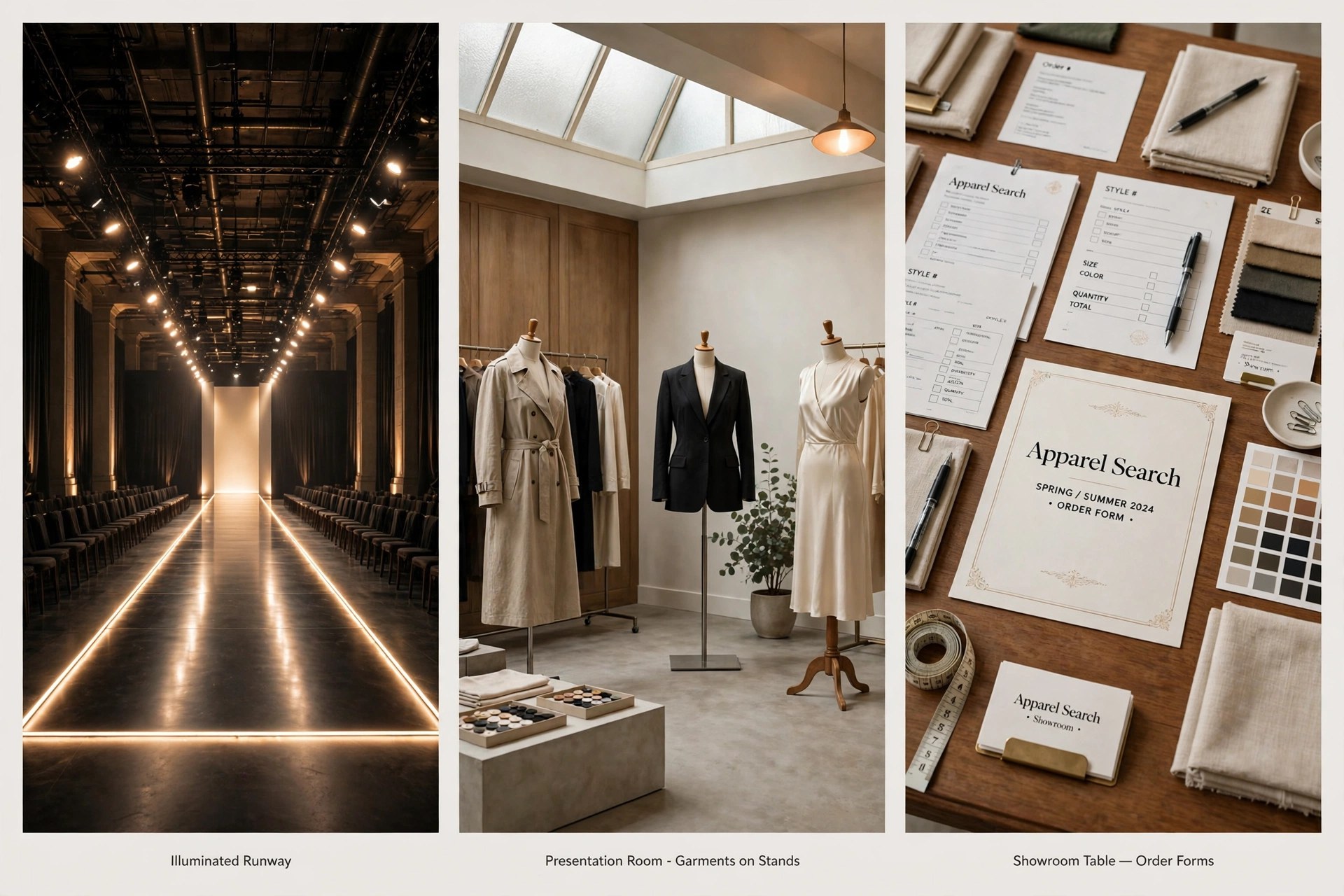
The runway shows dominate the phrase fashion week events, but the week's programme is wider than the catwalk. Presentations hold garments still for close inspection, letting buyers examine construction that a moving show only advertises; showrooms run appointment-based selling all week; launches, exhibitions and industry parties carry the networking that no show format accommodates. Each event type does a different job: the show creates the image, the presentation substantiates it, and the showroom converts it into orders. Designers choose among them by budget and intent — a young label may skip the runway entirely and still have a full, successful week of presentations and appointments. Judging a fashion week by its shows alone is therefore like judging a market by its advertising: accurate about the surface, silent about the transactions. The events summaries and directories linked from this page list the whole programme, and the whole programme is the event.
Common Questions
What happens at fashion week events?
Designers present their collections in runway shows to the press and buyers. The shows compile the products they plan to sell to retail stores for the upcoming season, and they influence current and upcoming trends.
Why can fashion week make or break a designer?
Because the audience decides immediately and publicly: buyers place or withhold orders, and media publish or withhold coverage, based on the showing.
Whose careers are affected by fashion week events?
Designers first, but also fashion models, journalists, photographers, stylists, PR firms, retailers and — through the trends that result — consumers.