Fashion Weeks
Apparel Search fashion summary — a short guide to fashion weeks.
The world fortunately has more than one of nearly everything — including fashion weeks. Fashion Weeks is simply the plural of Fashion Week: the several different events, in different cities, that share the name, from New York and Paris to Montreal and beyond.
Fashion Weeks — Explore & Resources
- fashion weeks
- Fashion week calendar summary
- Fashion week daily summary
- Fashion week designers summary
- Fashion week events summary
- Fashion week NYC summary
- Fashion week schedule summary
- Fashion week summary
- Fashion week tickets summary
- Fashion weeks around the world summary
- Fashion Models Summary
- Fashion Stylists Summary
- Fashion Photographers Summary
- Fashion Show Summary
- Fashion Runway Summary
One Name, Many Events
A fashion week is a grouping of fashion shows over the course of several days, at which several of the industry's top designers present their upcoming collections to clothing store buyers and the media. The plural refers to the fact that there are several such events: New York Fashion Week, Paris Fashion Week and Montreal Fashion Week are all fashion weeks.
Treating them as a system rather than a single event changes the questions. Instead of asking what happens at the week, the plural view asks how the weeks divide the year, the map and the market between them — the view the fashion weeks list and the fashion week blog linked from this page both take.
The Seasonal Cycle
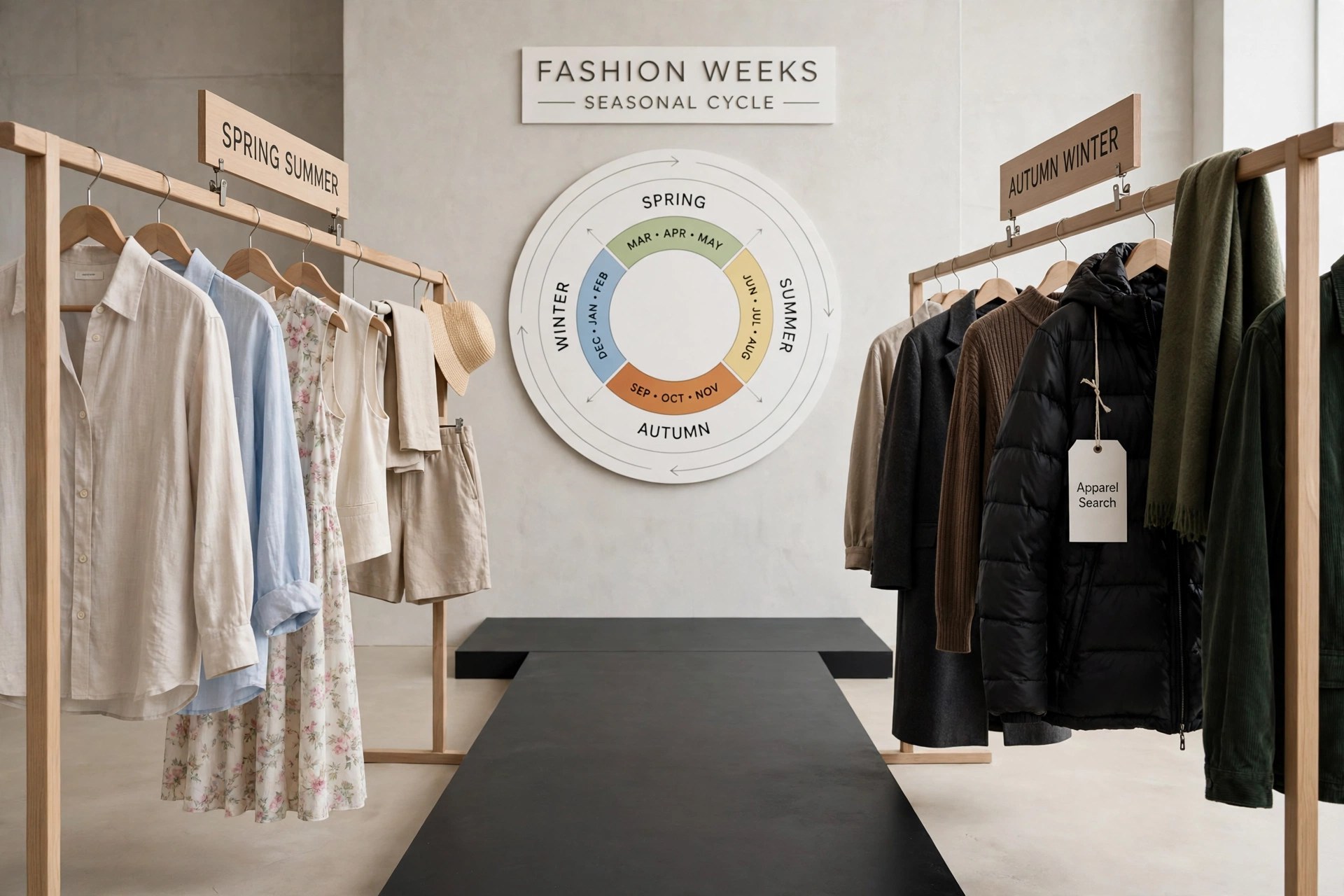
Fashion weeks are traditionally held several months in advance of the season, to allow the press and fashion store buyers a chance to preview new collections for the following season. In February and March, designers showcase their autumn and winter collections; in September and October, they showcase their spring and summer collections.
The lead time is the industry's production logic made visible: buyers need months to order, factories need months to make, and stores need the clothes when the season — not the show — begins. The calendar, daily, designers, events, schedule and tickets summaries linked below open up the single week's machinery; this page's subject is the cycle that machinery repeats, city after city, twice a year.
Keeping the Whole System in View
The plural view has one more use: it explains fashion's calendar power. Because the weeks are staggered across cities and months, the industry maintains a nearly continuous season of showings somewhere in the world — a designer, buyer or journalist can follow the circuit for weeks at a stretch, and the trade press never fully leaves fashion week mode. That continuity is why trends now seem to arrive as a steady flow rather than a twice-yearly announcement: the plural system produces them continuously. It also distributes risk. A weak season in one capital is answered by a strong one in another; a designer refused by one week's organizers can debut at a different week and be reviewed on the work. Seen singly, a fashion week is an event. Seen as fashion weeks — the recurring, globe-spanning plural — it is the industry's operating system: the schedule on which collections are made, ordered, publicised and replaced. The summaries linked below mostly open single doors; this page's subject is the corridor that connects them.
Common Questions
What does fashion weeks mean, as opposed to fashion week?
The plural: the several different events that share the name — New York Fashion Week, Paris Fashion Week, Montreal Fashion Week and many others around the world.
When do fashion weeks take place?
Twice a year in the main cycle: in February and March designers show autumn and winter collections, and in September and October they show spring and summer collections.
Why are fashion weeks held months before the season?
To give the press and fashion store buyers time to preview collections for the following season — and the industry time to order, produce and deliver the clothes before that season starts.