Fabric Marketing Research: Apparel Retailer Directories
The 300 largest apparel retailers in the USA — who they are and where their headquarters are
Who are the major apparel retailers in the USA, and the apparel retailers and mail order catalog companies who control 90 percent of the apparel retail business? Fabric Marketing Research answers that question with a retailer directory of 300 of the largest chain stores in the USA — the retailers who control 90 percent of all apparel sales in the USA, with a combined sales volume in the billions. For each retailer the directory gives the profile information a seller needs, including where the company's headquarters are, so an approach goes to the office that actually buys. Fabric Marketing Research is a specialist in this industry for 38 years, and the retailer directory is one part of a wider set of apparel and textile databases for the United States and Canada.
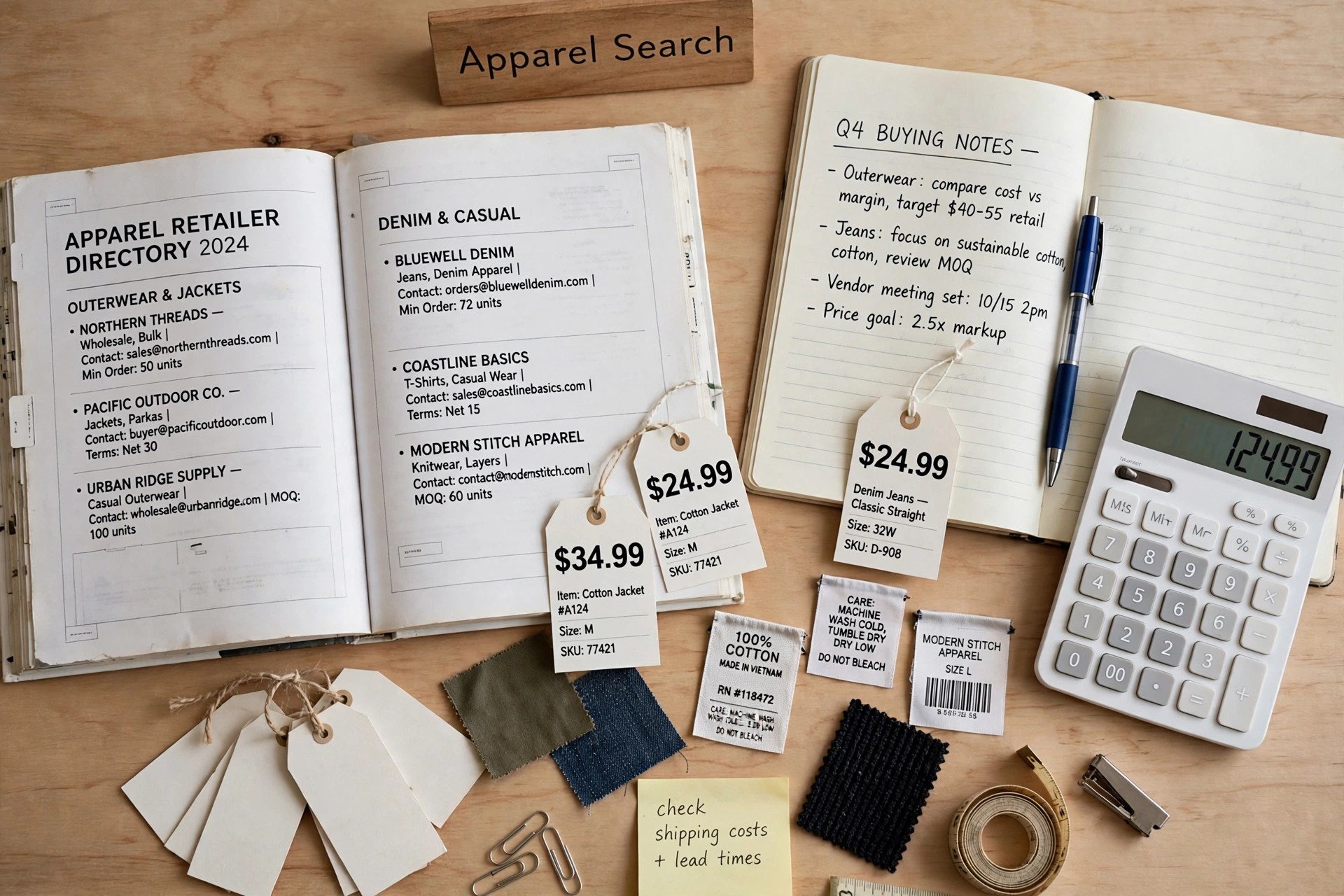
The 300 Largest Chain Stores
Retail concentration is the central fact of selling apparel in the United States: a few hundred retail companies account for the great majority of sales. The retailer directory profiles 300 of the largest chain stores in the USA, which together control 90 percent of all apparel sales in the USA. For a manufacturer or importer deciding where to spend selling time, that concentration is an advantage — the accounts that matter most are a defined, researchable set — provided the seller knows who they are, what they sell and where their headquarters are. The directory is built to answer exactly those questions.
Examples of the retailers listed include Wal Mart, Charlotte Russe, Dillards, Casual Corner, bebe, K-Mart, Gottschalks, Target, Nordstrom's, Ann Taylor, Men's Wearhouse, Brylane, Ross Stores, Macy's, Gap Inc, Victoria's Secret, Federated Stores and J C Penney, among many others. The range itself is instructive: mass merchants, department stores, specialty chains, off-price retailers and catalog companies all sit in the same 300, because apparel volume flows through all of those formats. A line that does not fit one format may fit another, and the directory lets a seller compare the whole field before choosing targets.
Why Headquarters Matter
Chain store buying is centralized. The store in a local mall does not choose its apparel lines; the buying office at headquarters does. A directory that gives headquarters locations therefore saves the most common wasted effort in apparel selling — pitching the wrong office. Knowing where a retailer's headquarters are, and holding a profile of the company's operations, lets a seller route an approach to the buying team, prepare for the company's price range and store count, and follow up through the right address. For mail order catalog companies in the list, the headquarters is likewise the buying address.
What the Profiles Include
These profiles and databases of apparel and textile firms include all types of information about the firm's products: names of executives, types of fabrics used, volume of business, number of employees and much more data about each company's operations. Applied to retailers, that profile structure tells a seller the scale of the account before the first call: how large the business is, who runs it, and what it sells. Used as sales leads, the profiles help a sales department find new prospects in priority order — largest and best-matched accounts first — rather than working a territory blind.
More Databases from the Same Publisher
The retailer directory sits inside a larger database family. Fabric Marketing Research also holds databases of apparel manufacturers, apparel importers, wholesalers, textile mills, converters, decorative fabrics, fabric shops and upholstered furniture, along with many other clothing and textile categories for the United States and Canada, all described on the main Fabric Marketing Research page in this section. A seller can therefore build both sides of a campaign from the same source: the retailers to approach, and the manufacturers and importers whose products and capacity shape the offer. Contact the publisher for more information about any category.
Checking Directory Data
Apparel Search does not maintain or own the directories described on this page; the information is provided so viewers can research and purchase fashion industry guides and directories more easily. Reliance on directory data should only be undertaken after an independent review of its accuracy, completeness, efficacy and timeliness, and Apparel Search cannot accept responsibility for the accuracy or completeness of the information or for loss or damage caused by any use of it. Retail rosters change as chains merge, rebrand and close, so a retailer profile should be treated as the starting point for verification, not the end of it.
Common Questions
How many retailers does the Fabric Marketing Research retailer directory cover?
It covers 300 of the largest chain stores in the USA, the retailers who control 90 percent of all apparel sales in the USA, with a combined sales volume in the billions.
Which retailers are examples of those listed?
Examples include Wal Mart, Target, Macy's, Gap Inc, Victoria's Secret, Nordstrom's, Ann Taylor, Men's Wearhouse, Ross Stores, J C Penney, Dillards, Charlotte Russe, bebe, K-Mart, Brylane, Casual Corner, Gottschalks and Federated Stores.
What does a retailer profile include?
Profiles include the retailer's headquarters location, names of executives, volume of business, number of employees and information about the firm's products and operations.
More to Explore
- Fashion Directory Guide
- Fashion Industry Guides
- Find Clothing Industry Directories
- fabric Marketing Research
- "2006-07" The Apparel Salesman's Guide to Retailers and Buyers in the USA and Canada
- Fashiondex Directories - Apparel fabrics, Services & Trims Sourcebook Directory
- The Directory of Brand Name Apparel Manufacturers and Private Label - Fashiondex
- National Register - Apparel Manufacturers
- National Register - The Apparel Marketplace: Wholesalers, Importers, Exporters
- National Register - Fashion Accessories
- The National Register of Independent Sales Reps
- fabric Marketing Research