01 — The Principles
Three Things Make a Fabric Wear Cool
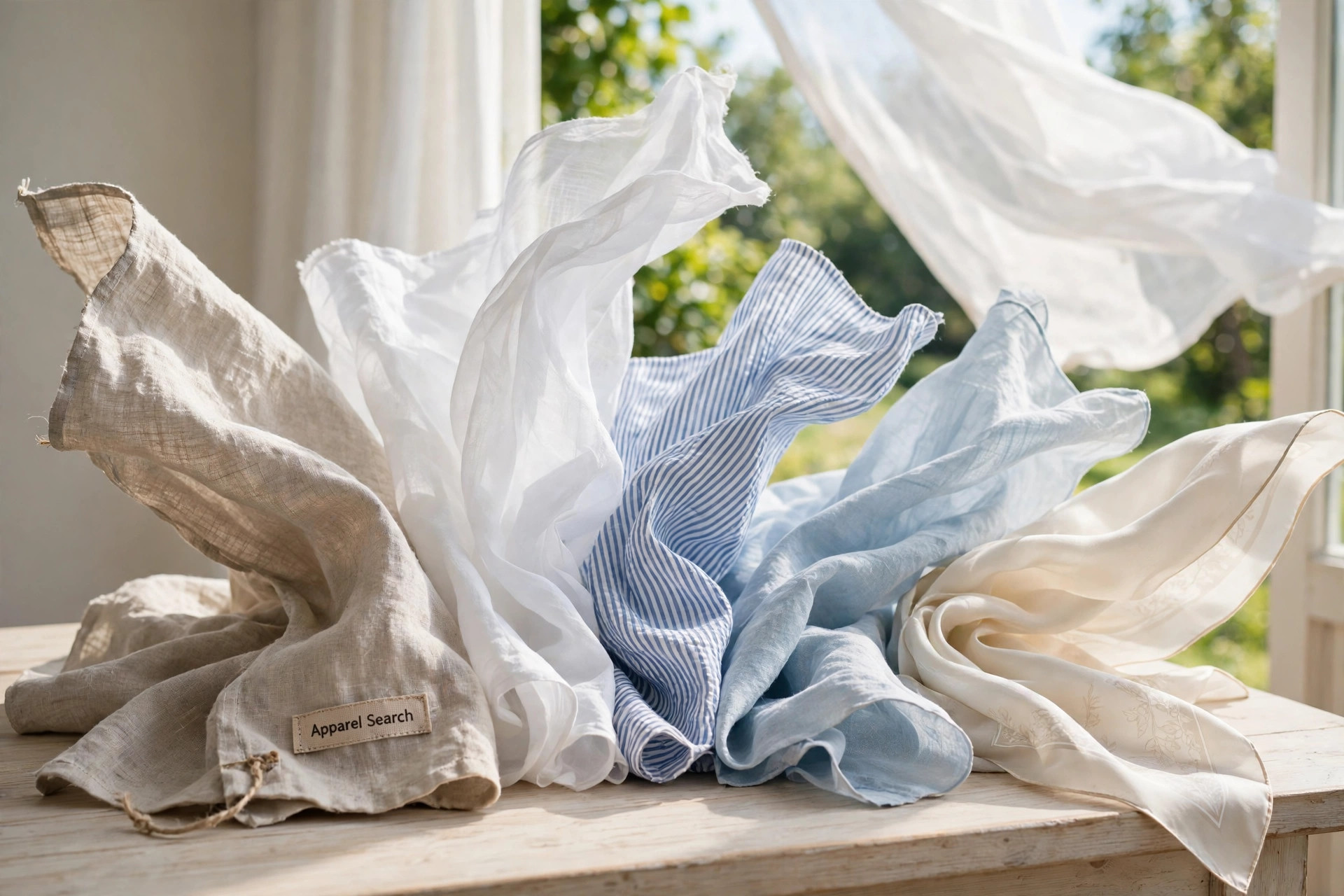
Shoppers use “lightweight” as if it were a single quality, but a fabric’s warm-weather behavior comes from three separate properties, and a cloth can score well on one and badly on another. The first is weight — the mass of cloth per area, quoted as GSM (grams per square metre) or ounces per square yard. Shirting at 100–130 GSM feels light; a fabric under 150 GSM generally wears light in any garment. Weight is the easiest property to check and the one printed on fabric listings, which is why it gets all the attention.
The second property is openness of construction. A loosely woven or knitted cloth lets air move through it, and moving air is what actually cools skin. This is why a midweight open-weave linen can feel cooler than a featherweight but densely woven synthetic: the scale says one thing, the airflow says another. Hold a fabric up to the light — if light and air pass easily, it will ventilate. The third property is fiber behavior: what the fiber does with heat and sweat. Plant fibers absorb moisture and release heat readily; linen is the standout, conducting warmth away from the body. Wool, surprisingly, manages moisture well even in light weights. Most synthetics absorb almost nothing, so sweat sits on the skin unless the fabric is engineered with channels and finishes to move it — the subject of the performance fabrics guide.
The practical lesson: judge a warm-weather fabric on all three. The comparison table in the next section scores the classic lightweight fabrics on exactly these terms, and the breathable fabrics term page defines the ventilation side of the story precisely.
02 — The Cloths
The Lightweight Fabrics, One by One
| Fabric | Weight & weave | How it wears | Best uses & watch-outs |
|---|---|---|---|
| Linen | Light to midweight; plain weave, naturally open | The coolest classic cloth; absorbs moisture, dries fast, softens with washing | Shirts, trousers, dresses, suits. Creases sharply — the rumple is part of its character; blends with cotton crease less |
| Cotton lawn | Very light, fine smooth plain weave | Crisp, dry hand; breathable; holds a neat finish better than most light cloths | Blouses, summer dresses, shirts. Slightly sheer in white — check linings |
| Cotton voile | Featherweight, sheer, slightly crisp | Maximum airflow; floats over skin rather than touching it | Layered dresses, scarves, blouses over camisoles. Needs a layer beneath; delicate at seams |
| Seersucker | Light; puckered stripe weave | The pucker holds cloth off the skin, creating air channels — cool by construction | Suits, shirts, dresses. The texture is the look; ironing flattens the pucker that makes it work |
| Chambray | Light plain weave, colored warp and white weft | Denim’s appearance at a fraction of the weight; breathable and hard-wearing | Shirts, shirt-dresses, summer trousers. Quality varies — very thin versions wear out fast |
| Rayon / viscose | Light, fluid drape | Cool to the touch and absorbent; drapes beautifully in heat | Dresses, blouses, wide trousers. Shrinks and weakens when wet — gentle washing, no wringing |
| Tencel / lyocell | Light to midweight, smooth | Absorbs and releases moisture efficiently; smoother and stronger than rayon, resists creasing better | Travel clothing, dresses, shirts. Higher price reflects the closed-loop production |
| Silk | Very light for its strength; satin or crepe weaves | Temperature-regulating and smooth against skin; light silk crepe breathes well | Blouses, dresses, scarves. Water spots and sun damage are the enemies; lined garments last longer |
| Technical knits | Light engineered knits, usually polyester or nylon | Manages sweat by wicking rather than absorbing; dries fastest of all | Active and travel wear. Can hold odor over time; smooth faces pill less than brushed ones |
Two honorable mentions round out the shelf: cotton gauze, a very open, softly crinkled weave used in casual summer pieces and beach cover-ups, and lightweight merino, knitted fine enough for warm weather, which manages odor and moisture so well that travelers wear it for days — a standing exception to the idea that wool is only for winter.
03 — In Practice
Choosing for Heat, Humidity and Travel
The right lightweight fabric depends on which problem the weather is posing. In humid heat, where sweat does not evaporate, the winners are the fabrics that hold themselves off the skin and move air: seersucker’s pucker, open-weave linen, voile and gauze. Cling is the enemy — a fluid rayon dress that drapes beautifully in dry heat can plaster itself to the body in humidity. The full climate-side treatment, including fit and construction, is in What to Wear in Humid Weather. In dry heat, evaporation works, so absorbent fibers shine: linen, lawn and Tencel pull moisture away and let it go, and a slightly looser weave in any of them is comfortable at temperatures that would defeat a city shirt.
For travel, the ranking changes again: crease behavior and drying speed matter as much as coolness. Tencel and technical knits pack flat, wash in a sink and dry overnight; linen arrives creased and asks to be worn that way; seersucker’s texture hides creasing entirely, which is why it has been a traveler’s suiting for a century. One fabric family applies the same light-and-breathable logic to a single garment type throughout: the linen wide-leg trousers guide shows how weave, cut and airflow combine in a piece designed for heat. And for shoppers weighing the environmental side of these choices — natural versus regenerated versus synthetic — the sustainable fabrics guide compares the fibers on that axis.
In humidity, choose the fabric that stands off the skin. In dry heat, choose the one that drinks and dries. In a suitcase, choose the one that forgives.
04 — Keeping Them Alive
Care: Lightweight Means Less Margin
Light cloth wears out faster than heavy cloth for a simple reason: there is less of it. The same number of washes removes a larger fraction of a voile blouse than of a denim jacket, and stress concentrates at seams, buttonholes and fold lines. A few habits extend life considerably. Wash light fabrics gently and less often — airing between wears handles most refreshment — and dry them out of direct sun, which fades dyes and weakens both silk and linen fibers over time. Store folded rather than hung where the fabric is very light; a hanger’s shoulder points can distort a featherweight knit or bias-cut dress under its own (admittedly small) weight.
Fiber-specific cautions matter more at light weights. Rayon loses up to half its strength when wet, so it should never be wrung or lifted dripping from a basin. Silk spots with water and weakens in sunlight. Linen is the exception that thrives on washing — it softens and strengthens with care — but it should be pressed while slightly damp, or simply worn with its creases as the fabric’s signature. Technical knits ask for the opposite discipline: no fabric softener, which coats the wicking channels the fabric was engineered with. Treat lightweight fabrics as the precision instruments of the wardrobe — they do a job heavy cloth cannot, and they ask for a lighter hand in return.
05 — Good to Know
Common Questions
What is the coolest fabric for hot, humid weather?
Open-weave linen and seersucker share the title, for different reasons. Linen absorbs moisture, conducts heat away from the skin and dries quickly; seersucker’s puckered weave holds the cloth off the skin so air circulates beneath it. Cotton voile and gauze run close behind. The fabrics to avoid in humidity are clinging ones — fluid rayon and smooth synthetics that seal against wet skin.
Is linen always the best lightweight choice?
No — linen is the best choice for heat, but it creases heavily, can feel coarse in cheap grades, and its relaxed surface does not suit every setting. For a polished office in summer, cotton lawn or a linen-cotton blend gives most of the coolness with a neater finish. For travel, Tencel or seersucker usually beats linen because they arrive presentable. Choose by the day’s demands, not by a single ranking.
What does GSM mean, and what counts as lightweight?
GSM is grams per square metre — the standard measure of fabric weight. As a rough map: under 100 GSM is featherweight (voile, gauze, light silk), 100–150 GSM is light shirting and dress weight, 150–250 GSM is midweight, and above that a fabric stops behaving as a lightweight cloth whatever its fiber. Weight is only one of three factors, though: weave openness and fiber behavior matter just as much to how cool a fabric wears.
Do lightweight fabrics last as long as heavier ones?
Generally not, and it is simple arithmetic: there is less material to wear away. A lightweight garment’s life is decided at its stress points — seams, buttonholes, elbows, seat — long before the main panels fail. Gentle washing, airing between wears, shade drying and folded storage close much of the gap, and well-made light fabrics in linen or Tencel can outlast careless heavier ones. Buy the best construction you can at light weights; the margin for cheap making is smallest there.
More to Explore
Search Apparel Search