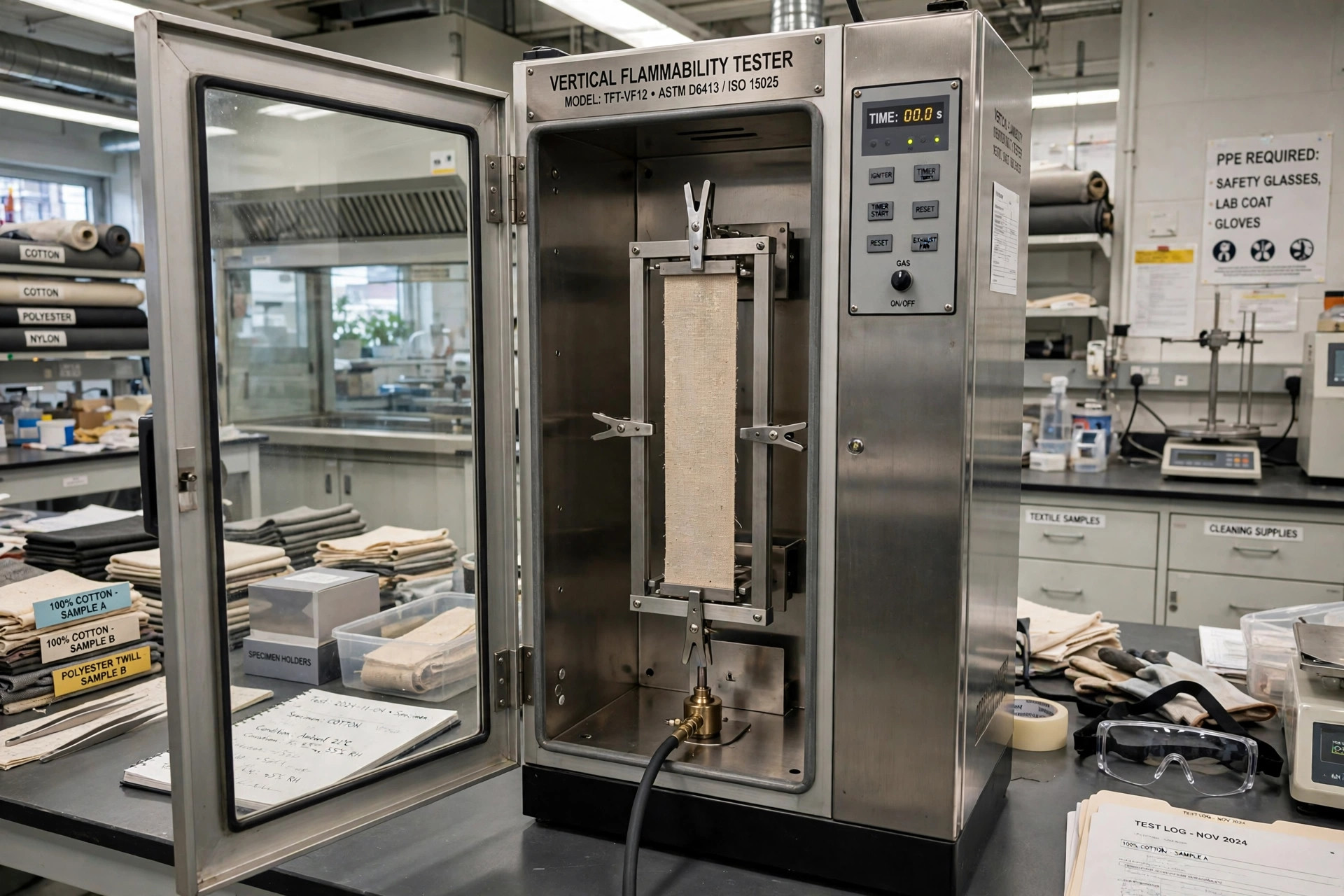
Most textile testing is a private agreement between buyer and seller. Flammability testing is different: in the United States it is federal law. Within the Textile Testing & Quality Standards Guide, this is the section where a failed result does not mean a renegotiation — it means the product cannot be sold. Our pages on flammability and the Flammable Fabrics Act give the background; this guide explains the standards and the testing.
The law behind clothing flammability in the U.S. is the Flammable Fabrics Act, enforced by the Consumer Product Safety Commission (CPSC). It produced two tiers of regulation: a baseline standard that every yard of wearing-apparel fabric must meet, and a much stricter standard for the highest-risk category — children's sleepwear, where loose garments, nighttime and open flames historically combined with tragic results.
The General Wearing Apparel Standard: 16 CFR 1610
The Standard for the Flammability of Clothing Textiles, 16 CFR 1610, applies to fabrics and garments for general wearing apparel. In the test, a specimen is held at a 45-degree angle in a cabinet, a standardized flame is applied to its surface for one second, and the time the flame takes to spread across a set distance is measured. Fabrics are classified by that behavior:
- Class 1 — Normal flammability. Flame spread is slow enough (or the fabric does not ignite, or burns without rapid spread) that the fabric is acceptable for clothing.
- Class 2 — Intermediate flammability. Applies to certain raised-fiber-surface fabrics that burn faster; still acceptable, with conditions on the fiber surface type.
- Class 3 — Rapid and intense burning. The fabric is considered dangerously flammable and is prohibited in wearing apparel.
Some fibers behave so predictably that the regulation treats them as reliably Class 1 by composition — plain-surface fabrics of certain fibers such as acrylic, modacrylic, nylon, polyester and wool at sufficient weight among them — but the obligation remains on the seller to be able to support compliance, and raised-fiber surfaces (brushed, fleeced, flocked) get extra scrutiny because surface fibers ignite and flash far faster than the base fabric. Anyone importing apparel into the United States is responsible for this compliance whether or not a buyer's lab package mentions it.
Children's Sleepwear: 16 CFR 1615 and 1616
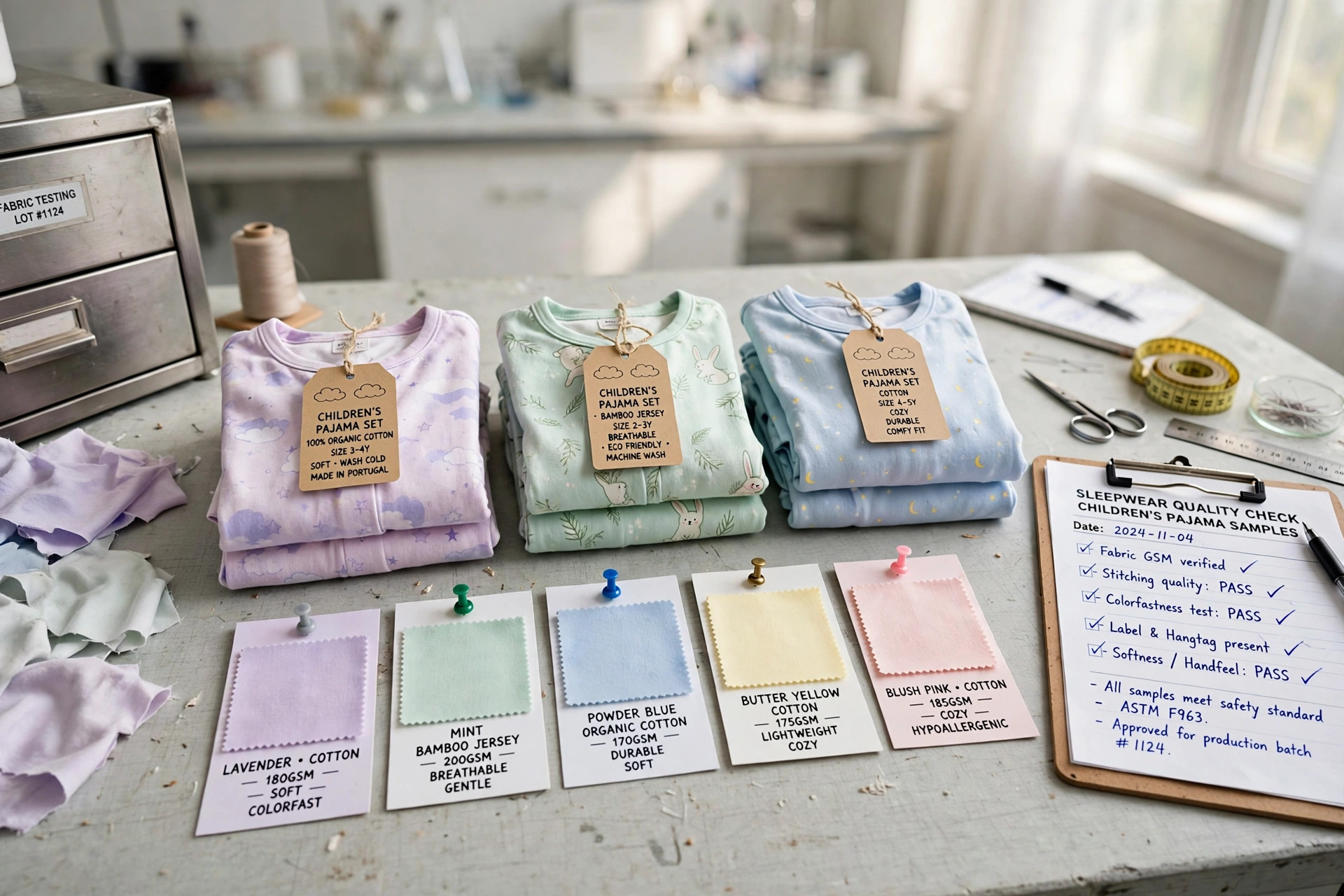
Children's sleepwear is regulated separately and far more severely under 16 CFR 1615 (sizes 0–6X) and 16 CFR 1616 (sizes 7–14). The test is a vertical one: specimens are suspended, ignited at the bottom edge, and the char length — how far the burn damage travels — is measured. Specimens must self-limit: average char length must stay within the standard's limit and no individual specimen may char its full length. Testing applies to the fabric, and then again to garments — seams and trims included — and production units must be sampled and tested according to the standards' detailed sampling plans, with records kept.
There are two lawful routes to market for children's pajamas. The fabric can pass the sleepwear standard — historically achieved with flame-retardant treatments or inherently resistant fibers such as polyester — or the garment can qualify for the snug-fitting exemption: pajamas made to specified tight dimensions, carrying the required hangtags and labels explaining they are not flame resistant and should fit snugly. The snug-fitting route is why most cotton children's pajamas are sold as fitted styles with yellow hangtags. Either way, this is a category where a brand's testing program is a legal compliance program, documented unit by unit — the stakes described in our testing labs guide for choosing accredited labs apply here with full force.
How Burn Results Are Used in Practice
For most apparel, flammability testing is a gate at fabric approval: the mill's fabric is classified, and Class 3 behavior ends the discussion. Problems usually arrive disguised — a brushed or fleeced surface added for softness, a novelty flocked print, a very light plain fabric in a fiber that burns freely. Each construction change re-opens the question, which is why experienced sourcing teams re-test when a fabric's surface or finish changes, not just when the fiber changes.
Beyond the U.S., other markets run their own regimes — the UK has long had specific nightwear rules, and other jurisdictions regulate children's sleepwear and general apparel differently. Export programs should test to the rules of the destination market. This guide summarizes the U.S. framework for orientation; the Code of Federal Regulations text and CPSC guidance are the governing documents, and compliance decisions belong with qualified labs and counsel.
Common Questions
- What is 16 CFR 1610?
- It is the U.S. Standard for the Flammability of Clothing Textiles — the federal requirement for general wearing apparel fabrics. Specimens are ignited at a 45-degree angle and classified by flame spread: Class 1 (normal) and Class 2 (intermediate) are acceptable; Class 3 (rapid and intense burning) is prohibited in clothing.
- Why are children's pajamas tested more strictly?
- Because sleepwear combines loose fit, nighttime wear and proximity to ignition sources. Under 16 CFR 1615 and 1616, children's sleepwear must pass a vertical char-length test at fabric, garment and production-unit level — or qualify as snug-fitting with the required labels.
- Does every garment need a burn test?
- Every wearing-apparel fabric must comply with 16 CFR 1610, though some fiber and weight combinations are treated as reliably compliant. Raised-fiber surfaces and children's sleepwear require particular attention and, for sleepwear, documented production testing.
- What happens if a fabric fails flammability testing?
- A Class 3 fabric cannot legally be used in U.S. wearing apparel. Unlike commercial tests, there is no negotiation with the buyer — the product cannot be sold, and goods already imported can be refused or recalled.
Back to the Textile Testing & Quality Standards Guide
The full guide to fabric and garment testing — every test family, the standards behind them, and how to read a lab report.