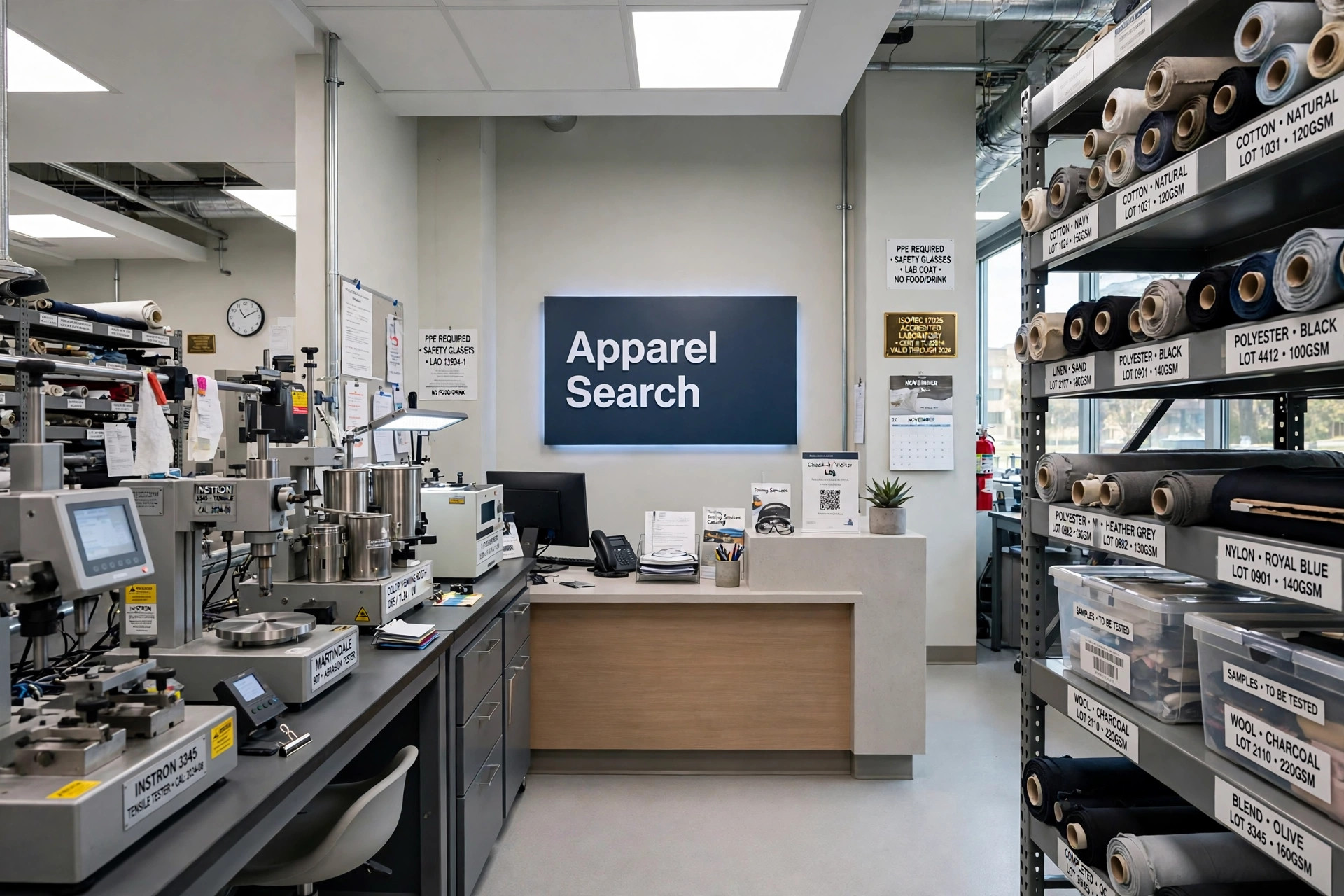
A test result is only as good as the laboratory behind it. This final section of the Textile Testing & Quality Standards Guide covers how to choose a lab — accreditation, scope, the buyer's own approval list — and how to check that the report you receive is complete enough to act on.
Textile testing labs range from global inspection-and-testing companies with laboratories on every continent to small independent labs serving regional mills. The right choice is rarely the cheapest or the nearest: it is the lab whose results the buyer accepts, for the methods your products need, at a speed your production calendar can live with. A perfect report from a lab the buyer does not recognize can be worth less than no report at all — the tests simply get run again, at your expense, on your timeline.
Accreditation: ISO/IEC 17025

The credential that matters is accreditation to ISO/IEC 17025, the international standard for the competence of testing and calibration laboratories. Accreditation is granted by a recognized accreditation body after assessment of the lab's quality system, equipment calibration, staff competence and method validation. Two checks separate a real claim from a logo:
- Check the scope, not just the certificate. Accreditation covers a listed scope of specific methods. A lab accredited for colorfastness is not automatically accredited for flammability. The scope document names the methods — ask for it, and match it against the tests you need.
- Check the accreditation body. The certificate names the body that granted it; recognized bodies can be verified, and the lab's status can be confirmed current.
Regulated work raises the stakes further: children's products sold in the U.S. must be tested by CPSC-accepted laboratories for the applicable rules, which is a separate, checkable listing.
Buyer Programs, Turnaround and Cost
Most major brands and retailers maintain approved-lab programs: lists of laboratories whose results they accept, sometimes with required report formats and direct data feeds into the buyer's quality system. Before commissioning tests, confirm the lab is on your buyer's list for your product category. Submitting results from an unlisted lab is the most common — and most avoidable — testing mistake in the supply chain.
Practically, compare labs on:
- Turnaround. Routine packages are typically quoted in working days; rush service exists at a premium. Build testing time into the production calendar rather than paying rush fees every season — and remember that failed results consume calendar twice.
- Sample requirements. Each test consumes fabric. The lab's submission form states how much material per test and per color; sending too little stalls everything.
- Cost structure. Tests are priced per test or as a package per style/color. Testing has a real line in the garment's economics — see how it sits in a cost sheet in our Garment Costing & Production Economics Guide.
- Location. Testing near the mill catches fabric problems before cutting; testing near the buyer speeds approvals. Many programs split the difference: bulk fabric tested at origin, compliance tests at a buyer-approved lab.
What a Complete Test Report Should Contain
Whether you commission the test or receive the report from a supplier, check it for these elements before accepting its conclusion:
- Lab identification and accreditation details — who tested, and under what accreditation.
- Sample identification — style, color, fabric description and lot, matching the goods in question. A report about a different dye lot is a report about different fabric.
- Named methods, with options — the standard and the procedure choices used (for example, which wash procedure). Unnamed methods make results unrepeatable.
- The requirement — the buyer's limit the result was judged against, stated on the report.
- Results and conclusion — measured values or grades, per direction or specimen where the method requires, and an explicit pass/fail.
- Dates and signatures — when the sample was received and tested, and who authorized the report. Testing performed after shipment is a red flag, not a formality.
Keep reports organized by style, color and lot across seasons. When a fabric drifts — a new dye lot grading half a step lower each delivery — the file shows it before your customers do. For the equipment side of laboratories, see our machinery and testing lab equipment resources.
Common Questions
- What accreditation should a textile testing lab have?
- Accreditation to ISO/IEC 17025 from a recognized accreditation body — and, critically, a scope that lists the specific test methods you need. For U.S. children's products, the lab must also be CPSC-accepted for the applicable rules.
- Why does it matter which lab my supplier uses?
- Because most brands accept results only from approved laboratories. A report from an unlisted lab may have to be re-run at an approved one, costing money and time, even if the original testing was done perfectly.
- How long does textile testing take?
- Routine packages are typically a matter of working days, with faster rush service available at extra cost. Build the turnaround — plus a margin for re-tests after a failure — into the production calendar.
- What should I check first on a lab report?
- That the sample is actually your goods (style, color, lot), that every method is named with its options, and that the requirement the lab judged against matches your specification. Then read the results.
Back to the Textile Testing & Quality Standards Guide
The full guide to fabric and garment testing — every test family, the standards behind them, and how to read a lab report.