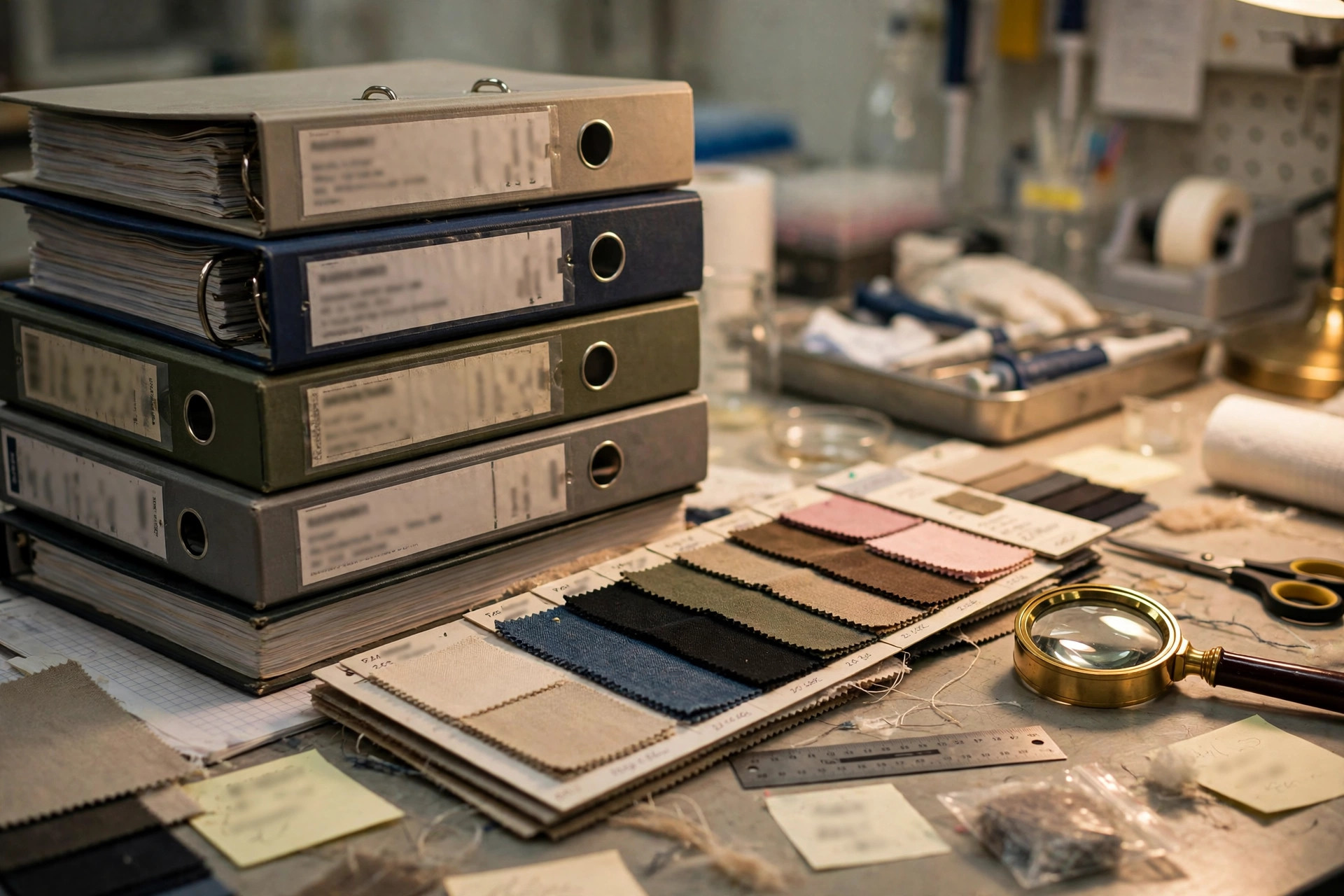
Every number on a textile lab report traces back to a published method written by a standards body. In North American apparel testing, two organizations dominate: AATCC and ASTM International. This page — the reference point for the whole Textile Testing & Quality Standards Guide — explains what each body does and decodes the method numbers buyers and labs cite most.
A standard method is a recipe precise enough that different laboratories, on different equipment, in different countries, get the same result from the same fabric: specimen size, conditioning, machine settings, procedure, and how the result is calculated or graded. Without that precision, a "pass" in one lab and a "fail" in another would mean nothing. Methods are written by committees of industry volunteers — mill, brand, lab and academic experts — and are revised as technology and products change.
One distinction runs through everything below: methods describe how to measure; they do not set the passing grade. The requirement — the minimum grade or value — comes from the buyer's specification. Confusing the two is the most common misreading of a lab report.
AATCC: The Color and Wet-Processing Authority
AATCC (the American Association of Textile Chemists and Colorists) built its reputation on dyeing, finishing and color — its methods dominate colorfastness and laundering-related testing. The numbers seen most often:
- AATCC 8 — Colorfastness to Crocking. The rubbing test: a white cloth is rubbed against the specimen, dry and wet, and graded for transferred color. See the colorfastness guide.
- AATCC 16 — Colorfastness to Light. Exposure testing under a controlled light source, graded against blue wool references.
- AATCC 61 — Colorfastness to Laundering: Accelerated. The accelerated wash test that approximates repeated home laundering in a single laboratory cycle, grading color change and multifiber staining.
- AATCC 135 — Dimensional Changes of Fabrics After Home Laundering. The benchmark shrinkage method behind the results in our shrinkage guide.
AATCC also publishes the grey scales used for grading and technical manuals of its full method library. Where a test concerns color, washing, or wet processing, an AATCC number is the one most likely to appear on the report.
ASTM: The Physical and Mechanical Authority
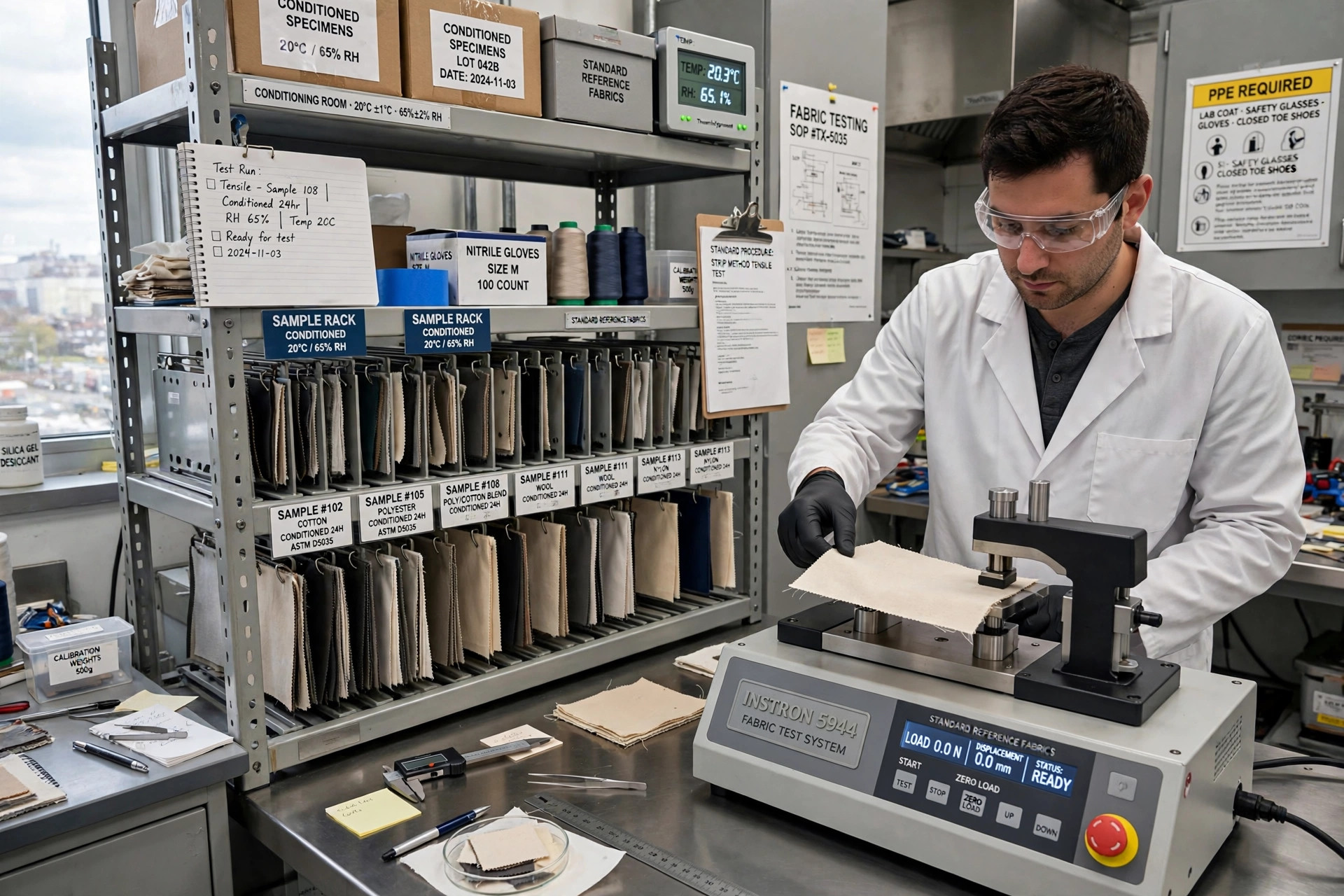
ASTM International writes standards across all industries; its textile committee (D13) covers the physical and mechanical side of fabrics — strength, wear, construction and terminology. The most-cited apparel methods:
- ASTM D5034 — Breaking Strength and Elongation (Grab Test). The standard tensile method for most apparel fabrics; see the strength guide.
- ASTM D4970 — Pilling Resistance (Martindale Tester). The Martindale pilling method; see the pilling and abrasion guide.
- ASTM D3776 — Mass Per Unit Area (Fabric Weight). How fabric weight (for example in grams per square meter) is measured — the quiet check that a fabric was delivered at the weight ordered.
- ASTM D123 — Terminology Relating to Textiles. The shared dictionary: official definitions that keep contracts, specifications and reports meaning the same thing to everyone who reads them.
Beyond the Big Two
U.S. federal flammability rules (16 CFR 1610 and the children's sleepwear standards, covered in our flammability guide) are law, not voluntary methods. Internationally, ISO methods parallel many AATCC and ASTM procedures, and European programs often cite ISO numbers for the same properties; an export specification should name the system it uses, because results between systems are comparable in spirit but not always interchangeable in detail. Laboratory accreditation — ISO/IEC 17025 — sits above all of it, certifying that a lab is competent to run the methods it offers; our testing labs guide explains how to check.
For definitions of individual textile terms, ASTM D123 and our own fabric testing methods glossary are good starting points, and AATCC and ASTM both publish their full catalogs online.
Common Questions
- What is the difference between AATCC and ASTM methods?
- AATCC methods center on color, dyeing and wet processing — colorfastness, laundering, dimensional change. ASTM's textile methods center on physical and mechanical properties — strength, pilling, fabric weight — plus shared terminology. A typical apparel lab report cites both.
- Does a standard method say whether a fabric passes?
- No. A method defines how the property is measured. The pass/fail requirement comes from the buyer's specification or quality manual. The lab report places the measured result next to the buyer's requirement and states the conclusion.
- What does AATCC 61 test?
- AATCC 61 is the accelerated laundering colorfastness method. One controlled laboratory cycle approximates the effect of repeated home laundering, and the specimen is graded for color change and for staining of an attached multifiber strip.
- Why do lab reports from different labs sometimes disagree?
- Borderline specimens, grading by eye, conditioning differences and method options can all move a result slightly. Accredited labs, named methods with stated options, and retained specimens for re-test keep disagreements rare and resolvable.
Back to the Textile Testing & Quality Standards Guide
The full guide to fabric and garment testing — every test family, the standards behind them, and how to read a lab report.