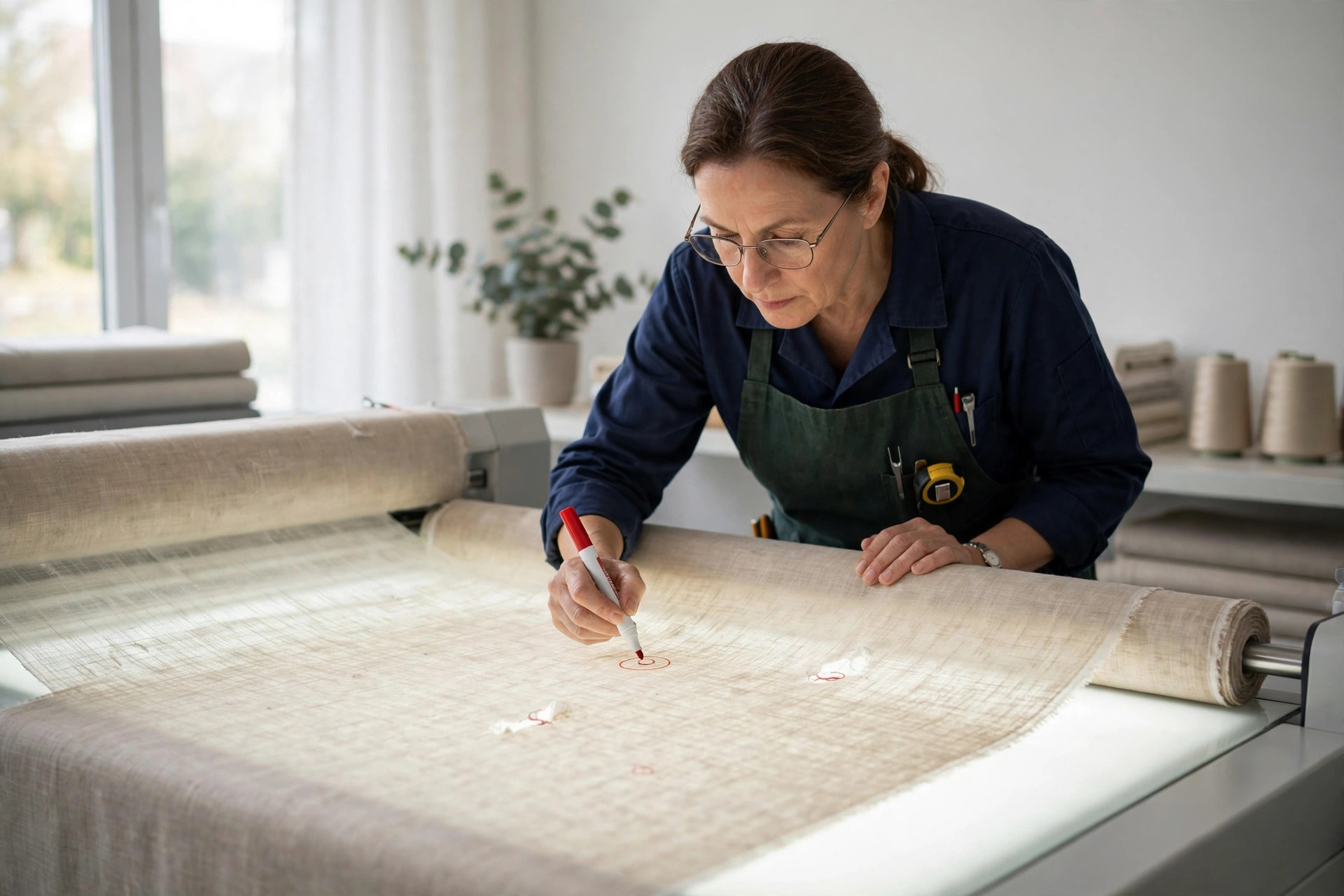
The 4-point system is the most widely used method for inspecting woven and knitted fabric: an inspector examines the cloth on an inspection machine, assigns each defect 1 to 4 penalty points according to its size, and totals the score for the roll. Inspecting fabric before cutting is the cheapest quality gate in garment production — a defect found on the roll costs pennies; the same defect found in a finished, shipped garment costs the whole garment.
How Points Are Assigned
Points follow defect length (for running defects, the longer dimension governs): defects up to 3 inches score 1 point; over 3 up to 6 inches, 2 points; over 6 up to 9 inches, 3 points; and over 9 inches, 4 points — the maximum any single defect can score. Holes and openings larger than about an inch typically score the full 4 points. No more than 4 points are counted in any single linear yard, however many defects it contains. Typical scored defects include slubs, missing or broken yarns, barre, oil spots, holes, misweaves, and printing faults; the related vocabulary is collected in the site’s fabric defect terms.
Rolls are scored as points per 100 square yards: (total points × 3,600) ÷ (inspected length in yards × width in inches). A widely used commercial acceptance level is around 40 points per 100 square yards, but the limit is a contract term, not a law of nature — premium shirting buyers set it lower, utility fabrics higher. Agree the limit, the inspection percentage (10% of rolls is a common sampling practice), and the remedy before the fabric ships.
The Inspection Itself
Fabric runs over a lighted inspection frame at a controlled speed while the inspector marks defects with stickers or chalk at the selvedge so cutters can work around them, and records counts by defect type. A good inspection report therefore does two jobs: it passes or fails the roll, and it tells the mill which defects are recurring — feedback that fixes weaving or finishing problems at source. This is piece-goods inspection, one stage of the wider quality system described in the piece goods inspection term page and the in-process quality control page.
Fabric Inspection Is Not AQL Garment Inspection
Do not confuse the two gates. The 4-point system scores fabric, roll by roll, before cutting. AQL inspection samples finished garments and passes or fails a shipment by counting defective units against an acceptable quality level. Apparel Search already maintains a dedicated AQL section, and this guide deliberately does not duplicate it: start with the AQL clothing inspection guide, then the level-specific pages for AQL 2.5 and AQL 4.0, and the AQL glossary of terms. A sound quality plan uses both systems, each at its own stage — plus the shade control described in our shade band guide.
FAQs
- What is the 4-point system in fabric inspection?
- A scoring method that assigns each fabric defect 1–4 points by size, totals them per roll, and expresses the result as points per 100 square yards for pass/fail decisions.
- What is an acceptable 4-point score?
- Around 40 points per 100 square yards is a common commercial level, but buyers set their own limit by fabric and end use. The agreed contract figure is what counts.
- How is the 4-point system different from AQL?
- 4-point inspects fabric before cutting; AQL samples finished garments before shipment. They are separate gates at separate stages — see the linked AQL section for the garment system.
- What defects score points?
- Slubs, holes, broken or missing yarns, barre, spots, misweaves, and print faults, scored by the defect’s length, with holes typically scoring the maximum 4.
More B2B Production Guides
This guide is part of the Apparel Search B2B production series on specifications, printing, dyeing, trade terms, and compliance. Browse the full series below, or start from the manufacturing guides hub.
Spec, Measure & Inspect
- Spec Sheet
- Points of Measure
- Shade Band
- Fabric Inspection: 4-Point System (this guide)
Print Methods
Dye Methods
Trade & Compliance
Apparel Search: explore the manufacturing guides hub and production & sourcing resources for the fashion industry.