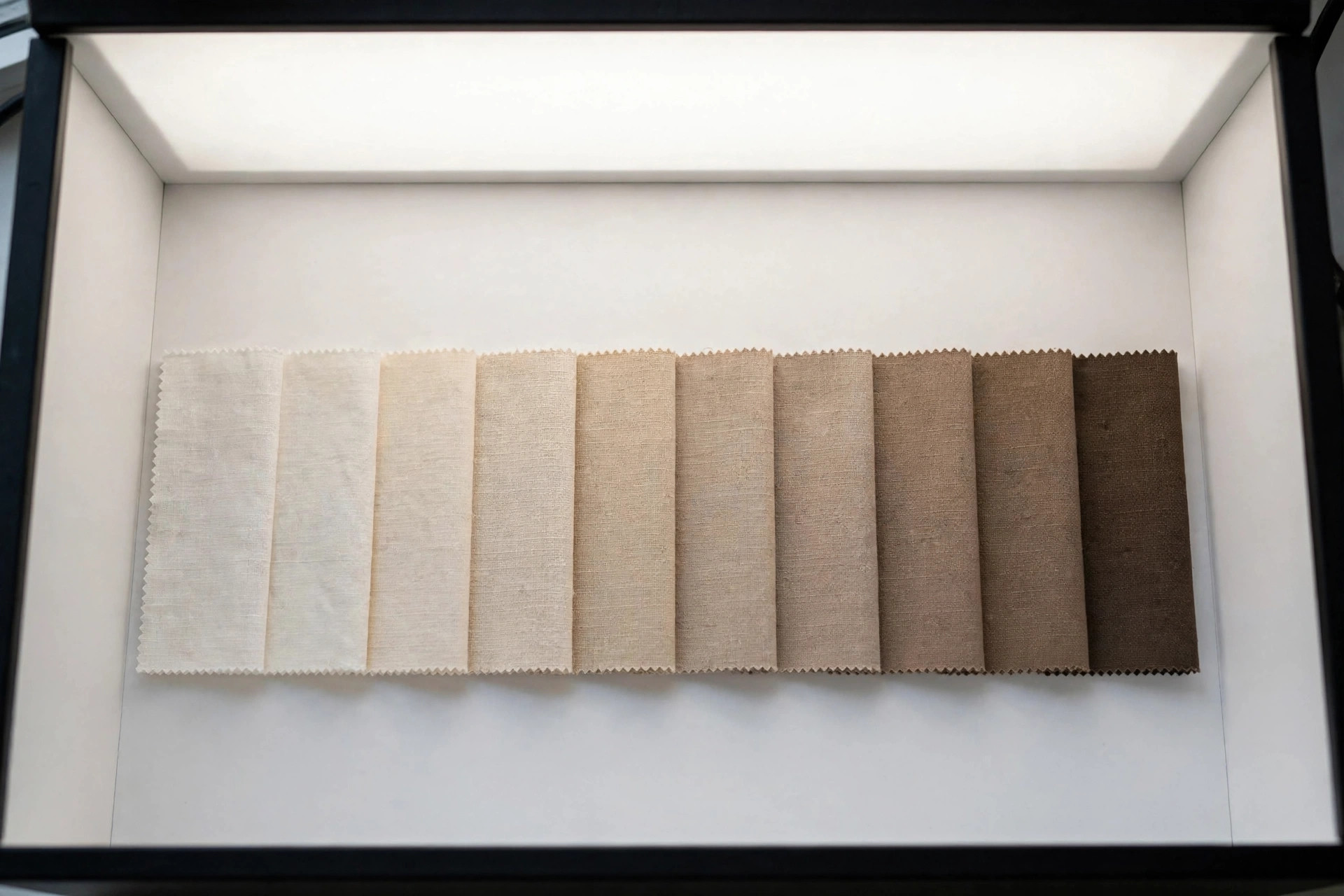
A shade band is the approved range of color variation for a fabric or garment: a set of physical samples running from the lightest acceptable shade to the darkest, with the target standard in the middle. Bulk production is judged against the band, not against a single perfect swatch — because dyeing is a chemical process, and lot-to-lot variation within a controlled range is normal, expected, and managed rather than eliminated.
How a Shade Band Is Built
The process starts with the lab dip: the dyehouse submits samples, the brand approves one as the standard, and production dyeing begins. From the first bulk lots, the brand (or its inspector) selects swatches that sit at the acceptable extremes — slightly lighter, slightly deeper, a touch redder or bluer — and mounts them as the band. Every later lot is compared against that range under standardized lighting. Lots inside the band pass; lots outside it are re-dyed, sorted, or rejected before cutting.
Why It Matters: Shade Within a Garment
Shade variation is most dangerous within one garment or one retail delivery. A jacket whose sleeves were cut from a different lot than its body can show a visible two-tone effect, and a store rail of the same style in visibly different shades looks like a defect to customers even when every piece is ‘in band’ individually. Factories manage this with shade sorting (sometimes called shade grouping): rolls are grouped by lot, cut separately, and garments are sewn and packed within groups so any variation sits between deliveries, not within a size run on one rail.
Judging Shade Fairly
Shade calls are made under a standard light source — typically a D65 daylight simulator in a light box — because colors shift under store, office, and street lighting (metamerism). The band, the standard, and the bulk must all be judged in the same booth, by the same method, ideally with the same fabric construction and finish, since texture changes perceived color. Brands that skip the band and judge bulk against a single lab dip invite disputes: the dyehouse says ‘commercially acceptable’, the brand says ‘off shade’, and only a pre-agreed physical band settles it. The related approval for printed fabric is the strike-off.
FAQs
- What is a shade band in textiles?
- A set of approved physical samples showing the lightest-to-darkest acceptable color range for production. Bulk lots are passed or failed against the band.
- Who approves the shade band?
- The brand or buyer, working from the approved lab dip standard and the dyehouse’s first bulk lots. Both sides should hold an identical copy.
- Can one garment contain two shades?
- It should not. Factories shade-sort fabric lots and cut and sew within groups so panels in one garment come from the same lot.
- What happens to fabric outside the band?
- Depending on the contract: re-dyeing, downgrading to a different use, price claims, or rejection. The band agreed in advance is what makes any of those enforceable.
More B2B Production Guides
This guide is part of the Apparel Search B2B production series on specifications, printing, dyeing, trade terms, and compliance. Browse the full series below, or start from the manufacturing guides hub.
Spec, Measure & Inspect
- Spec Sheet
- Points of Measure
- Shade Band (this guide)
- Fabric Inspection: 4-Point System
Print Methods
Dye Methods
Trade & Compliance
Apparel Search: explore the manufacturing guides hub and production & sourcing resources for the fashion industry.