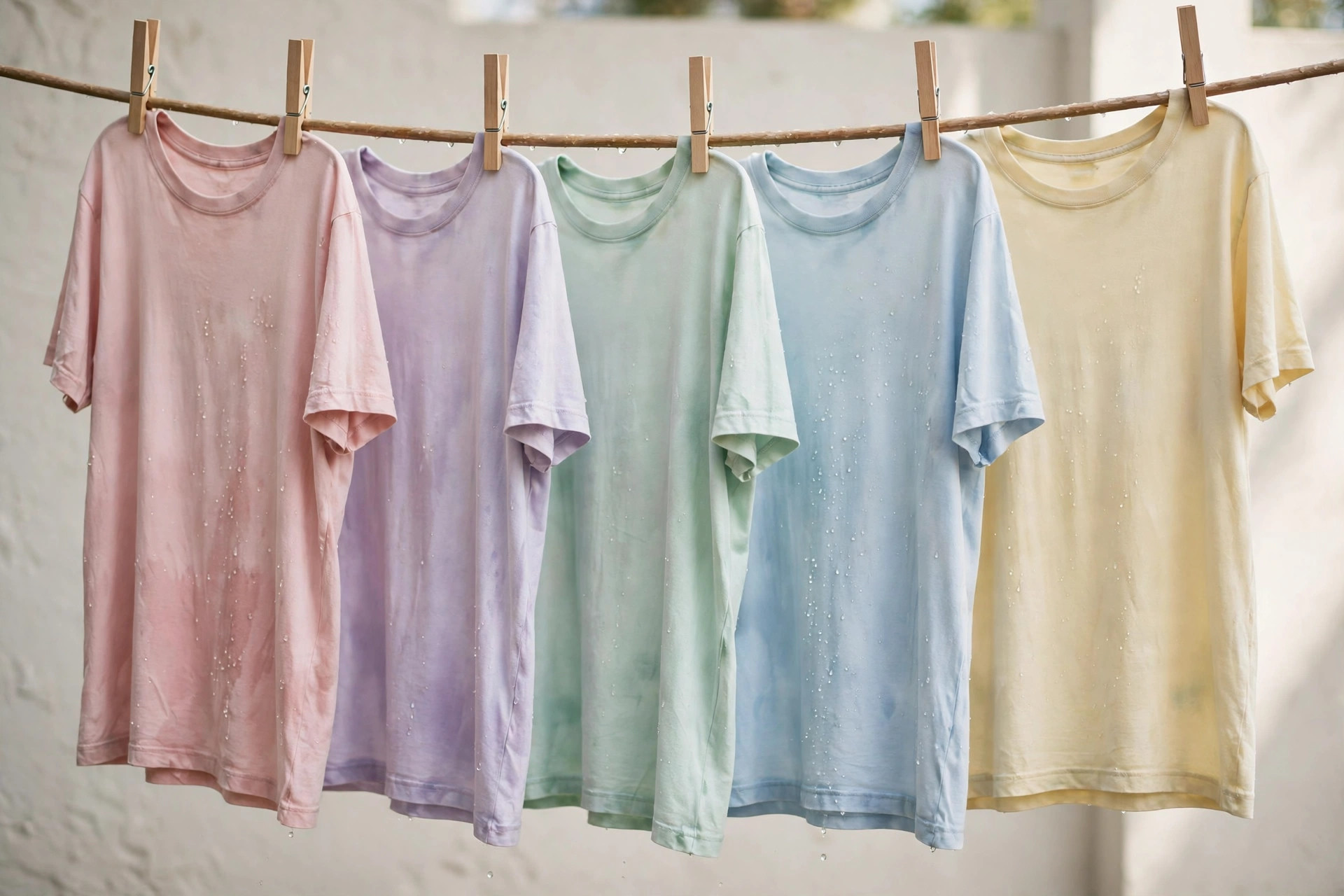
Despite the name, pigment dyeing is not dyeing in the chemical sense: pigments have no affinity for fiber, so they are applied with a resin binder that glues the color to the fabric surface, then cured. Because the color coats rather than penetrates, pigment dyeing produces the soft, uneven, sun-faded character of garment-dyed tees, sweatshirts, and caps — and it behaves differently from every true dye class in this series.
Why Brands Choose It
Pigment dyeing is usually done at the garment stage: blank garments are sewn from prepared-for-dye (PFD) fabric, then dyed, washed, and softened in one program. That inverts the normal order and buys real commercial advantages — color can be decided late, after seeing which styles sell; a single blank feeds many colorways; and the wash-down finish gives every piece a lived-in, slightly irregular character that piece-dyed goods cannot imitate. Pastels and sun-bleached mid-tones are its sweet spot; the process also works across fiber blends that no single true dye could color uniformly, since the binder does not care what fiber it coats.
The Trade-Offs: Crocking, Hand, and Fading
Surface color has surface weaknesses. Crocking — color rubbing off onto skin, upholstery, or the white sneaker next to it — is pigment dyeing’s signature fault, worst in deep shades; reputable programs test crocking and disclose it, and dark pigment garments should be washed before wear and worn carefully against light surfaces at first. The binder also adds a slightly papery hand until washing softens it, and continued fading with every wash is inherent: the look evolves, which is the appeal for vintage programs and a defect for anything sold as color-stable. Uniform buyers should look to vat or solution dyeing instead.
Specifying Pigment Programs
Put the process expectations in writing: target shade judged after the specified wash (pigment shades are approved post-wash, not off the dye machine), acceptable variation between pieces — garment dyeing varies more than piece dyeing, so a shade band approach applies — crocking test results, and the wash care label, which should honestly tell the customer the garment will soften and fade. Pigment printing, used in some water-based print systems, is the same binder logic applied through a screen.
FAQs
- Is pigment dyeing really dyeing?
- Technically no: pigments do not bond chemically with fiber. A resin binder fixes them to the surface, which is why the color fades and can crock like a coating, not a dye.
- Why do pigment-dyed shirts fade so fast?
- By design. The surface pigment abrades and washes away gradually, producing the vintage wash-down look. If you need stable color, choose a true dye class.
- What is crocking?
- Color rubbing off a fabric onto another surface through friction. Pigment-dyed goods, especially deep shades, crock more than true-dyed goods; testing and pre-washing reduce it.
- Can pigment dyeing be done on blends?
- Yes — a key advantage. Because the binder coats the surface, blends that would need two dye systems can be colored in one pigment process.
More B2B Production Guides
This guide is part of the Apparel Search B2B production series on specifications, printing, dyeing, trade terms, and compliance. Browse the full series below, or start from the manufacturing guides hub.
Spec, Measure & Inspect
Print Methods
Dye Methods
- Solution Dyeing (Dope Dyeing)
- Vat Dyeing
- Sulfur Dyeing
- Pigment Dyeing (this guide)
Trade & Compliance
Apparel Search: explore the manufacturing guides hub and production & sourcing resources for the fashion industry.