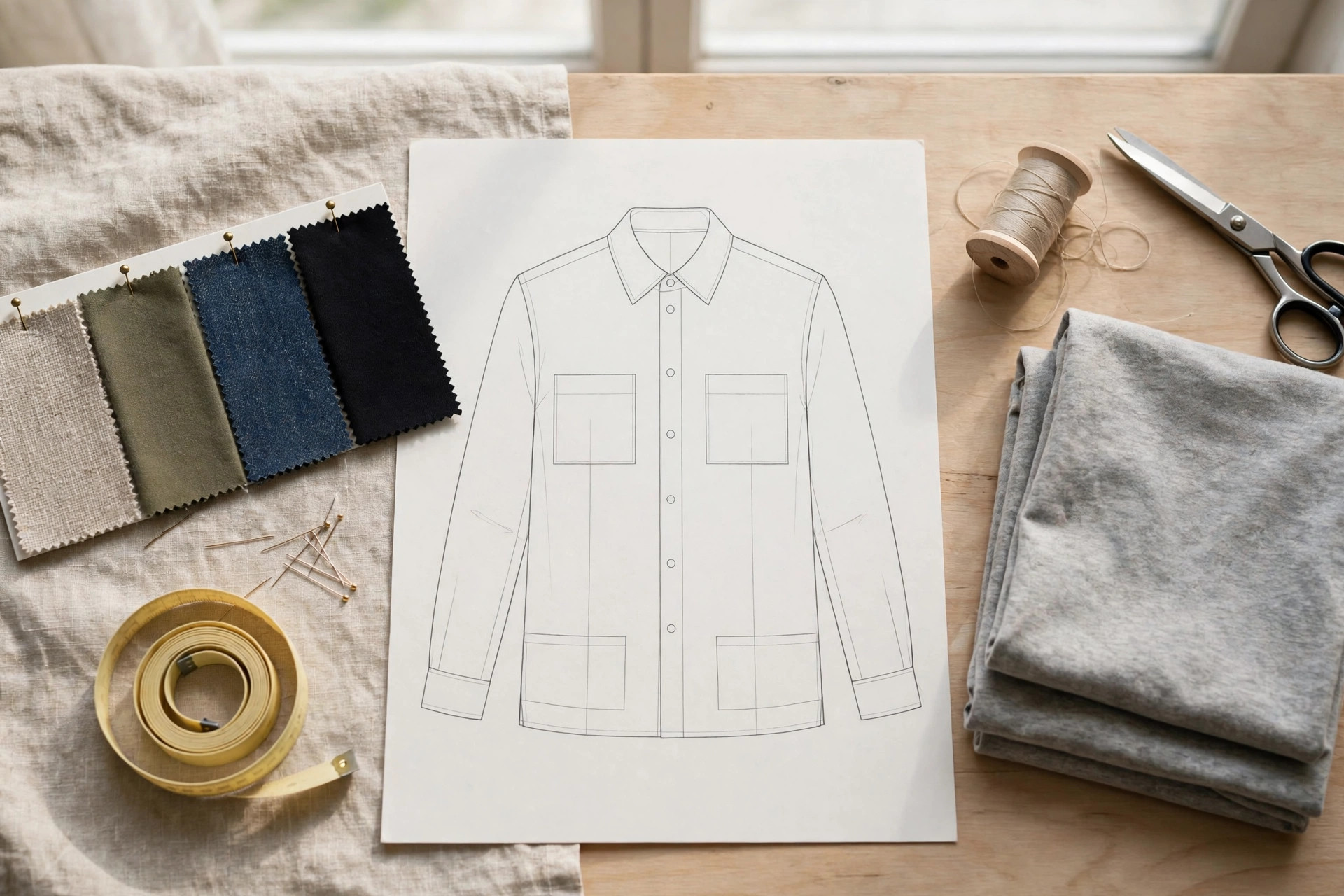
A garment spec sheet (specification sheet) is the control document for a style: it records the measurements, materials, construction details, tolerances, and quality requirements a factory must hit, size by size. Where a design sketch says what a garment should look like, the spec sheet says exactly what it must measure, what it must be made from, and how much variation is acceptable — which makes it the reference for sampling, costing, inspection, and disputes.
What a Spec Sheet Contains
A complete spec sheet normally covers five blocks of information. Style identification: style number, season, size range, colorways, and a front/back sketch or photo. Bill of materials: every fabric, trim, label, and thread, with supplier, content, weight, and placement. Construction: seam types, stitch density, seam allowances, and operations such as bartacks or topstitching. Measurements: the full points of measure table for every size, with tolerances. Packing and labeling: fold, polybag, carton, barcode, and care-label requirements.
Good spec sheets are unambiguous: every entry is a number, a named material, or a yes/no requirement — never an instruction like ‘make it look nice’ that two people can read two ways.
Spec Sheet vs. Tech Pack
The terms overlap, and factories use them loosely. In the most common usage, the tech pack is the complete package — sketches, bill of materials, construction pages, artwork, and grading — and the spec sheet is the measurement-and-specification core of that package. Some brands issue a single combined document; others keep a separate spec sheet that travels with inspection teams. Either way, the measurement table is the part that gets checked against physical garments, so it deserves the most care. Our tech pack management guide covers organizing and versioning the full package.
Tolerances, Revisions, and Sign-Off
Every measurement carries a tolerance — the acceptable plus/minus around the target, often around ±½ inch on major points for woven garments and wider on knits, which stretch and recover. Tolerances are what inspectors measure against; a garment inside tolerance passes even if it is not exactly on spec. Spec sheets are living documents through development: each sample round produces comments and a revised spec, so date and number every revision, keep the superseded versions, and have the factory confirm in writing that it is building to the current one. Most production disputes trace back to two parties working from different revisions of the same sheet.
FAQs
- Is a spec sheet the same as a tech pack?
- Not exactly. The spec sheet is the measurement, materials, and construction specification; the tech pack is the wider package that usually contains it, plus sketches, artwork, and grading. Many brands combine them into one document.
- Who writes the spec sheet?
- Usually the brand’s technical designer or pattern team, working from the approved fit sample. The factory may format it, but the brand owns the numbers and tolerances.
- How detailed should a spec sheet be?
- Detailed enough that a new factory could make the garment without asking questions: every material specified, every measurement and tolerance listed, and every construction operation named.
- What happens if bulk production is off-spec?
- The spec sheet is the contract reference: garments outside tolerance are defects the factory must rework, sort, or discount. That is why revision control and written factory confirmation matter.
More B2B Production Guides
This guide is part of the Apparel Search B2B production series on specifications, printing, dyeing, trade terms, and compliance. Browse the full series below, or start from the manufacturing guides hub.
Spec, Measure & Inspect
- Spec Sheet (this guide)
- Points of Measure
- Shade Band
- Fabric Inspection: 4-Point System
Print Methods
Dye Methods
Trade & Compliance
Apparel Search: explore the manufacturing guides hub and production & sourcing resources for the fashion industry.