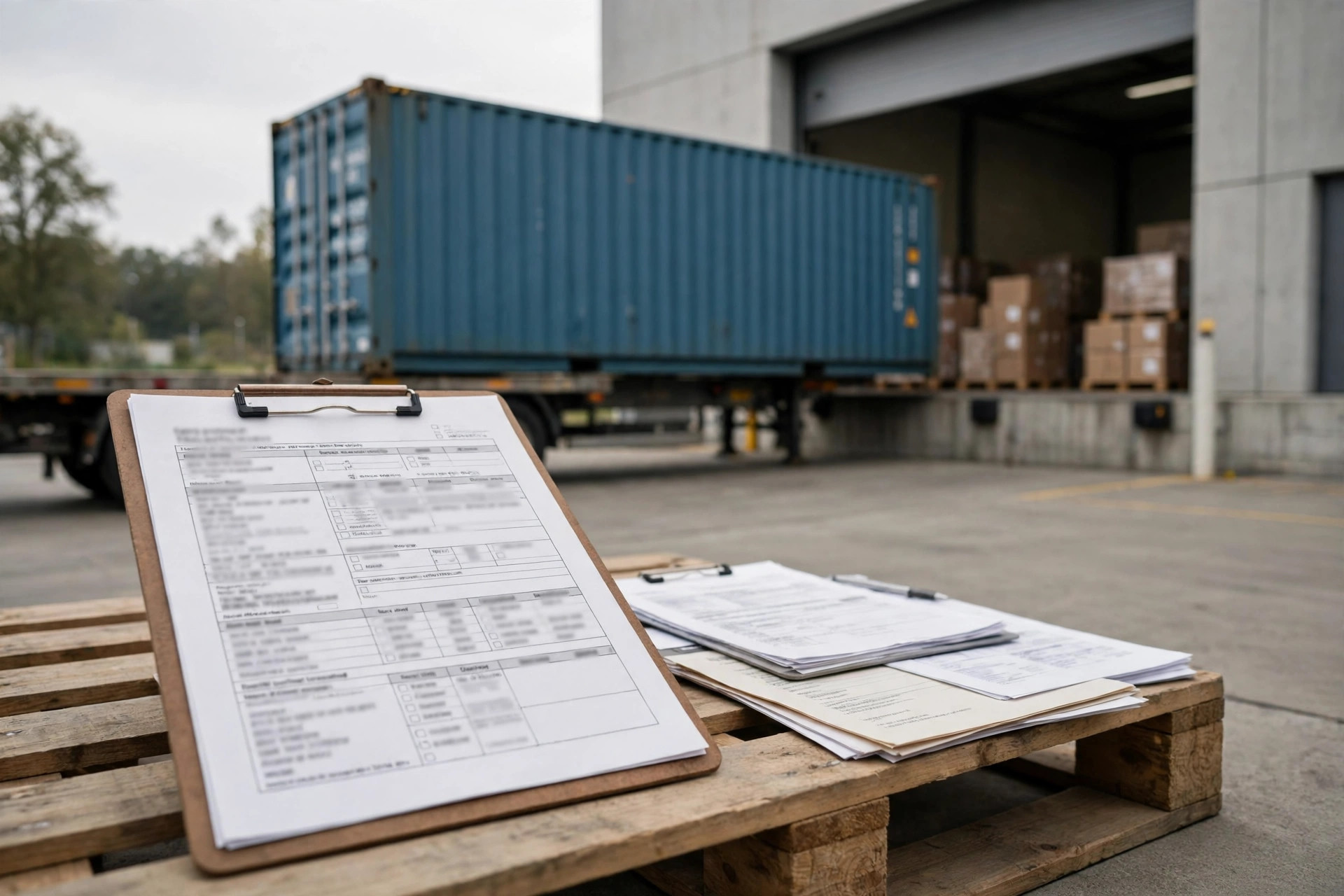
DDP — Delivered Duty Paid — is the Incoterm that places maximum obligation on the seller: the seller delivers the goods to a named destination in the buyer’s country, cleared for import, with duties and taxes paid, and bears the cost and risk of the entire journey until the goods are ready for unloading. For apparel buyers it promises a single, final price — and hides several risks inside that simplicity.
What the Seller Covers (and What You Still Do)
Under DDP (Incoterms® 2020) the seller arranges and pays for export clearance, main carriage, insurance choices if any, import customs clearance, duties, and import taxes, delivering to the named place — your warehouse, 3PL, or store. The buyer’s formal duties are minimal: unload, and provide information the seller needs. That is the attraction for small brands: no freight forwarder, no customs broker, no duty calculations. Use our landed cost calculator and garment cost sheet tool to reconstruct what a DDP quote must contain — goods, freight, duty at the correct apparel tariff rate, brokerage, and delivery — before judging whether it is cheap or expensive.
The Importer-of-Record Trap
Here is the part DDP sellers gloss over: in the United States, the importer of record carries legal responsibility for the entry — correct classification, valuation, labeling compliance, and record-keeping — regardless of who paid the duty. A foreign factory often cannot act as a US importer of record in its own right and may route goods through intermediaries, under-declared values, or another party’s importer number. If customs finds undervaluation or mislabeling, the liability trail can still reach the brand that owns the goods. Prudent buyers ask, in writing: who is the importer of record, who is the customs broker, and can entry summaries be shared? A legitimate DDP program answers those questions without drama.
DDP vs. EXW vs. FOB
EXW (Ex Works) is DDP’s mirror image: the buyer collects at the factory gate and owns every cost and risk from there — cheapest factory price, heaviest buyer workload, and full visibility. FOB splits the journey at the origin port: the seller delivers goods on board the vessel, the buyer controls (and sees) freight and import. Our FOB glossary guide covers that split in detail. Choose DDP for simplicity on small, occasional orders once the seller’s import route is verified; choose FOB (or EXW with your own forwarder) as volumes grow, when per-unit transparency and customs control start paying for themselves. Either way, compare quotes only on a like-for-like delivered basis — a DDP price against an EXW price is a comparison between two different products.
FAQs
- What does DDP mean in shipping?
- Delivered Duty Paid: the seller delivers goods to a named place in the buyer’s country, import-cleared, with duties and taxes included in the seller’s obligations and price.
- Who is the importer of record under DDP?
- Formally the seller should handle import clearance, but a foreign seller often cannot be US importer of record directly. US liability follows the importer of record — always confirm whose name and number the entry uses.
- Is DDP more expensive than FOB?
- The DDP unit price is higher because it bundles freight, duty, and clearance. Whether it costs more overall depends on the seller’s rates versus your own forwarder’s — compare full landed costs, not unit prices.
- DDP or EXW for a first order?
- DDP is simpler and often sensible for a small first order from a verified seller. EXW gives lower prices and full control but requires your own freight and customs arrangements from the factory gate.
More B2B Production Guides
This guide is part of the Apparel Search B2B production series on specifications, printing, dyeing, trade terms, and compliance. Browse the full series below, or start from the manufacturing guides hub.
Spec, Measure & Inspect
Print Methods
Dye Methods
Trade & Compliance
- DDP Incoterms (this guide)
- Prop 65 for Apparel
- SA8000 Certification
- WRAP Certification
- bluesign
Apparel Search: explore the manufacturing guides hub and production & sourcing resources for the fashion industry.