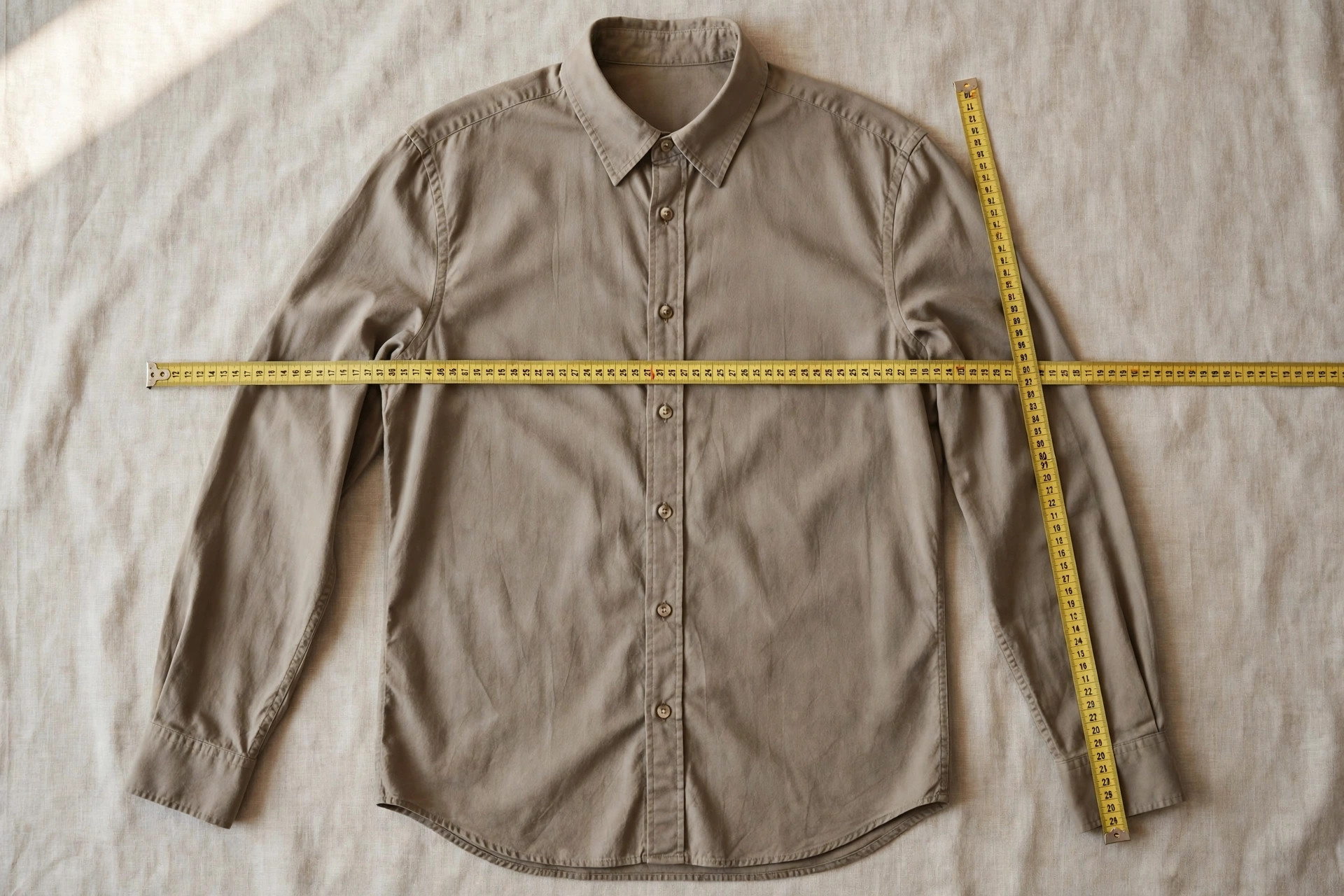
Points of measure (POM) are the standardized locations where a garment is measured — chest, waist, sleeve length, inseam, and dozens more — each with an agreed method for where the tape goes. POMs are the rows of the measurement table on a spec sheet: they let a brand in one country and a factory in another measure the same garment the same way and get the same number.
The Core POMs
Every garment category has its own POM list, but the core points recur. Chest/bust: across the garment at the armhole, usually doubled for full circumference. Waist: at the natural waist or the waistband, relaxed and sometimes stretched for knits. Hip: at the fullest point below the waist. Body length: from the highest point of the shoulder to the hem. Sleeve length: from shoulder point or center back, depending on the style. Inseam and outseam for bottoms, shoulder width, armhole depth, neck width and drop, and hem sweep complete most basic lists.
Whether a POM is recorded as a flat (half) measurement or a full circumference must be stated on the sheet — mixing the two in one table is a classic source of garments arriving exactly twice, or half, the intended size somewhere.
Method Matters as Much as the Number
A POM is really two things: a target number and a measuring method. ‘Chest 20 inches’ means little until the sheet says measured flat, 1 inch below the armhole, tape edge to edge, garment relaxed and smoothed but not stretched. Factories and inspectors measure against the method, not just the figure. Knits complicate this further: how long a garment rests after handling, and whether it is measured relaxed or extended, changes readings, which is why knit spec sheets spell the method out in words, not just diagrams.
Tolerances and Grading
Each POM carries a tolerance — tighter on fit-critical points like waist and chest, looser on less critical ones. POMs also drive grading: the grade rule states how much each point grows or shrinks between sizes, so the size set stays in proportion. When a fit problem appears, the fix is usually a POM change plus a grade-rule check, recorded on the revised spec sheet and confirmed on the next sample — see our guide to pre-production samples for where that confirmation happens.
FAQs
- What does POM stand for in apparel?
- Points of measure — the standardized points on a garment where measurements are taken, listed with methods and tolerances on the spec sheet.
- Are POMs measured on the body or the garment?
- On the garment, laid flat (or on a form where specified). Body measurements belong to size charts; POMs are garment measurements used for production and inspection.
- Why do two people get different POM readings?
- Usually method, not math: tape position, garment tension, and resting time on knits all change readings. A written measuring method on the spec sheet is the fix.
- How many POMs does a garment need?
- A simple tee may need 12–15; a tailored jacket can need 40 or more. Cover every point that affects fit, appearance, or function — no more, no fewer.
More B2B Production Guides
This guide is part of the Apparel Search B2B production series on specifications, printing, dyeing, trade terms, and compliance. Browse the full series below, or start from the manufacturing guides hub.
Spec, Measure & Inspect
- Spec Sheet
- Points of Measure (this guide)
- Shade Band
- Fabric Inspection: 4-Point System
Print Methods
Dye Methods
Trade & Compliance
Apparel Search: explore the manufacturing guides hub and production & sourcing resources for the fashion industry.