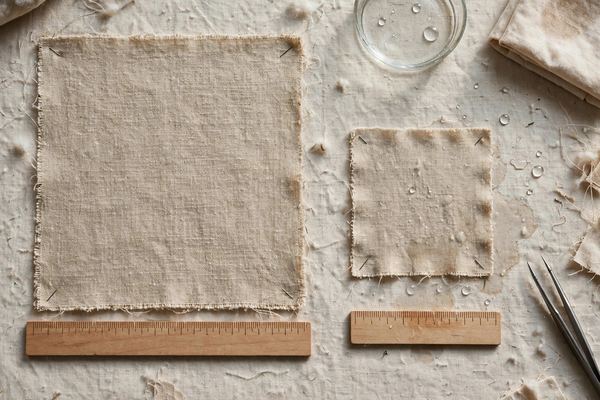
Fabric shrinkage is the reduction in a textile's dimensions after washing, drying, or steaming. Every natural fiber shrinks to some degree - and accounting for it correctly is essential to delivering garments that fit after the customer washes them.
Why Fabrics Shrink
Yarns are stretched during spinning, weaving, and knitting. Washing relaxes those tensions and the fibers return toward their natural state. Heat accelerates the process. Cotton, linen, wool, and rayon shrink most; synthetics shrink least.
Typical Shrinkage Rates
- Cotton jersey: 3-5% (up to 8%+ if unsanforized)
- Denim: 1-3% sanforized, up to 10% unsanforized
- Linen: 3-5%
- Wool: varies widely; can felt and shrink dramatically
- Polyester: under 1%
How Brands Handle It
Patterns are cut with shrinkage allowances built in. Fabrics are pre-shrunk (sanforized, compacted) before cutting. And care labels give washing instructions that minimize further shrinkage. Testing every fabric lot for shrinkage is standard practice.
FAQs
- What is sanforizing?
- A mechanical pre-shrinking process for woven fabrics (especially denim) that compresses the fabric so it won't shrink much later.
- Can shrinkage be reversed?
- Generally no. Prevention - proper pre-shrinking and correct care - is the only reliable strategy.
- Why did my shirt shrink in length but not width?
- Warp (lengthwise) yarns are under more tension during weaving, so they relax more. Length shrinkage almost always exceeds width shrinkage.
Glossary: see the full fashion glossary for more apparel industry terms.