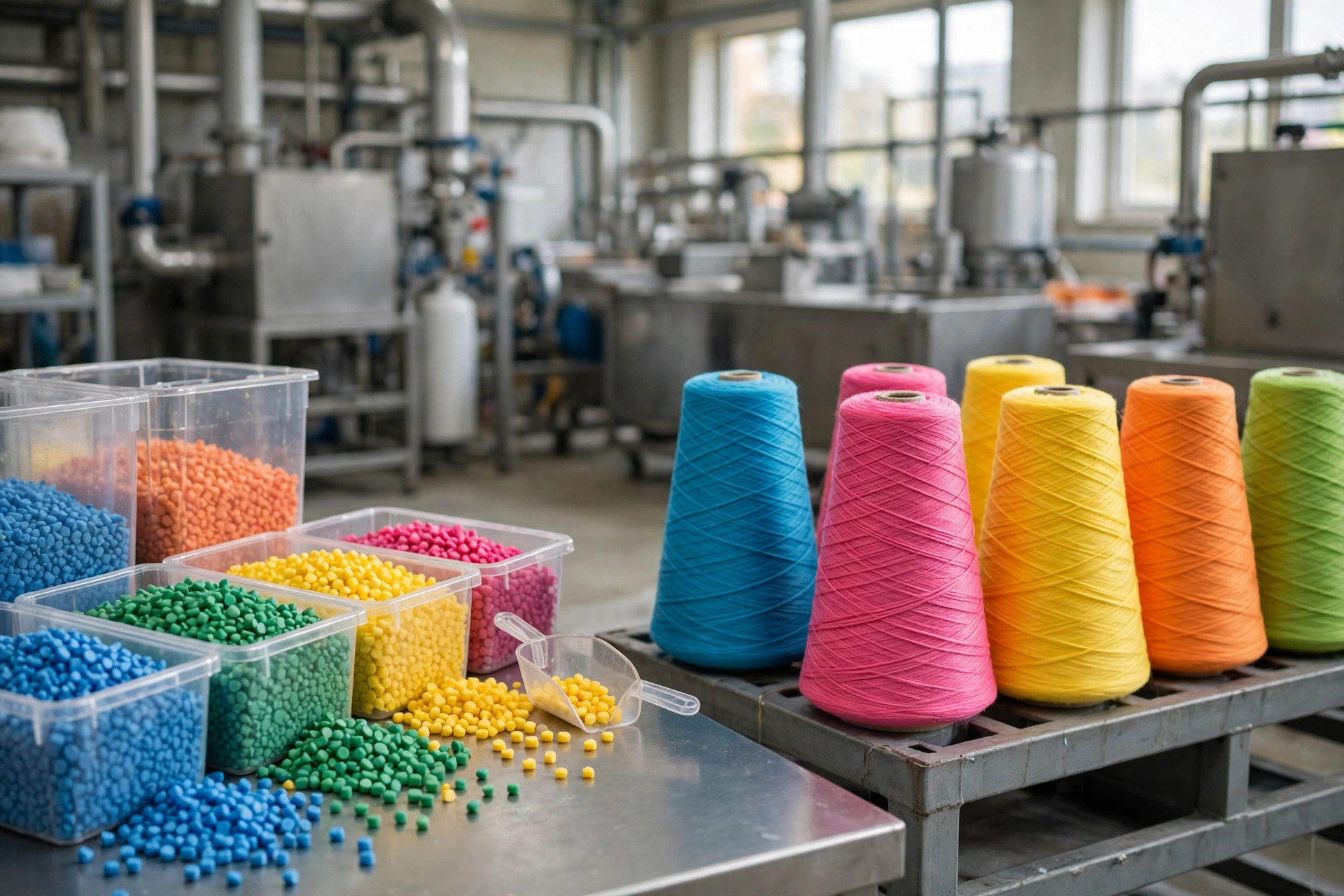
Solution dyeing, also called dope dyeing, colors synthetic fiber at the very start of its life: pigment is mixed into the molten polymer or spinning solution (the ‘dope’) before the fiber is extruded, so the color runs through the entire fiber cross-section instead of sitting on its surface. It is the most colorfast dyeing method in the industry — and one of the least flexible.
Why the Color Lasts
In conventional piece or yarn dyeing, dye molecules attach to a finished fiber and can, over time, be loosened by washing, light, chlorine, and abrasion. In a solution-dyed fiber the pigment is locked inside the polymer itself, so there is nothing to wash out: solution-dyed polyester, nylon, acrylic, and polypropylene show outstanding wash, light, and bleach fastness, and no crocking (color rubbing off), because there is no surface dye to rub. That is why the method dominates outdoor, marine, automotive, swim, and contract fabrics, and color-critical uses like uniforms where every production run must match for years.
The Environmental Case
Because the fiber is born colored, solution dyeing skips the conventional dye bath for that color: industry comparisons consistently credit it with very large reductions in water use, dye chemicals, and effluent compared with piece dyeing the same fiber, plus energy savings from not heating dye baths or re-dyeing off-shade lots. The honest caveat is scope: it applies to synthetics only — cotton, wool, and other natural fibers cannot be solution dyed — and the pigment and polymer chemistry still carry their own footprint. Brands substantiating claims should ask mills for their measured figures, and see how the method sits alongside the wider picture in our sustainable apparel manufacturing guide.
The Trade-Off: Commitment
Color decisions move to the fiber order, months earlier than piece dyeing, and minimums are set by the extrusion run, not the garment order — so a brand commits to a color at fiber scale before it knows how the style will sell. Late color changes, small test runs, and fast-response reorders in new colors are effectively impossible. Yarn and fabric producers manage this by stocking a palette of proven colors. Choose solution dyeing for core colors and long-life programs; choose pigment, vat, or sulfur piece/garment dyeing when the color story changes every season.
FAQs
- Is dope dyeing the same as solution dyeing?
- Yes — two names for one process: pigment is added to the polymer dope before extrusion, so the fiber is colored throughout.
- Which fibers can be solution dyed?
- Synthetics made by melt or solution spinning: polyester, nylon, acrylic, and polypropylene are the common ones. Natural fibers cannot be.
- Why is solution-dyed fabric more colorfast?
- The pigment is inside the fiber, not on it. There is no surface dye for water, light, or friction to remove, so fading and crocking are minimal.
- What is the downside of solution dyeing?
- Flexibility. Colors are committed at fiber production with large minimums and long lead times, so seasonal color changes and small runs are impractical.
More B2B Production Guides
This guide is part of the Apparel Search B2B production series on specifications, printing, dyeing, trade terms, and compliance. Browse the full series below, or start from the manufacturing guides hub.
Spec, Measure & Inspect
Print Methods
Dye Methods
- Solution Dyeing (Dope Dyeing) (this guide)
- Vat Dyeing
- Sulfur Dyeing
- Pigment Dyeing
Trade & Compliance
Apparel Search: explore the manufacturing guides hub and production & sourcing resources for the fashion industry.