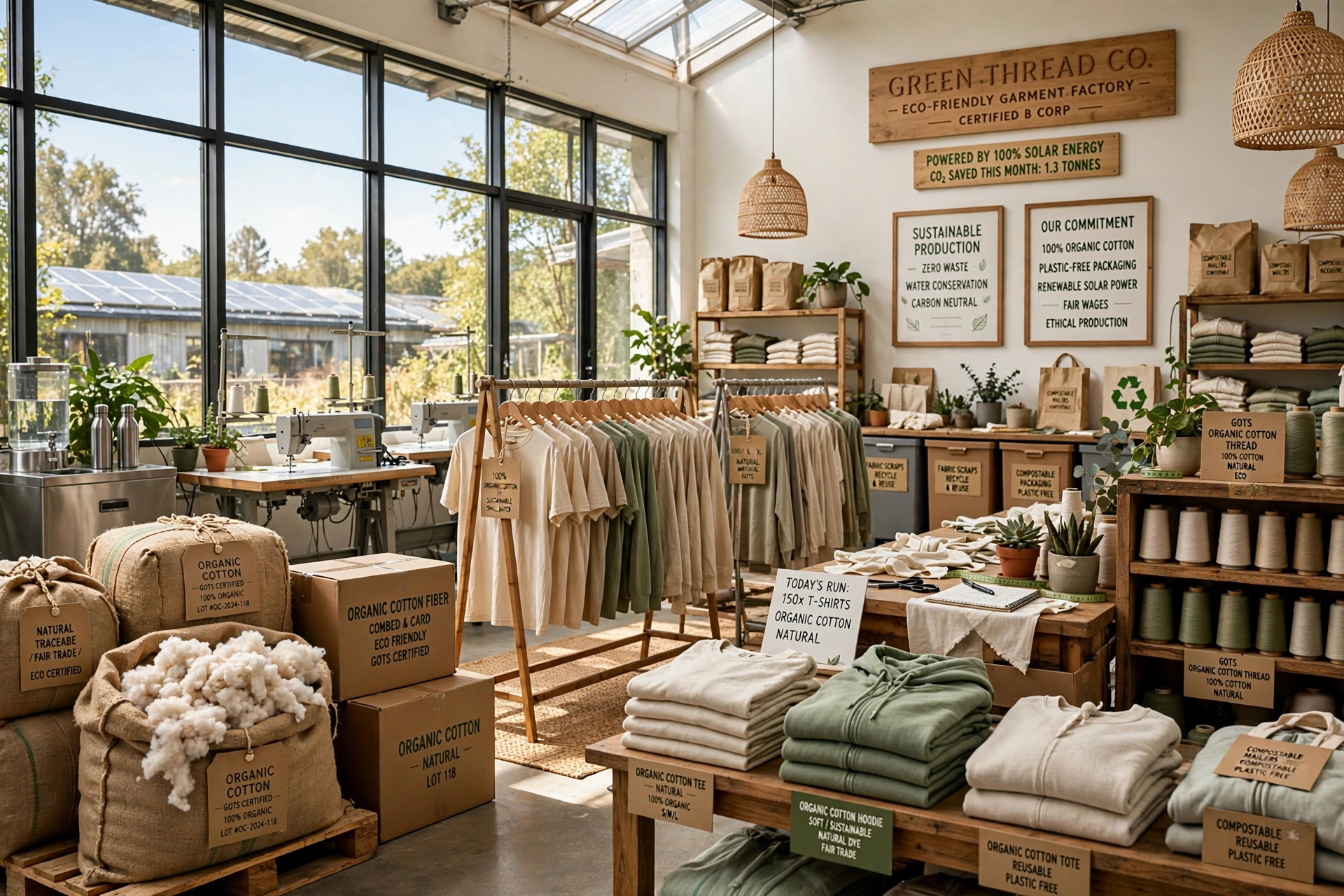
Sustainable apparel manufacturing means producing clothing in ways that reduce harm to people and planet — across materials, water, energy, chemistry, and labor. It is no longer a niche positioning: regulations, retailers, and consumers are all pushing the industry the same direction. This guide covers what actually moves the needle.
What It Means in Practice
Sustainability in production comes down to concrete choices: lower-impact fibers (organic cotton, recycled polyester, hemp), certified-safe chemistry and wastewater treatment, energy efficiency in dyeing and finishing, waste reduction in cutting (efficient markers, recycling cutting waste), and verified fair labor. No factory is perfect on all fronts — prioritize the impacts biggest for your product category.
Certifications That Matter
Third-party certifications separate real practice from marketing: GOTS (Global Organic Textile Standard) covers organic fiber through finished product including social criteria; OEKO-TEX Standard 100 verifies the finished textile is free from harmful substances; GRS (Global Recycled Standard) tracks recycled content and chain of custody. Ask factories which certifications they hold — and verify the certificates are current.
Finding Responsible Factories
Look for factories that publish sustainability reports, hold recognized certifications, and welcome audits. Ask specific questions: How is wastewater treated? What happens to cutting waste? Can you document working hours and wages? Vague answers are a red flag. Start with one or two certified product lines rather than trying to green your entire range overnight.
FAQs
- What is the most sustainable fabric?
- No single winner — it depends on the use case. Recycled fibers, organic hemp, and Tencel/lyocell score well on most life-cycle analyses. The most sustainable garment is often the one worn longest.
- How much more does sustainable manufacturing cost?
- Typically 5–20% above conventional for certified materials and audited factories. The premium shrinks as volumes grow and supply chains mature.
- What is greenwashing, and how do I avoid it?
- Greenwashing is making unsubstantiated eco-claims. Avoid it by making only claims you can document with certifications or data — and never claim more than your weakest link supports.
- Do consumers pay more for sustainable clothing?
- A meaningful segment does, especially in premium and mid-market. But treat sustainability as risk management and brand equity first, price premium second.
Apparel Search: explore more production & sourcing resources for the fashion industry.