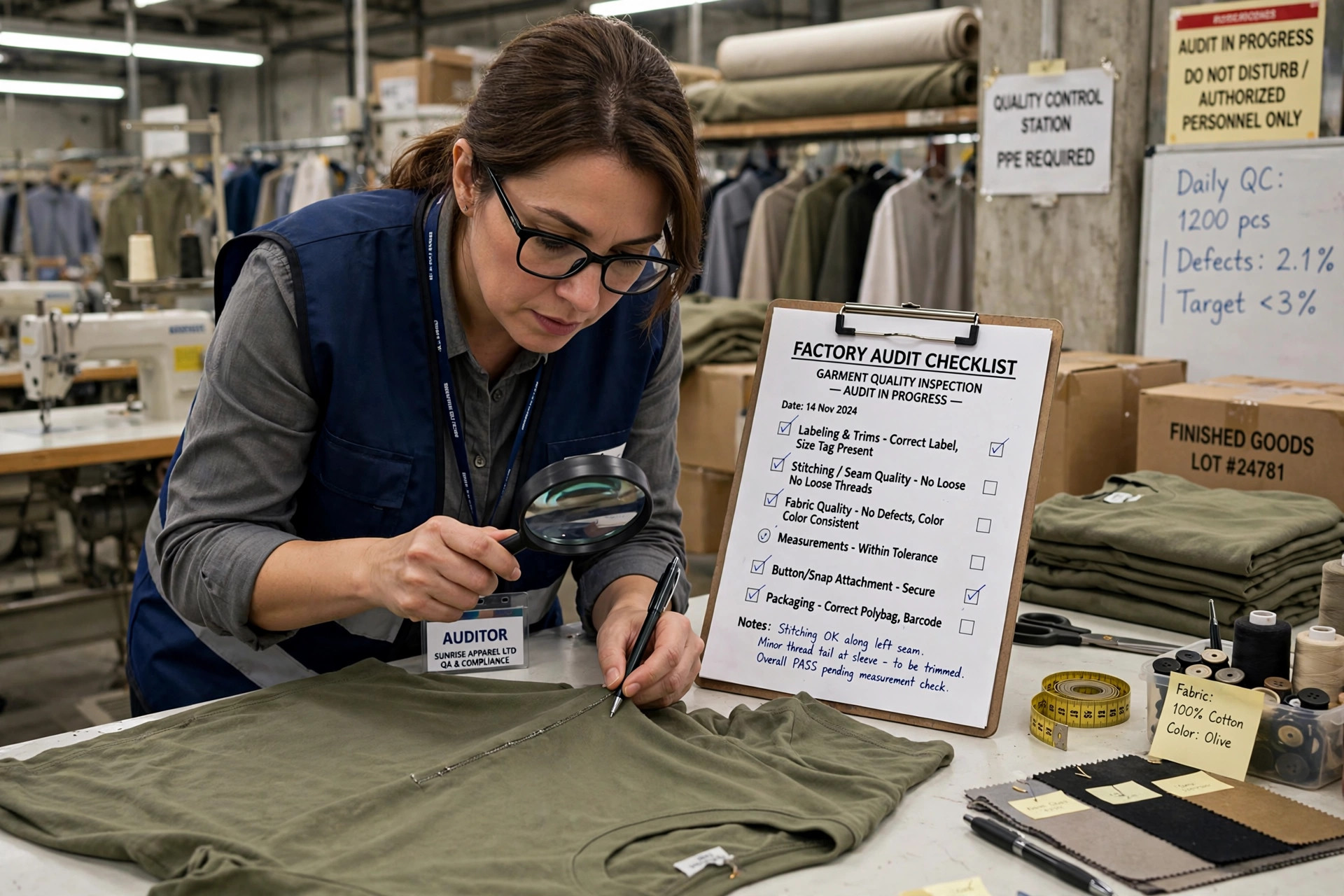
Choosing the wrong factory is the most expensive mistake a fashion brand can make — late deliveries, quality failures, and compliance scandals all start with poor supplier selection. A structured supplier evaluation turns factory selection from gut feeling into a repeatable process. Here is the checklist professionals use.
The Core Checklist
Evaluate every candidate on: technical capability (have they made your product type? ask to see similar production), capacity (can they absorb your volume without bumping you for bigger clients?), quality systems (in-line and final inspection procedures, AQL standards), compliance (labor, safety, environmental certifications), financial stability (years in business, client references), and communication (responsiveness and English capability of your day-to-day contact).
How to Run the Evaluation
Start with a detailed RFQ including your tech pack — serious factories respond with questions, not just a price. Order development samples and score them ruthlessly. Check at least two client references, preferably brands similar to yours. For significant volumes, commission an independent factory audit before placing bulk; the few hundred dollars it costs is trivial insurance.
Red Flags
Walk away when a factory: quotes far below everyone else (corners will be cut somewhere), refuses an audit or client references, can't show you similar past production, demands 100% payment upfront, or goes silent for days during sampling. Sampling behavior predicts bulk behavior — almost without exception.
FAQs
- What is an AQL inspection?
- AQL (Acceptable Quality Limit) is the statistical sampling standard used in final inspections — e.g., AQL 2.5 means a defined defect rate is acceptable. Specify your AQL level in the purchase order.
- How much does a factory audit cost?
- Independent third-party audits typically run $300–$800 per factory-day depending on country and scope — cheap insurance against a five-figure production disaster.
- Should I work with trading companies or factories direct?
- Direct factories give better prices and control; trading companies add flexibility, consolidation, and QC for a markup. Many brands use both for different needs.
- How many suppliers should I qualify?
- Qualify at least two per critical product category. Single-sourcing leaves you hostage to one factory's problems.
Apparel Search: explore more production & sourcing resources for the fashion industry.