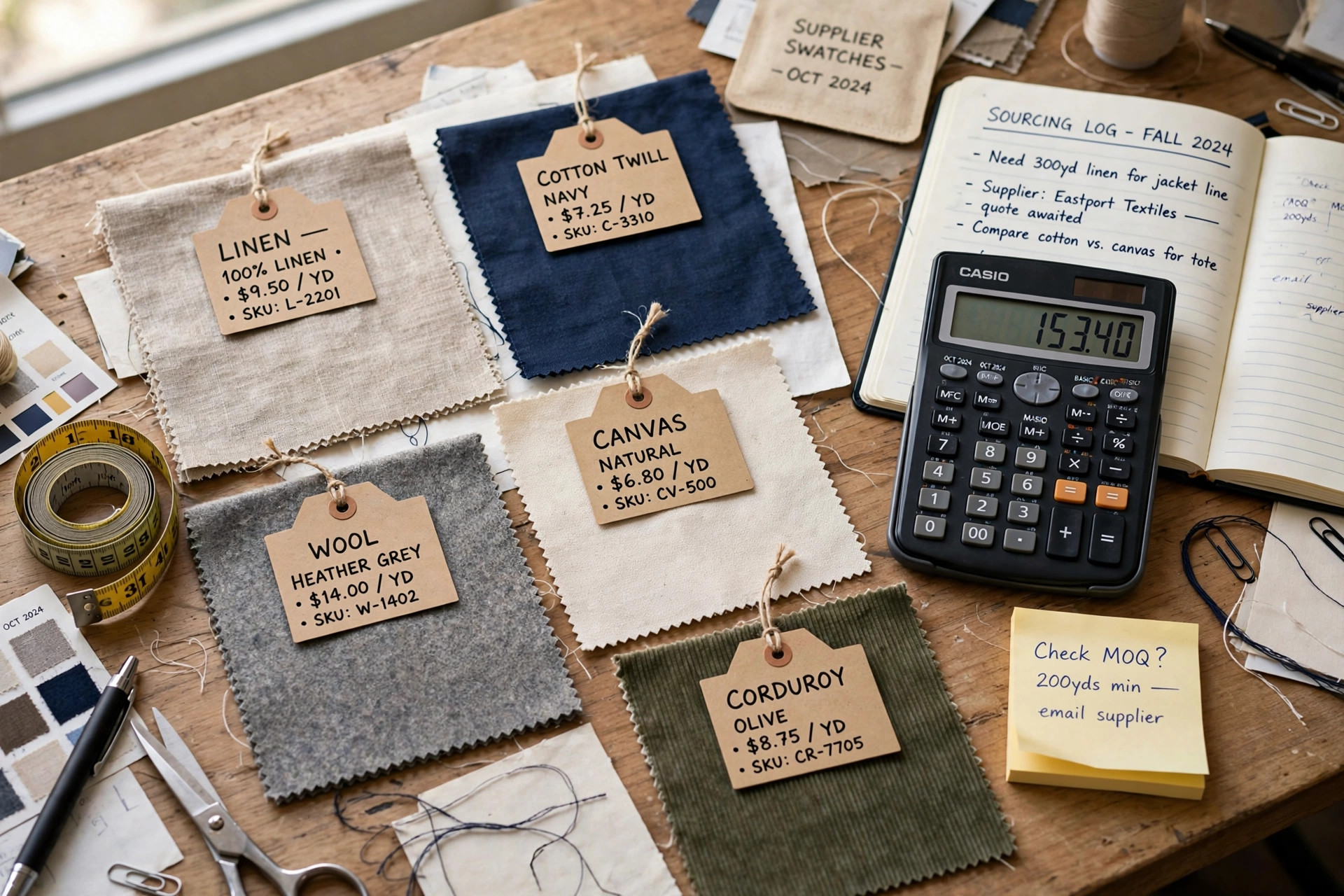
Fabric is typically 40–60% of a garment's cost, which makes fabric sourcing the single biggest lever on your margins. Fabric sourcing cost management is the discipline of buying the right materials at the right price — through smarter specifications, consolidated buying, and disciplined budgeting.
What Drives Fabric Cost
Five factors dominate: fiber content (synthetics cheapest, specialty naturals dearest), yarn and construction (finer yarns and denser weaves cost more), width and yield (wider goods waste less in cutting), finishes and dyeing (each process adds cost), and volume (bigger runs spread setup costs). Changing any one of these moves your price — which is exactly how cost engineering works.
Proven Cost-Reduction Strategies
Consolidate fabrics across styles so one bulk buy serves many garments. Buy greige (undyed) goods and dye to order when colors are uncertain. Standardize on a core fabric library instead of developing new cloth each season. And negotiate on total annual volume, not per-order — mills reward predictable partners with better pricing than one-off bargain hunters get.
Budgeting and Tracking
Set a target fabric cost per garment before design begins, derived from your retail price working backwards. Track actuals against targets in your costing sheet, and review variances every season: which fabrics overran, and why? The brands with the best margins aren't the ones that find the cheapest cloth — they're the ones that never get surprised by the invoice.
FAQs
- How much of a garment's cost is fabric?
- Typically 40–60% for most apparel. In basics like t-shirts it can exceed 60%; in heavily constructed tailored garments, labor takes a larger share.
- What are greige goods?
- Greige (pronounced 'grey') goods are undyed, unfinished fabrics. Buying greige and dyeing to order reduces color-commitment risk and can lower costs.
- How can I reduce fabric costs without hurting quality?
- Consolidate qualities across styles, widen your approved mill base for competitive quotes, reduce color counts, and design for efficient marker utilization to cut waste.
- Should I lock in fabric prices?
- For core, repeat fabrics, annual price agreements protect you from fiber market swings. For fashion fabrics bought once, spot pricing is normal.
Apparel Search: explore more production & sourcing resources for the fashion industry.