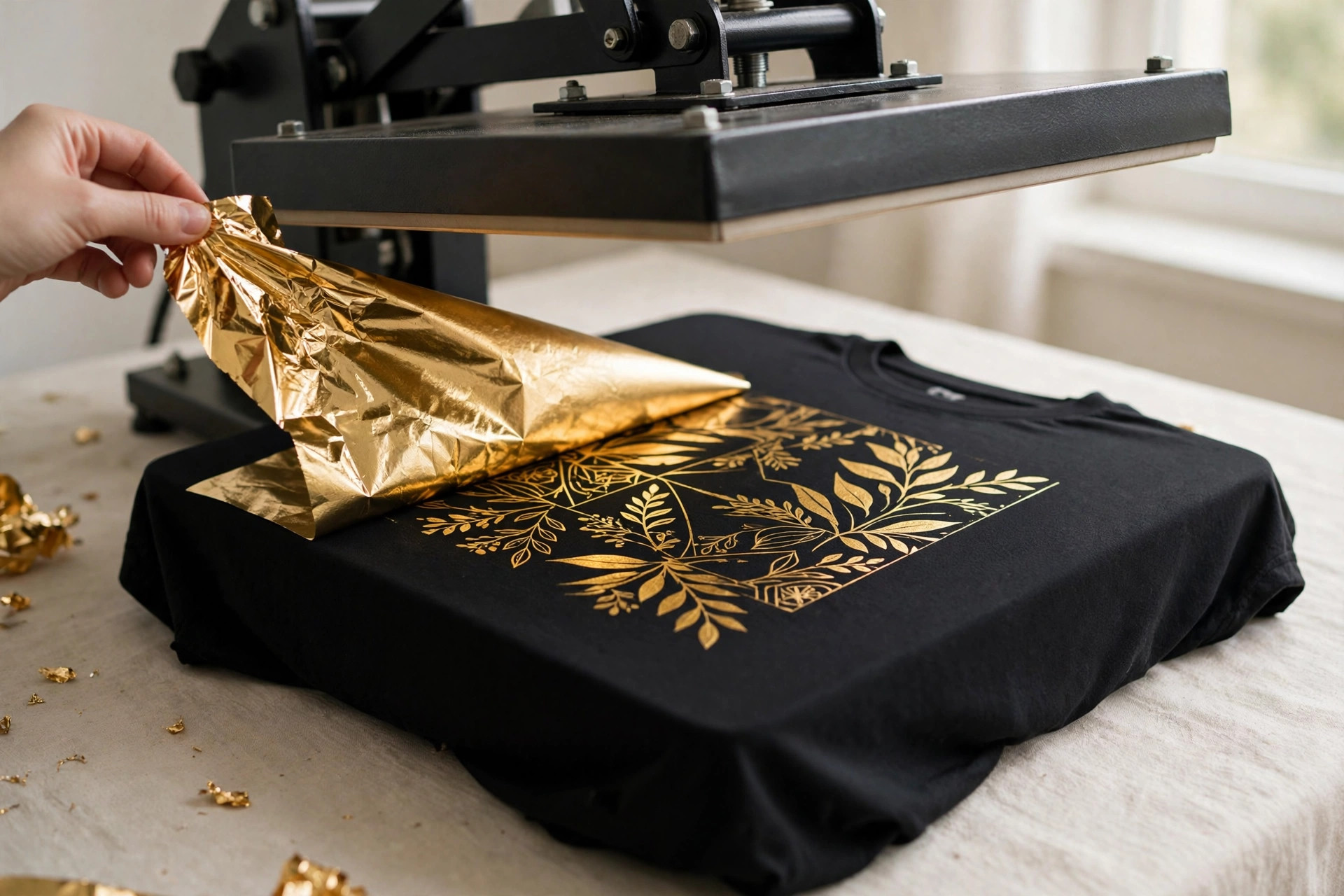
A foil print (foil transfer) creates a true metallic graphic on a garment in two steps: the design is screen printed with a special adhesive, then a sheet of metallic foil is heat-pressed over it so the foil bonds only where the adhesive is. The excess foil is peeled away, leaving a mirror-bright gold, silver, copper, or holographic design that no metallic ink can quite match.
Process and Effects
Because the foil itself is a manufactured film, its finish is perfectly uniform — chrome-smooth, in colors and effects (holographic, matte metal, patterned) that printers stock as foil rolls. Foil can also be combined with a colored ink layer beneath or beside it, and distressed/vintage foil looks are made by deliberately abrading or washing the finished print. As with puff and flocking, artwork needs reasonably bold shapes: hairline adhesive lines bond weakly and break up.
Durability and Care
Foil’s weakness is that it is a surface film. Repeated washing, tumble-dryer heat, and abrasion dull, crack, and eventually flake it — faster on stretch fabrics, which flex the film, and in high-friction placements. Care labels for foil garments should say wash inside out, cold, and hang dry, and brands should set customer expectations: foil is a fashion finish with a fashion lifespan, not a workwear finish. Wash-testing the exact garment/foil/adhesive combination before bulk is essential, because adhesion varies widely between foil suppliers.
When to Spec Foil
Spec foil when the shine is the design: evening and occasion tees, dance and performance wear, holiday graphics, premium logo hits, and limited runs where impact matters more than decade-long durability. For a permanent metallic thread effect, embroidery with metallic thread is the durable (and costlier) alternative; for raised texture, puff; for matte softness, water-based or discharge printing. Put the foil type, supplier, press temperature, dwell, and peel method (hot or cold) on the production spec — small process changes visibly change the result.
FAQs
- How long does foil print last on a shirt?
- With gentle care — inside out, cold wash, hang dry — a quality foil print stays bright through many wears, but it will eventually dull and crack sooner than a standard ink print.
- Can foil be printed on any fabric?
- It bonds best to smooth, stable fabrics. Heavy stretch, deep textures, and very rough surfaces weaken adhesion and cause early cracking.
- Is foil print the same as metallic ink?
- No. Metallic ink suspends metal flakes in ink and looks glittery-matte; foil is an actual metal-effect film transferred by heat and is far brighter and smoother.
- Why is my foil cracking?
- Film fatigue from flexing, heat, and washing, or weak original adhesion. It is the known trade-off of the finish; correct adhesive, press settings, and care slow it down.
More B2B Production Guides
This guide is part of the Apparel Search B2B production series on specifications, printing, dyeing, trade terms, and compliance. Browse the full series below, or start from the manufacturing guides hub.
Spec, Measure & Inspect
Print Methods
- Discharge Printing
- Water-Based Printing
- Puff Print
- Foil Print (this guide)
- Flocking
Dye Methods
Trade & Compliance
Apparel Search: explore the manufacturing guides hub and production & sourcing resources for the fashion industry.