Printing Is a Routing Decision
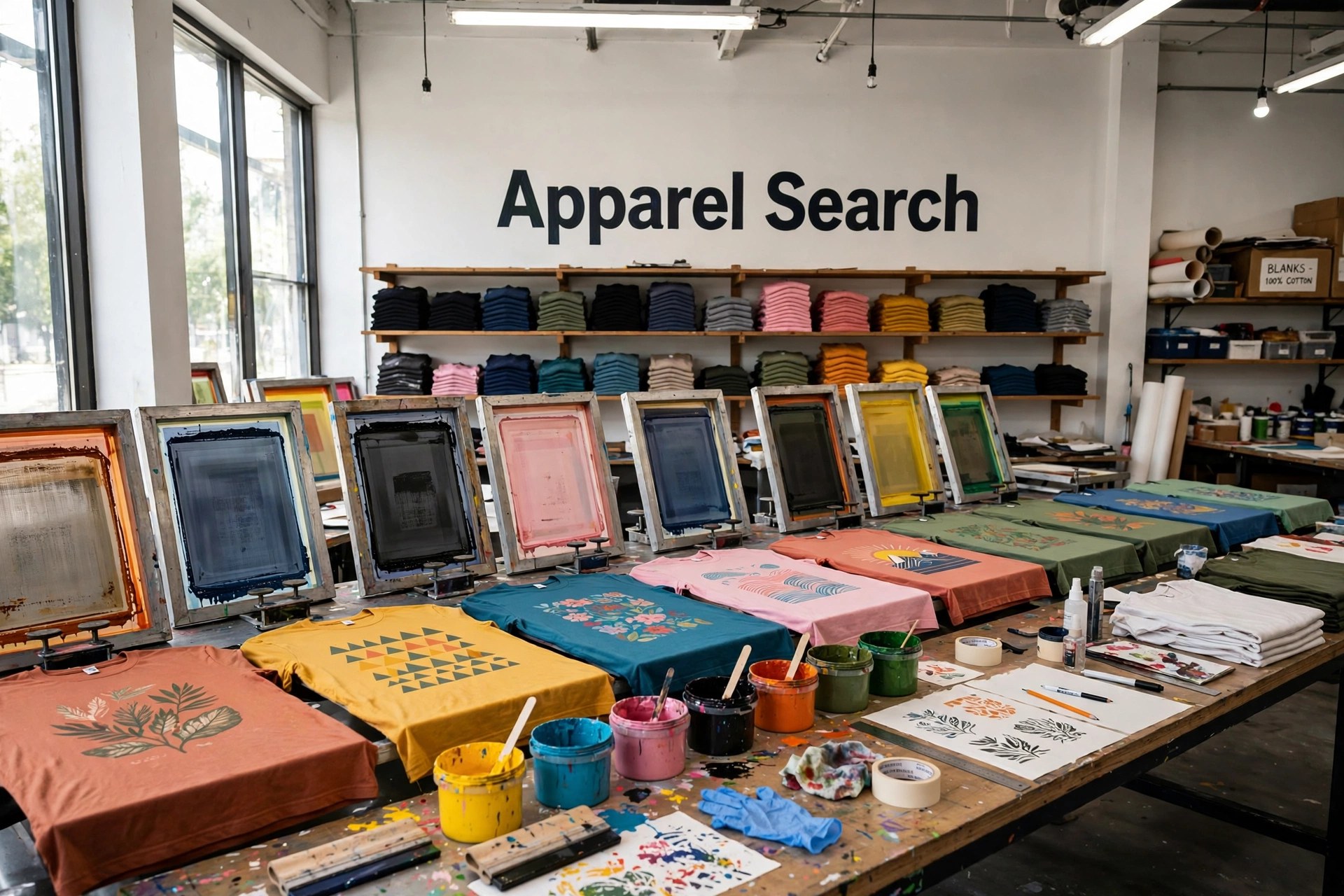
Textile printing is how most patterned fabric and most decorated garments get their design. But "printing" is not one process — it is a family of very different technologies that happen to end at the same place: color fixed on cloth. A design that is cheap and easy in one method can be expensive or physically impossible in another. A photograph with forty colors is trivial for a digital printer and a nightmare for a screen shop. A one-color logo on five hundred hoodies is the opposite.
This guide is the routing layer. It compares the major textile printing methods on the five things that decide which one a job belongs to — fabric compatibility, run length, hand feel, durability, and cost — and then links you to a full guide on each method, from industrial rotary screen printing of yardage to hand block printing and batik. Two of the choices below shape everything downstream: whether you are printing yardage (fabric on the roll, before cutting) or finished garments, and how many pieces the run contains.
Printing also sits inside the economics of the whole garment. The print method is one of the largest single lines a factory can move on a cost sheet, which is why our Garment Costing Guide treats print choice as a costing decision, not just a design one.
The Methods Compared
| Method | Best fabrics | Typical run | Hand feel | Durability | Cost shape |
|---|---|---|---|---|---|
| Screen printing | Cotton, blends, most garments | 24 pieces to tens of thousands | Depends on ink: plastisol sits on top, water-based soaks in | Excellent when cured | High setup (screen per color), low per piece |
| Rotary screen | Yardage: cotton, viscose, polyester | Thousands of meters | Soft, ink in the fabric surface | Very good | High setup, lowest per meter at volume |
| Digital (roll-to-roll / DTG) | Matched to ink: cotton, silk, polyester | Samples to short/medium runs | Soft, thin ink film | Good | Almost no setup, higher per piece |
| Direct to garment (DTG) | Cotton and high-cotton blends | One-offs to a few hundred | Soft, especially on light garments | Good | No setup, flat per-garment cost |
| Direct to film (DTF) | Almost anything: cotton, poly, blends, nylon | One-offs to medium runs | Slight film feel | Very good | No setup, low per-transfer cost |
| Sublimation | Polyester (white/light base) only | One-offs to long runs | None — dye is inside the fiber | The most permanent of all | Flat per piece, no color surcharge |
| Discharge | Dark cotton with dischargeable dyes | Medium to long runs | Softest of the screen methods | Excellent | Screen setup, low per piece |
| Heat transfer | Most garments and fabrics | One-offs to medium runs | Film feel, varies by transfer type | Good to very good | Low setup, moderate per piece |
| Foil printing | Most garments (adhesive base) | Short to medium runs | Metallic film surface | Moderate — foils fade with washing | Screen/transfer setup plus foil |
| Flocking | Most garments (adhesive base) | Short to medium runs | Raised velvet-like pile | Good | Screen setup plus flock fiber |
| Block printing | Cotton, linen, silk yardage and garments | Artisan batches | Soft, ink in the surface | Good | Block carving once, labor per impression |
| Resist & batik | Cotton, silk | Artisan batches | No print layer — it is a dyeing method | As durable as the dye itself | Labor-intensive per piece |
The pattern behind the table: methods divide into those that charge for setup (anything involving a screen, block, or engraved cylinder per color) and those that charge per piece (digital and transfer methods). Almost every routing decision is really a question of where your run length sits relative to that crossover.
Every Method, in Depth
- Screen Printing Guide — the industry's workhorse: mesh screens, one per color, printed by hand or automatic carousel. Plastisol vs. water-based inks, and the run lengths where screens beat everything else.
- Rotary Screen Printing — continuous yardage printing for mills: cylindrical screens, thousands of meters, and the economics of fashion fabric production.
- Digital Textile Printing — inkjet straight from file to fabric: DTG for garments and roll-to-roll for yardage, with reactive, pigment, acid, and disperse inks matched to the fiber.
- Direct to Garment Printing (DTG) — the print-on-demand engine: pretreatment, white underbase, and photographic detail on cotton with zero setup.
- Direct to Film Printing (DTF) — print the design on film now, press it onto almost any fabric later. The fastest-growing method in garment decoration.
- Sublimation Printing — dye turned to gas and locked inside polyester: all-over prints and sportswear with no hand feel and nothing to crack.
- Discharge Printing — printing that removes the garment's dye and replaces it with your color, for the softest prints on dark cotton.
- Heat Transfer Printing — designs carried on paper or film and applied with heat and pressure, from vinyl names and numbers to full-color transfers.
- Foil Printing — metallic shine applied over a printed adhesive: how foil is printed, and why it needs gentler washing than ink.
- Flocking — short fibers stood on end in printed adhesive to make a raised, velvet-like design.
- Block Printing — the oldest printing method still in production: hand-carved wooden blocks, artisan repeats, and prints whose slight irregularity is the point.
- Resist Printing & Batik — pattern made by keeping dye out: hot wax, paste, and binding, from batik's crackle to tie-dye's bursts.
How to Route a Job: Five Questions
- What is the fabric? Fiber content eliminates methods first. Sublimation needs polyester; discharge needs dyeable cotton; DTG wants cotton; rotary and screen handle nearly everything.
- Yardage or garments? All-over patterns and fashion fabrics are printed on the roll (rotary or roll-to-roll digital). A placed chest print on a finished shirt is garment printing (screen, DTG, DTF, transfer).
- How many pieces? Under a few dozen, setup-free digital and transfer methods win. In the thousands, screens — garment or rotary — almost always win on unit cost.
- What does the artwork demand? Spot colors and special effects (foil, flock, puff) belong to screens. Photographs, gradients, and unlimited colors belong to digital or sublimation.
- What must the print survive? Workwear washed hot and often argues for sublimation or a well-cured screen print. Fashion garments washed gently can carry foil and delicate digital prints.
One more consideration sits behind all five: artwork rights. A method that can reproduce anything — DTG above all — makes it easy to print designs you may not have the right to use. Our Fashion Law & Intellectual Property Guide covers how copyright applies to printed artwork before it becomes a problem.
Related Guides
Fashion Law & Intellectual Property Guide — who owns a print design, what copyright covers, and what to know before you print artwork on garments for sale.
Garment Costing Guide — how the print method, color count, and run length flow into the cost sheet and the final price of a garment.
Common Questions
- What is the best textile printing method for a small run of t-shirts?
- For a handful of garments with a multi-color or photographic design, direct-to-garment (DTG) or direct-to-film (DTF) printing is usually best: neither needs screens or setup, so the cost per shirt stays flat from the first piece. Screen printing only becomes cheaper per garment once the run is long enough to spread the cost of making one screen per color.
- Which printing method lasts the longest?
- Sublimation is the most permanent print of all because the dye becomes part of the polyester fiber itself — it cannot crack or peel. Among prints on cotton, a well-cured screen print (plastisol or discharge) is extremely durable, outlasting most digital garment prints, which are thinner ink films bonded to the surface.
- What is the difference between printing yardage and printing garments?
- Yardage printing decorates fabric on the roll before it is cut and sewn, which suits all-over patterns and fashion fabrics; it is done with rotary screens or roll-to-roll digital printers. Garment printing decorates a finished piece of clothing, usually in one placed position, using screen printing, DTG, DTF, or heat transfers.
- Why does the printing method affect the price of a garment so much?
- Each method splits its cost differently between setup and per-piece work. Screen printing charges heavily up front (a screen per color) and little per garment; digital methods charge almost nothing up front and more per piece. The crossover point depends on colors, run length, and fabric — which is why the printing line of a garment cost sheet can swing the final price either way.
Planning a Print Program?
Start with the fabric and the run length, and the method usually chooses itself. For the business side of the same decision, see how print costs are built into a garment's price in the Garment Costing Guide, and browse the wider manufacturing guides for the production steps that come before and after printing.