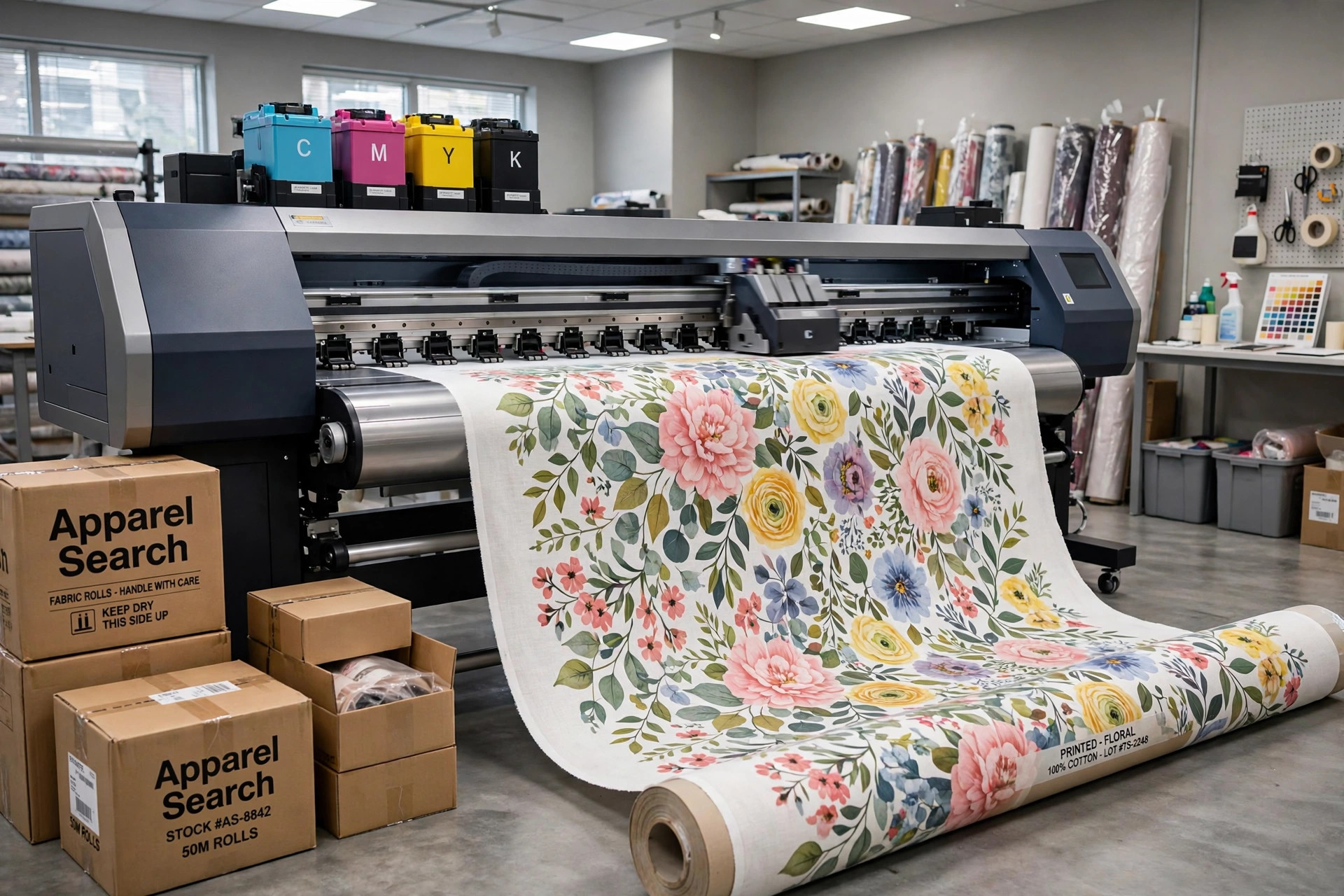
Digital textile printing prints a design directly from a digital file onto fabric with inkjet technology — either direct-to-garment (DTG), where a printer prints onto a finished garment, or roll-to-roll, where fabric yardage is printed before cutting and sewing. With reactive, pigment, acid, or disperse inks matched to the fiber, it reproduces photographic detail and unlimited colors with almost no setup, which makes sampling and short runs practical for the first time in textile printing history.
Two Routes: DTG and Roll-to-Roll
In direct-to-garment (DTG) printing, a finished garment is loaded flat on a platen, usually pretreated so pigment inks sit up on cotton fibers, printed like a sheet of paper, and heat-set. DTG is the engine of print-on-demand: one shirt, one design, no screens, shipped the same day. In roll-to-roll printing, fabric feeds continuously under wide inkjet heads; reactive-ink yardage is then steamed and washed to fix and finish it, while pigment yardage is simply heat-fixed. Roll-to-roll serves fashion fabrics, home textiles, and sampling desks that need a few meters of a design before committing to bulk screen production — always confirm colors on an approved strike-off, because screen and digital color rarely match perfectly.
Inks Matched to the Fiber
The ink chemistry follows the fiber. Reactive inks bond chemically with cotton, linen, and viscose, giving bright color and excellent wash fastness at the cost of steaming and washing after print. Pigment inks work on almost any fiber, including blends, and fix with heat alone, but a binder holds the color on the surface, so hand feel and saturation are a step below reactive. Acid inks serve silk and nylon; disperse inks serve polyester — printed directly or by the transfer route covered in our sublimation printing guide. Specifying the wrong ink for the fiber is the most common cause of prints that fade in the first wash.
Digital vs. Screen Printing
Screen printing charges its cost up front — a screen and setup per color — then prints bulk quickly and cheaply, with special effects (puff, foil, flock) that digital cannot duplicate. Digital charges almost nothing up front and more per meter or garment, so the crossover is run length: digital wins for samples, one-offs, and short runs, and for photographic detail no screen can hold; screen wins at volume and for exact spot colors on any garment color. Many factories now run both, using digital for sampling and replenishment and screens for the bulk of a proven program. Compared with water-based screen printing, DTG prints also feel softer than plastisol but generally less soft than a true water-based or discharge print on dark cotton.
FAQs
- What is the difference between DTG and roll-to-roll printing?
- DTG (direct-to-garment) prints onto a finished garment loaded on a platen — ideal for single shirts and print-on-demand. Roll-to-roll prints continuous fabric yardage before cutting and sewing — ideal for fashion fabrics and sampling. The inkjet technology is similar; the form of the material is not.
- Can digital printing match screen printing quality?
- For photographic detail and fine gradients, digital exceeds what screens can hold. For saturated spot colors, prints on dark garments, and special effects such as puff or foil, screen printing still leads. Wash fastness is good on both when the ink is correctly matched to the fiber.
- Why is digital printing so good for sampling and short runs?
- There are no screens to make and no setup per color, so a sample or a 20-piece run costs little more per piece than a long run and can be ready in hours. Designers can test several colorways before committing — the traditional sampling bottleneck largely disappears.
- Does digital printing work on polyester?
- Yes, with disperse inks — printed directly and heat-fixed, or printed to transfer paper and sublimated. Standard DTG setups are optimized for cotton and use pigment inks; polyester DTG exists but needs suitable pretreatment and inks, so confirm the fiber-ink match with the printer before ordering.
More B2B Production Guides
This guide is part of the Apparel Search B2B production series on specifications, printing, dyeing, trade terms, and compliance. Browse the full series below, or start from the manufacturing guides hub.
Spec, Measure & Inspect
Print Methods
- Discharge Printing
- Water-Based Printing
- Puff Print
- Foil Print
- Flocking
- Sublimation Printing
- Digital Printing (this guide)
Dye Methods
Trade & Compliance
Apparel Search: explore the manufacturing guides hub and production & sourcing resources for the fashion industry.