Two Opposite Ways to Put Ink on a Shirt
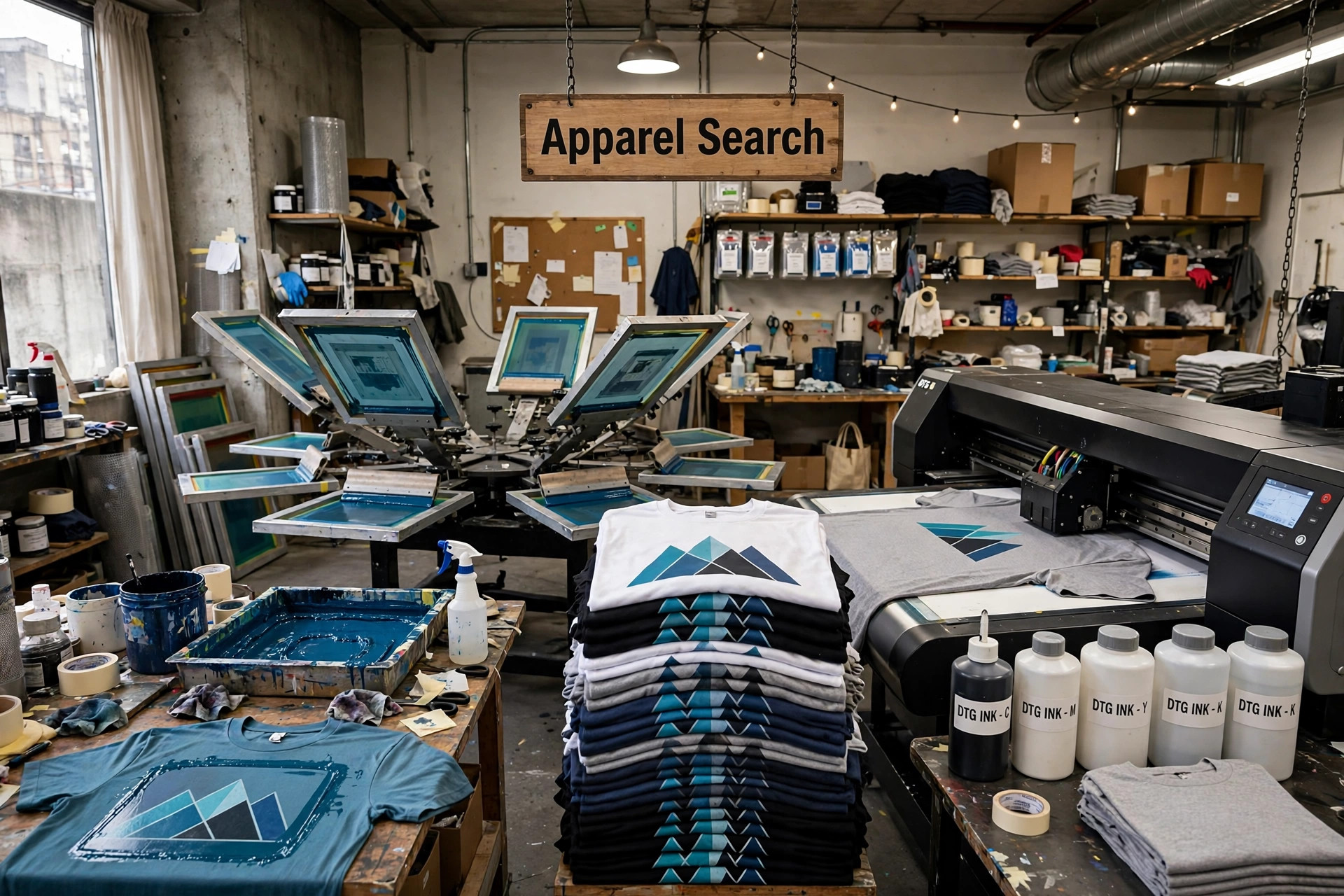
Screen printing pushes ink through a prepared mesh screen — one screen per color — onto garments printed in a batch. The setup is real work: artwork is separated by color, screens are made and registered on the press, and only then does printing start. Print on demand skips all of it: a digital file goes to a DTG or DTF printer and a single garment is printed when an order arrives, by a provider who also ships it. The screen printing guide covers the batch process step by step; this page compares what the two models mean for a clothing brand choosing between them.
| Factor | Print on demand | Screen printing |
|---|---|---|
| Setup | Upload a file; no screens or plates | One screen per color, made and registered before printing |
| Minimum | One garment | Commonly a dozen or more per design; setup cost needs a run to spread across |
| Cost structure | High, fixed cost per unit — blank, print and fulfillment in one price | High setup, low cost per additional unit; unit cost falls as the run grows |
| Colors and photos | Full color in one pass; photographs and gradients are routine with DTG | Charged per color; photographs need demanding halftone separations |
| Hand feel | DTG is soft on light garments; DTF sits slightly on the fabric surface | Depends on ink: plastisol sits on top, water-based and discharge soak in for a soft print |
| Inventory risk | None — nothing exists until it sells | The whole batch is bought before the first sale |
| Control | Provider's blanks, facilities and quality checks | Your blanks, your printer, your inspection — and your storage |
Where the Crossover Sits
Short runs and unproven designs: POD wins
For a handful of shirts, or a design that has never sold, screen printing's setup cost per color lands on very few garments, and unsold stock is a real possibility. POD's higher unit price is cheaper than a batch that does not sell. One-off and personalized pieces — a name or number per shirt — are only possible digitally, since each screen printed unit in a run is identical.
Proven designs in volume: screens win
Once a design sells steadily, the arithmetic flips. Screen setup spreads across the run, ink and blank bought in bulk cost less per shirt, and the per-unit gap between the two methods widens with every additional hundred units. The margin difference is worked through in print on demand pricing and margins.
Exact color and effects: screens win
Spot colors matched to a specification, metallic and puff inks, and prints that must be identical across a large team or uniform order are screen printing's home ground. Digital methods approximate brand colors rather than match them, and the provider — not you — runs the press.
The Hybrid Most Brands End Up With
Few working brands choose one method forever. The common pattern is to test designs on POD, where a failure costs nothing, and move the proven sellers to screen printed batches, where the margin is. Core designs with steady demand live on screens; the long tail of slower designs stays on demand; limited drops use whichever fits their run size. That staging is a business decision as much as a printing one — the point where volume justifies holding stock is one of the signals in the guide to moving beyond print on demand, linked in the resources below.
Rule of thumb: if you cannot yet say how many a design will sell, print it on demand. If you can, and the number is more than a few dozen, price a screen run before you reorder digitally.
Common Questions
Is print on demand cheaper than screen printing?
For one shirt or a short run, yes — screen printing's setup cost per color has too few garments to spread across. As the run grows, screen printing becomes cheaper per shirt and the gap widens, because its setup is fixed while print on demand charges the same high unit price on the five-hundredth shirt as on the first.
Which looks better, DTG or screen printing?
Neither is automatically better. A well-printed screen print with water-based or discharge ink is soft and durable, and plastisol gives exact, opaque color. A good DTG print handles photographs and fine gradients that screens struggle with. Poor work exists in both: an under-cured digital print fades, and a thick, badly printed plastisol design cracks.
Can screen printing do one shirt at a time?
Technically a press can print a single shirt, but the screen for each color must still be made and registered, so the cost of that one shirt carries the whole setup. That is why shops set minimums, and why one-offs and personalized garments belong to digital methods.
Should a new brand start with print on demand or screen printing?
Most new graphic-led brands start with print on demand because demand is unproven and inventory is the risk they cannot afford. A brand with an existing audience and a small set of confident designs can reasonably start with a short screen run instead. The deciding factor is how certain the sales are, not which method is more professional.
More to Explore
Search Apparel Search