What Screen Printing Is
Screen printing pushes ink through a fine mesh screen that has been turned into a stencil — open where the design should print, blocked everywhere else. One screen is made for each color in the design, and the garment (or fabric) passes under the screens in sequence until the full image is built up. If you are comparing methods before choosing one, start with the Textile Printing Methods Guide, which sets screen printing against digital, transfer, and traditional methods side by side; this page goes deep on screen printing itself.
The process is centuries old — it descends from stencil printing in Asia and was industrialized in the twentieth century — yet it remains the default for decorated garments worldwide because of a simple economic shape: it charges its cost up front, in screens and setup, and then prints each additional piece quickly and cheaply. For the glossary version, see the screen printing definition; here we cover how a job actually runs.
The Process, Step by Step
- Artwork and separations. The design is split into one layer per print color. Spot-color work separates cleanly; photographs are separated as halftones — fields of tiny dots that the eye blends back into continuous tone.
- Screen making. A mesh screen (the mesh count chosen for the ink and detail level) is coated with light-sensitive emulsion, dried, and exposed with the color's film positive. The design areas wash out, leaving the stencil.
- Setup and registration. Screens are mounted on the press in print order and aligned — registered — so each color lands exactly on the others. On dark garments, a white underbase is printed first, often flash-dried for a few seconds so colors on top stay bright.
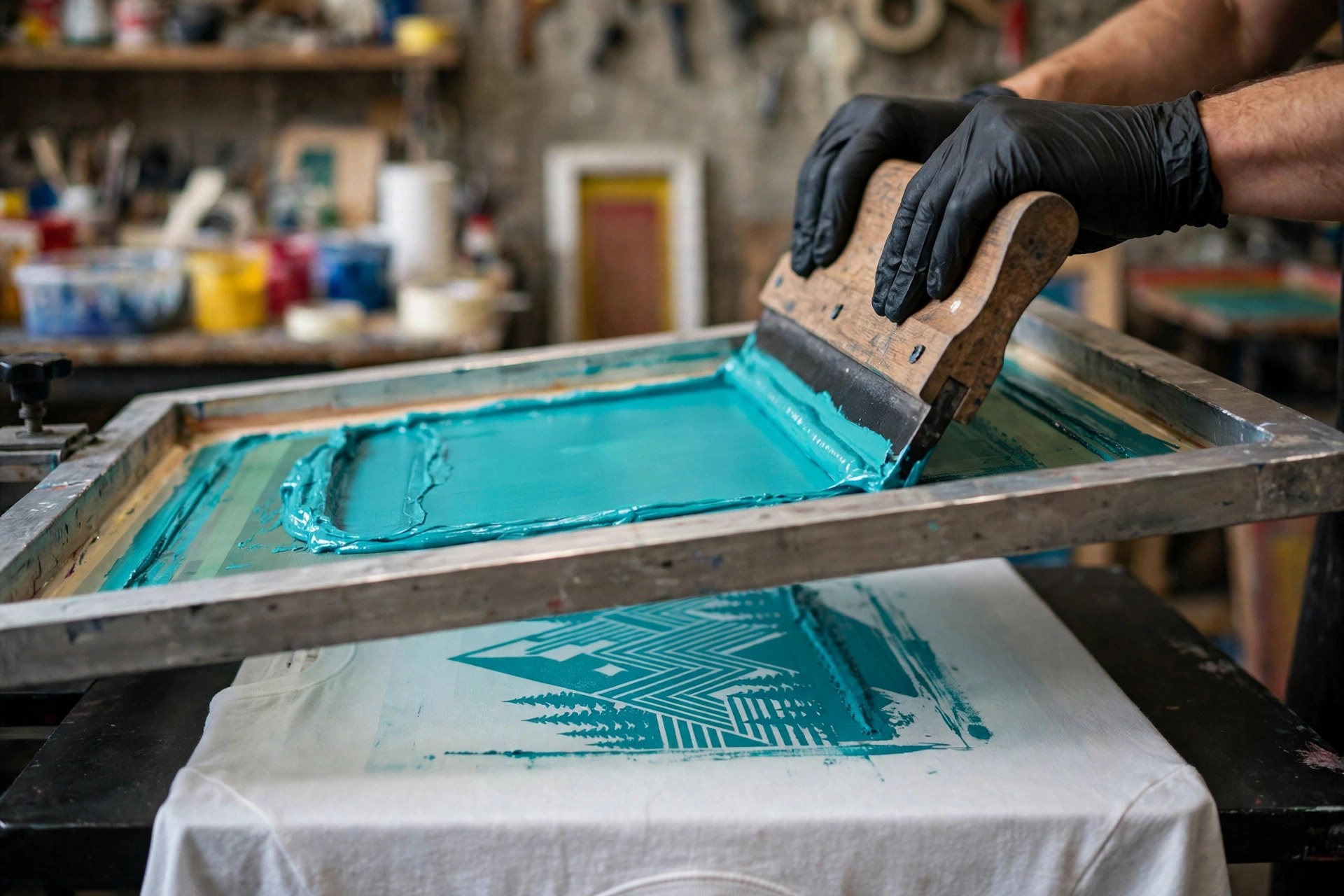
- Printing. The garment is loaded on a platen with a light adhesive. A squeegee floods the screen with ink, then pulls it across, forcing ink through the open mesh onto the fabric. One pass per color.
- Curing. The printed garment travels through a conveyor dryer. Plastisol must reach roughly 150–160°C (about 320°F) through the whole ink film to cure; undercured prints crack and wash out, so cure testing is a real quality step, not a formality.
- Reclaiming. After the run, ink is removed and the emulsion stripped so the mesh can be coated and reused — which is why screens are a setup cost you pay on every new design, not a permanent asset.
Manual, Automatic, and Flatbed Presses
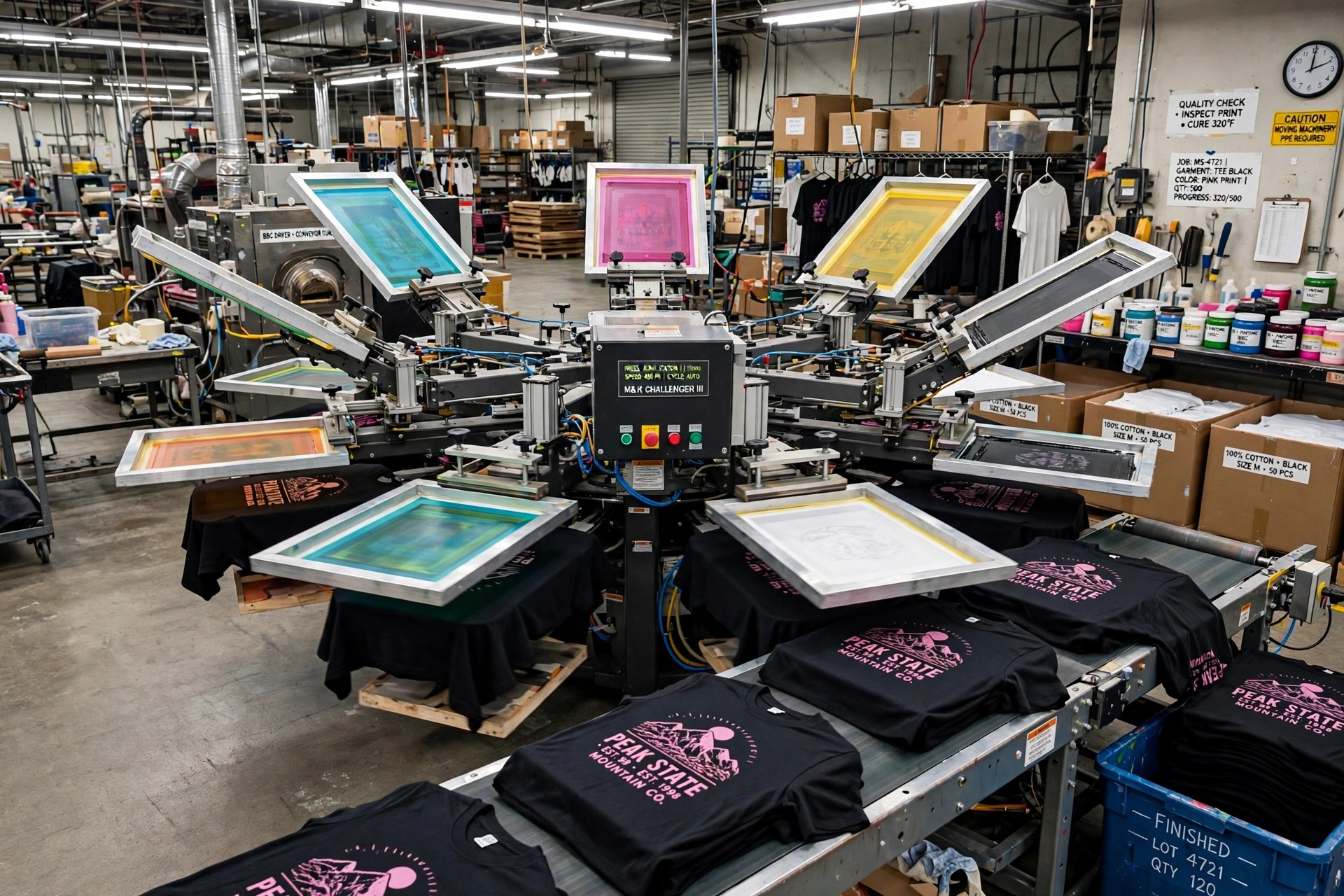
A manual press holds a few screens over rotating platens and is worked by one printer's arms; it is the tool of small shops, short runs, and fine control. An automatic carousel — like the one below — rotates garments under many screens at once and prints hundreds of garments per hour with identical pressure and speed. Large garment programs run on automatics; sampling and small batches run on manuals.
Flatbed screen printing is the yardage cousin: long tables (or a moving belt) print fabric panel by panel with big flat screens, one color per pass down the table. It suits short yardage runs and placement panels. Continuous high-volume yardage belongs to the rotary method covered in our rotary screen printing guide.
Plastisol vs. Water-Based Ink
Plastisol
Plastisol is a PVC-based ink that sits on top of the fabric and cures with heat. It is opaque on black garments, matches spot colors precisely, does not dry in the screen, and survives hard washing — which is why it became the garment industry's default. Its cost is feel: a thick plastisol print has a noticeable plastic hand, though modern high-mesh and soft-hand techniques reduce it.
Water-based
Water-based inks soak into the fibers instead of sitting on them, giving a print that feels like part of the shirt and suits vintage and fashion work. The trade-offs: opacity on dark fabric is hard work, the ink dries in the mesh during pauses, and color can look muted until the printer dials it in. A special water-based route — discharge printing — bleaches the dye out of dark cotton and replaces it with pigment, producing the softest prints on dark garments of any screen method.
Special effects
Screens also carry what digital cannot: puff inks that rise in the dryer, high-density inks, glitter, and adhesive prints finished with foil or flock. If a design depends on texture or shine, it is a screen job almost by definition.
When Screen Beats Digital — and When It Doesn't
Screen printing wins when the run is long, the colors are few and exact, the garments are dark, or the design needs an effect ink. It loses when the run is a dozen shirts, the artwork is a photograph, or every piece is different — names, numbers, one-off designs. Those jobs belong to DTG and DTF. Our digital textile printing guide covers that side of the crossover in detail.
One denim note: screen printing is also how most graphics land on jeans and denim jackets — discharge and water-based inks suit denim's dark indigo, and laser finishing often works alongside print on the same garment. For the fabric side, see the Denim Fabric Guide.
And a rights note, because screens reproduce anything put on them: printing artwork you did not create or license — a band logo, a cartoon character, another brand's graphic — infringes the owner's copyright or trademark however good the print is. The Fashion Law & Intellectual Property Guide explains where those lines sit before you expose your shop.
More Printing Methods
- Direct to Garment (DTG) — photographic prints on cotton with no screens and no minimums.
- Direct to Film (DTF) — printed transfers that press onto almost any fabric.
- Rotary Screen Printing — continuous yardage printing at mill scale.
- Sublimation Printing — dye inside polyester fiber: all-over prints that cannot crack.
- Block Printing — the hand-carved ancestor of every screen on this page.
- Resist Printing & Batik — pattern by keeping dye out, not by putting ink on.
Common Questions
- Why does screen printing charge per color?
- Each color in a screen printed design needs its own screen, its own setup on the press, and its own pass of ink. A six-color design means six screens made, registered, printed, and cleaned. That is why screen print quotes rise with color count while digital methods, which mix all colors in one pass, do not charge per color at all.
- What is the difference between plastisol and water-based screen printing ink?
- Plastisol is a PVC-based ink that sits on top of the fabric, giving bright, opaque color on dark garments and excellent durability; it has a slight plastic feel. Water-based ink soaks into the fibers, giving a much softer print with a vintage character, but it is harder to keep opaque on dark fabric and dries in the screen faster. Discharge ink is a water-based variant that removes the garment's dye for the softest dark-garment prints.
- How many shirts do you need to print for screen printing to be worth it?
- Most shops set minimums around 12 to 24 pieces per design, and screen printing usually becomes the cheapest option somewhere between a few dozen and a couple of hundred garments, depending on color count. The more colors and the shorter the run, the longer digital (DTG or DTF) stays ahead; the fewer colors and the longer the run, the faster screens win.
- Can screen printing reproduce a photograph?
- Yes, with halftone separations: the photograph is broken into tiny dots printed through one or more screens (process CMYK or simulated process). Skilled shops get remarkably photographic results, but the setup is demanding, which is why photographs on short runs usually go to DTG or sublimation instead.
Back to the Textile Printing Methods Guide
Compare screen printing against every other method — fabrics, run lengths, hand feel, durability, and cost — in the main guide.
Textile Printing Methods Guide