Plastisol
Miscellaneous Definitions — the PVC ink that will not dry until heat cures it, from Apparel Search
Search Apparel Search
At a Glance
Definition: Plastisol is a suspension of PVC or other polymer particles in a liquid plasticizer that flows as a liquid, is poured into heated molds, and is most commonly used as a textile ink for screen printing designs onto garments.
Category: Miscellaneous Definitions
Plastisol is a suspension of PVC or other polymer particles in a liquid plasticizer; it flows as a liquid and can be poured into a heated mold. Aside from molding, plastisol is commonly used as a textile ink for screen printing, and plastisols are the most commonly used inks for printing designs onto garments, particularly useful for printing opaque graphics on dark fabrics. This page covers what the suspension is, why it stays workable on the screen yet must be cured with heat before it will set, and the raised, plasticized feel it leaves on the cloth.
A Suspension That Flows Like a Liquid
Plastisol begins as a mixture rather than a solution: fine particles of PVC or another polymer are suspended in a liquid plasticizer, the ingredient that keeps the mass soft and flowing. In that state it behaves like a thick liquid — it can be poured, spread and pushed through a screen — which is why the same material serves two quite different trades. Poured into a heated mold, the heat fuses it into a solid molded article. Spread as an ink, it coats a garment and waits, still unfused, for the heat that will finish it.
That stability on the screen is a production advantage. A printer can leave plastisol on a press, print a run, and return to the same ink without it having skinned over or clogged the stencil, because plastisol inks will not dry on their own. The ink a shop mixes in the morning is the ink it prints with all day, and leftovers go back in the bucket rather than drying into waste. Few ink systems are as forgiving to handle, and that ease is part of why plastisols became the standard garment-printing ink.
Curing: The Heat That Sets the Print
What plastisol will not do is dry. Plastisol inks will not dry on their own, but must be cured, and curing can be done with a flash dryer or any oven. Most plastisols need to reach a temperature of about 180 degrees Celsius (350 Fahrenheit) for full curing, at which point the particles and plasticizer fuse into a solid, durable film bonded to the garment. Until that temperature is reached through the full thickness of the ink, the print is unfinished no matter how dry its surface feels.
An undercured print is the characteristic plastisol fault: the surface may feel dry while the interior of the ink film remains unfused, so the design cracks or washes out early in the garment's life. Correct curing is therefore a measured step, not a guess, and print shops check dryer temperature and dwell time against the ink manufacturer's specification for the fabric being printed. Because the cured film is fused plastic, a properly cured plastisol print resists washing and abrasion well, which is one reason plastisols are the most commonly used inks for printing designs onto garments in commercial screen printing.
Screen Printing, Opacity and Hand
Screen printing is a printing technique where a mesh is used to transfer ink onto a substrate, except in areas made impermeable to the ink by a blocking stencil. A blade or squeegee is moved across the screen to fill the open mesh apertures with ink, and a reverse stroke then causes the screen to touch the substrate momentarily along a line of contact. This causes the ink to wet the substrate and be pulled out of the mesh apertures as the screen springs back after the blade has passed. One color is printed at a time, so several screens can be used to produce a multicolored image or design, each screen carrying one color's part of the artwork and registering against the others.
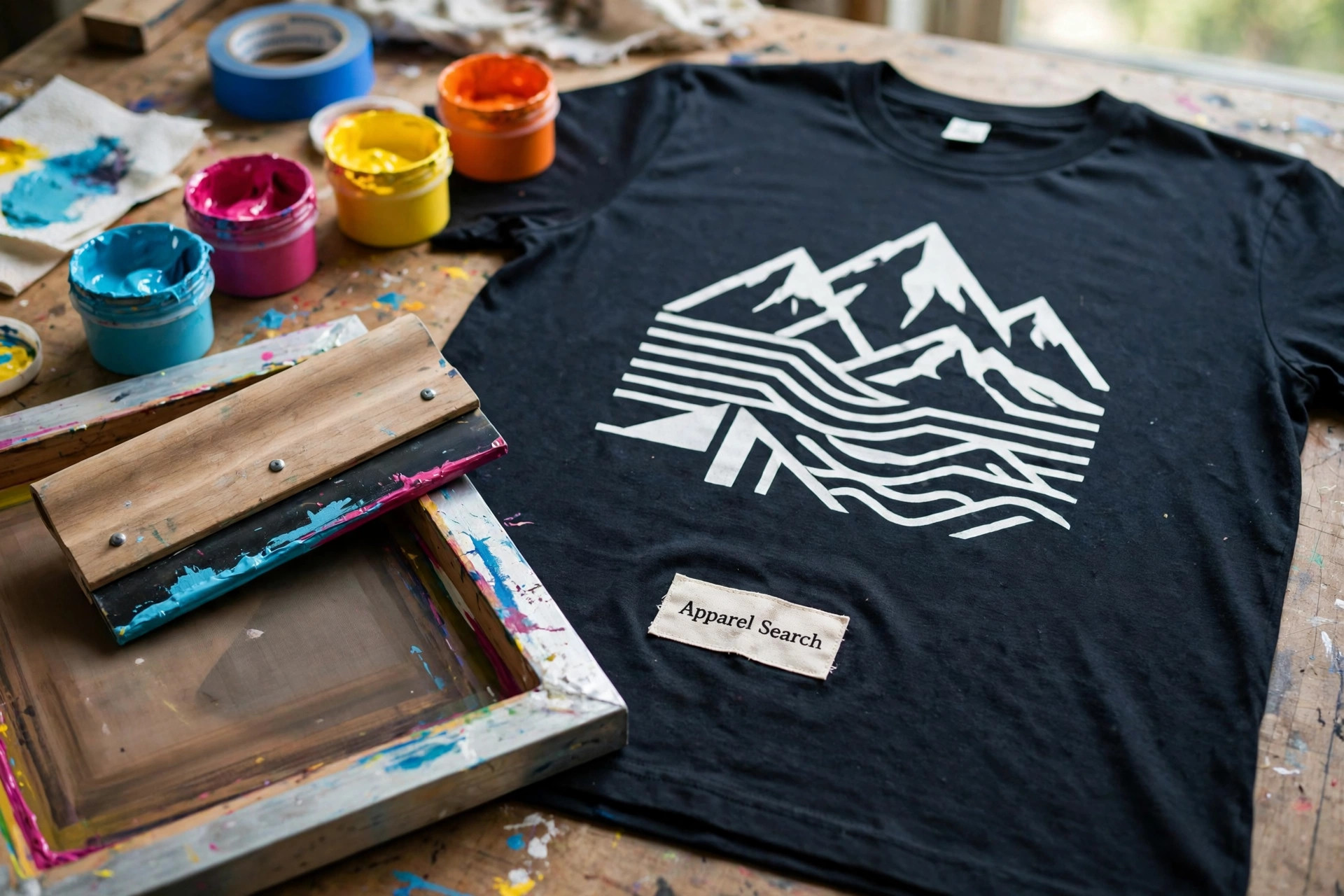
Plastisol suits this process on garments for a specific visual reason: opacity. Plastisols are particularly useful for printing opaque graphics on dark fabrics, because the ink film sits on top of the cloth and covers the garment color beneath it, letting a bright design hold its color on a black or navy shirt. The same quality creates the method's known drawback. Plastisol tends to sit atop the fabric instead of soaking into the fibers, giving the print a raised, plasticized texture, and this method does not provide the best hand to the fabric; other inks can produce a softer feel. Printers therefore choose plastisol deliberately — for opacity, durability, bright color and ease of handling — and accept a firmer print surface as the price, or select a softer ink system when the feel of the finished shirt matters more than coverage.
Common Questions
What is plastisol?
Plastisol is a suspension of PVC or other polymer particles in a liquid plasticizer. It flows as a liquid and can be poured into a heated mold, and it is commonly used as a textile ink for screen printing.
Why does plastisol ink need curing?
Plastisol inks will not dry on their own, but must be cured, with a flash dryer or any oven. Most plastisols need to reach a temperature of about 180 degrees Celsius, or 350 Fahrenheit, for full curing.
How does a plastisol print feel on fabric?
Plastisol tends to sit atop the fabric instead of soaking into the fibers, giving the print a raised, plasticized texture. This method does not provide the best hand to the fabric; other inks can produce a softer feel.
Why is plastisol used on dark fabrics?
Plastisols are particularly useful for printing opaque graphics on dark fabrics, because the ink film sits on top of the cloth and covers the garment colour beneath it, so a bright design holds its colour on a dark shirt.