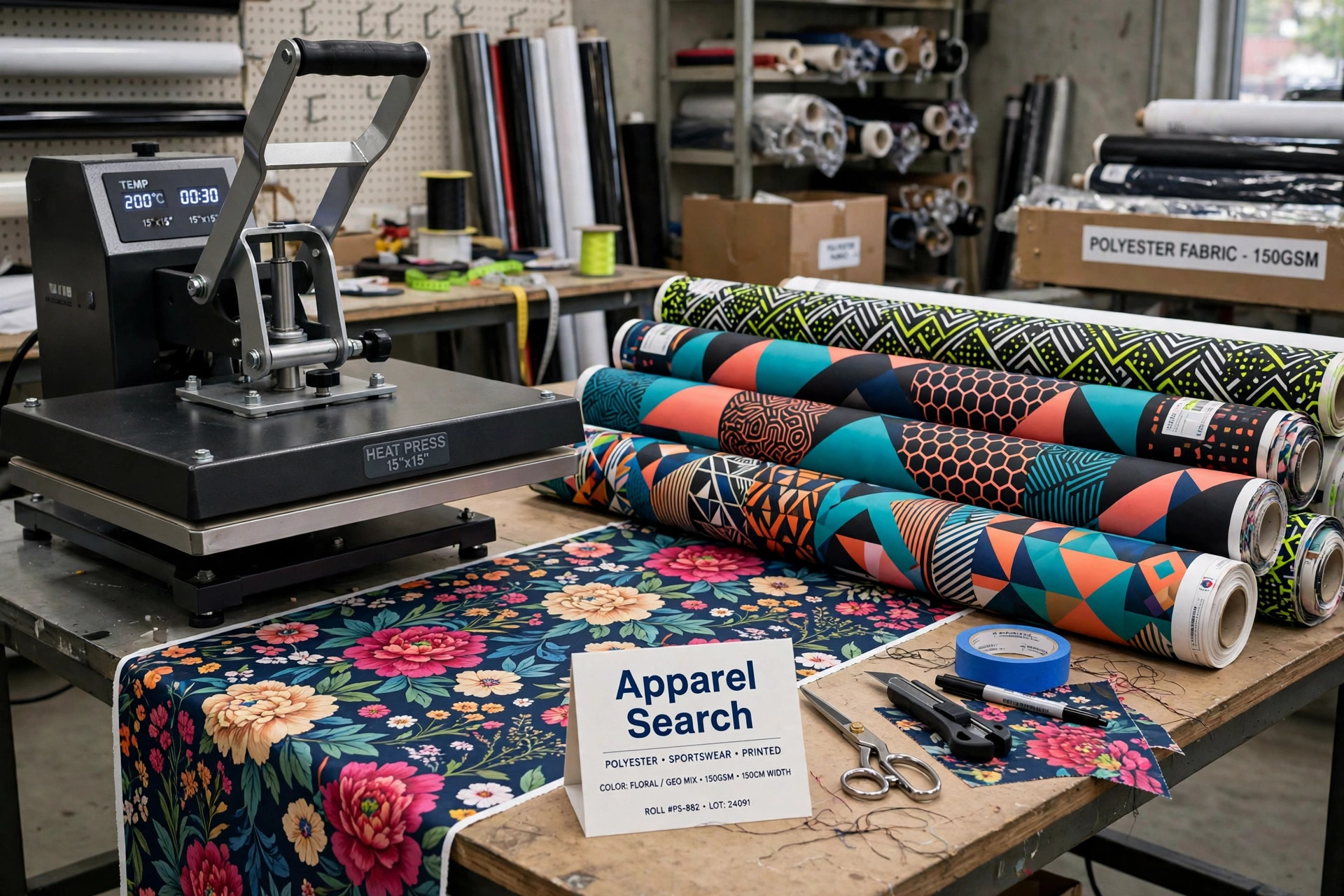
Sublimation printing (dye-sublimation) is a heat-transfer print method that prints a design with disperse dyes onto coated transfer paper, then uses heat and pressure to turn those dyes into a gas that penetrates and bonds inside polyester fibers. When the fabric cools, the dye is locked within the fiber itself — producing bright, photographic, edge-to-edge prints with no hand feel and no ink layer to crack, peel, or wash off.
How It Works
The artwork is first printed in mirror image onto transfer paper using disperse dye inks — often on a modified inkjet printer. For the equipment side of the process, see the dye-sublimation printer definition; this guide covers the production method itself. The printed paper is placed against white or light-colored polyester fabric or a pre-made garment, and the two pass through a heat press or calender at roughly 195–205°C (385–400°F) for 30 to 60 seconds. Heat opens the polyester polymer and turns the dye to gas; the gas diffuses into the fiber and is trapped there as the fabric cools.
Polyester content is the controlling variable. Prints are strongest and brightest on 100% polyester. On blends, only the polyester fibers take the dye, so a 50/50 poly-cotton garment prints with a washed, vintage look — sometimes wanted, often a surprise. Cotton, nylon, and other natural or non-polyester fibers cannot be sublimated at all without special coatings.
Where Sublimation Shines
Sublimation is the default choice for all-over prints (AOP) and performance sportswear. Because the dye adds no weight or film, printed jerseys stay breathable and stretch without cracking, and every player’s name and number can differ at no extra setup cost. Fashion programs use it for leggings, swimwear, dresses, and cut-and-sew garments printed as yardage before cutting. Two practical cautions: pressing a finished garment can leave white creases at seams, side folds, and underarms where the paper did not touch, and the process only works on light bases — there is no white dye, so nothing prints on black or dark fabric.
Sublimation vs. Screen and Digital Printing
Against screen printing methods, sublimation trades fabric freedom for image freedom: unlimited colors and photographic detail at one flat cost, but polyester only. Against digital textile printing, the relationship is close — sublimation is itself printed digitally — but direct digital (DTG and roll-to-roll) puts pigment or reactive inks onto cotton and other fibers where sublimation cannot go. Choose sublimation for polyester sportswear, all-over designs, and personalized short runs; choose screen printing for bulk spot-color work on cotton; choose digital direct printing for photographic designs on natural fibers.
FAQs
- Does sublimation printing work on cotton?
- No. Disperse dyes bond only inside polyester fibers. On cotton the dye has nothing to bond to and washes out; on poly-cotton blends only the polyester share of the fabric holds color, which is why blends print faded and vintage-looking.
- Why can't sublimation print white, or print on black garments?
- Sublimation dyes are transparent and there is no white dye in the process, so the fabric color always shows through the print. The method therefore starts from white or light-colored polyester; on a dark garment the design would be invisible.
- Does a sublimation print crack, peel, or fade?
- There is no ink film on the surface, so there is nothing to crack or peel. The dye sits inside the fiber and washes and wears like the fabric itself, with strong wash and light fastness on polyester.
- What is the difference between sublimation and a heat-transfer print?
- A heat-transfer (vinyl or printed film) design sits on top of the fabric as a layer that can crack, peel, and feel stiff. Sublimation turns the dye to gas so it becomes part of the fiber — the printed area feels exactly like unprinted fabric.
More B2B Production Guides
This guide is part of the Apparel Search B2B production series on specifications, printing, dyeing, trade terms, and compliance. Browse the full series below, or start from the manufacturing guides hub.
Spec, Measure & Inspect
Print Methods
- Discharge Printing
- Water-Based Printing
- Puff Print
- Foil Print
- Flocking
- Sublimation Printing (this guide)
- Digital Printing
Dye Methods
Trade & Compliance
Apparel Search: explore the manufacturing guides hub and production & sourcing resources for the fashion industry.