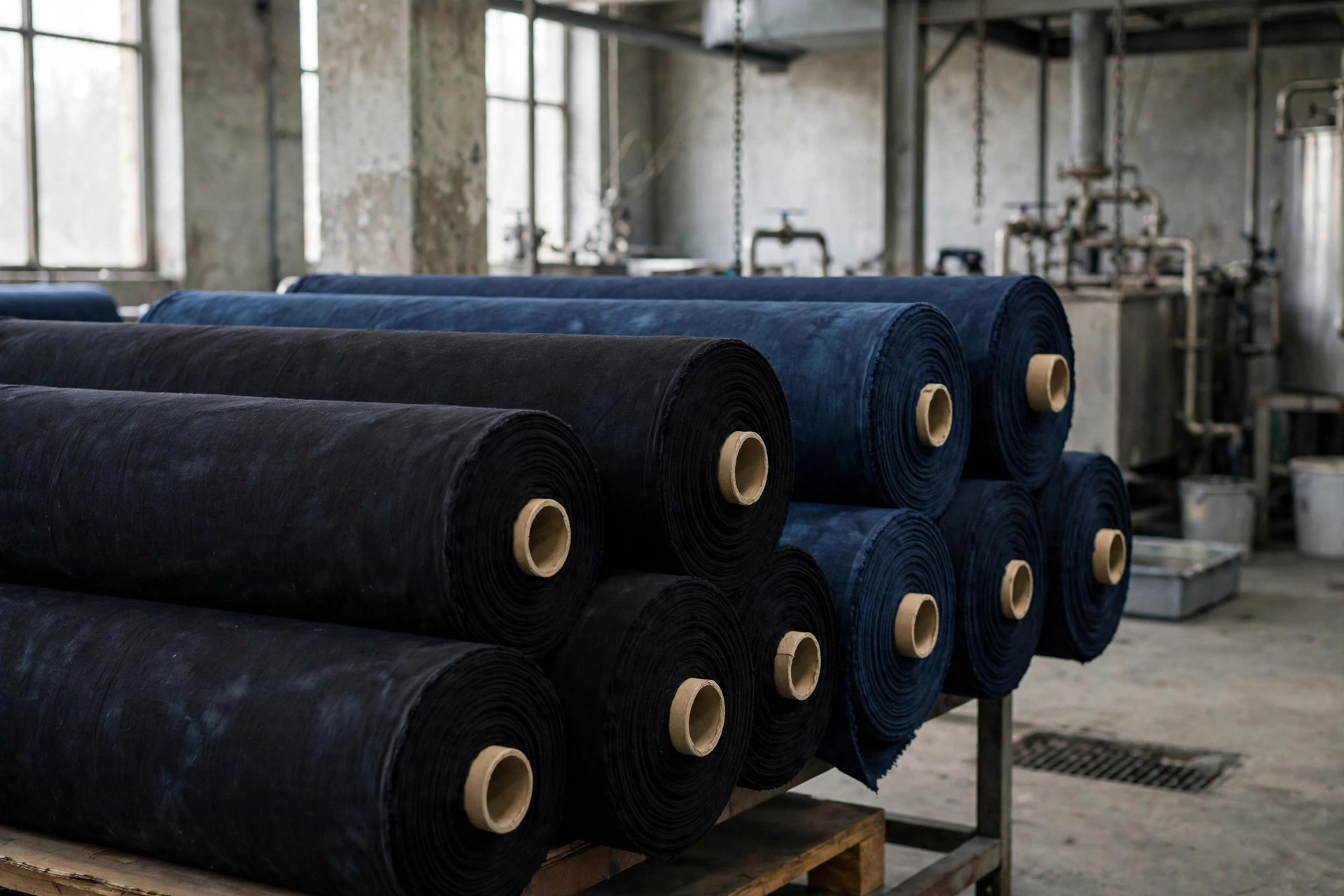
Sulfur dyes are a class of inexpensive, high-tonnage dyes used mainly for dark shades — black above all, plus navy, brown, olive, and maroon — on cotton and other cellulosic fibers. Like vat dyes they are insoluble in water and must be reduced to a soluble form for dyeing, then oxidized back inside the fiber. If you own black jeans, sulfur dye probably colored them.
Strengths: Price and Wash Fastness
Sulfur dyes win on economics: low dye cost, simple application in standard equipment, and shades deep enough for true jet blacks that would be expensive in other classes. Wash fastness is good — sulfur-dyed workwear, uniforms, denim, and corduroy survive repeated laundering — which is why the class dominates budget and mid-market dark cotton. The trade-offs sit elsewhere: light fastness is only moderate, chlorine bleach attacks the colors, and the shade range is deliberately muted — sulfur chemistry does not do brights.
The Known Risks: Tendering and Bronzing
Two classic sulfur faults belong on every buyer’s radar. Tendering: residual sulfur in the fabric can slowly oxidize to sulfuric acid in warm, humid storage, weakening (tendering) the cotton over months — goods feel fine at shipment and fail later. Thorough after-washing and correct finishing prevent it, which makes mill discipline, not the dye class alone, the deciding factor. Bronzing: very deep shades, especially blacks, can develop a metallic bronze sheen from dye sitting on the surface; proper reduction, oxidation, and soaping minimize it. Both faults are why sulfur programs need shade and storage checks built into inspection — see the fabric inspection guide and shade band guide.
Environmental Notes
Traditional sulfur dyeing uses sodium sulfide as the reducing agent, and sulfide-bearing effluent is a genuine treatment burden; modern liquid sulfur dyes and glucose- or sulfide-reduced systems cut that load substantially, and mills working under systems such as bluesign or with OEKO-TEX certified inputs will be using the cleaner variants. Ask which reduction system a mill runs rather than accepting or rejecting ‘sulfur’ as a label. For alternatives, compare vat dyeing (faster, costlier) and pigment dyeing (surface color, vintage character).
FAQs
- What colors are sulfur dyes used for?
- Dark, muted shades: black (the biggest use), navy, brown, olive, burgundy, and dark greens on cotton. The class cannot produce bright colors.
- Is sulfur-dyed clothing durable?
- Wash fastness is good and garments wear well. The specific risks are long-term tendering from poorly washed goods and bronzing on very deep shades — both are mill-process issues.
- Why do black jeans fade grey?
- Washing gradually removes surface dye and abrades fibers. Sulfur blacks fade to a greyish tone, unlike indigo’s blue-to-white ring-dyed fade.
- Are sulfur dyes harmful?
- Finished, properly washed garments are a standard mass-market product. The environmental concern is dyehouse effluent from sulfide reduction, which modern low-sulfide systems reduce.
More B2B Production Guides
This guide is part of the Apparel Search B2B production series on specifications, printing, dyeing, trade terms, and compliance. Browse the full series below, or start from the manufacturing guides hub.
Spec, Measure & Inspect
Print Methods
Dye Methods
- Solution Dyeing (Dope Dyeing)
- Vat Dyeing
- Sulfur Dyeing (this guide)
- Pigment Dyeing
Trade & Compliance
Apparel Search: explore the manufacturing guides hub and production & sourcing resources for the fashion industry.