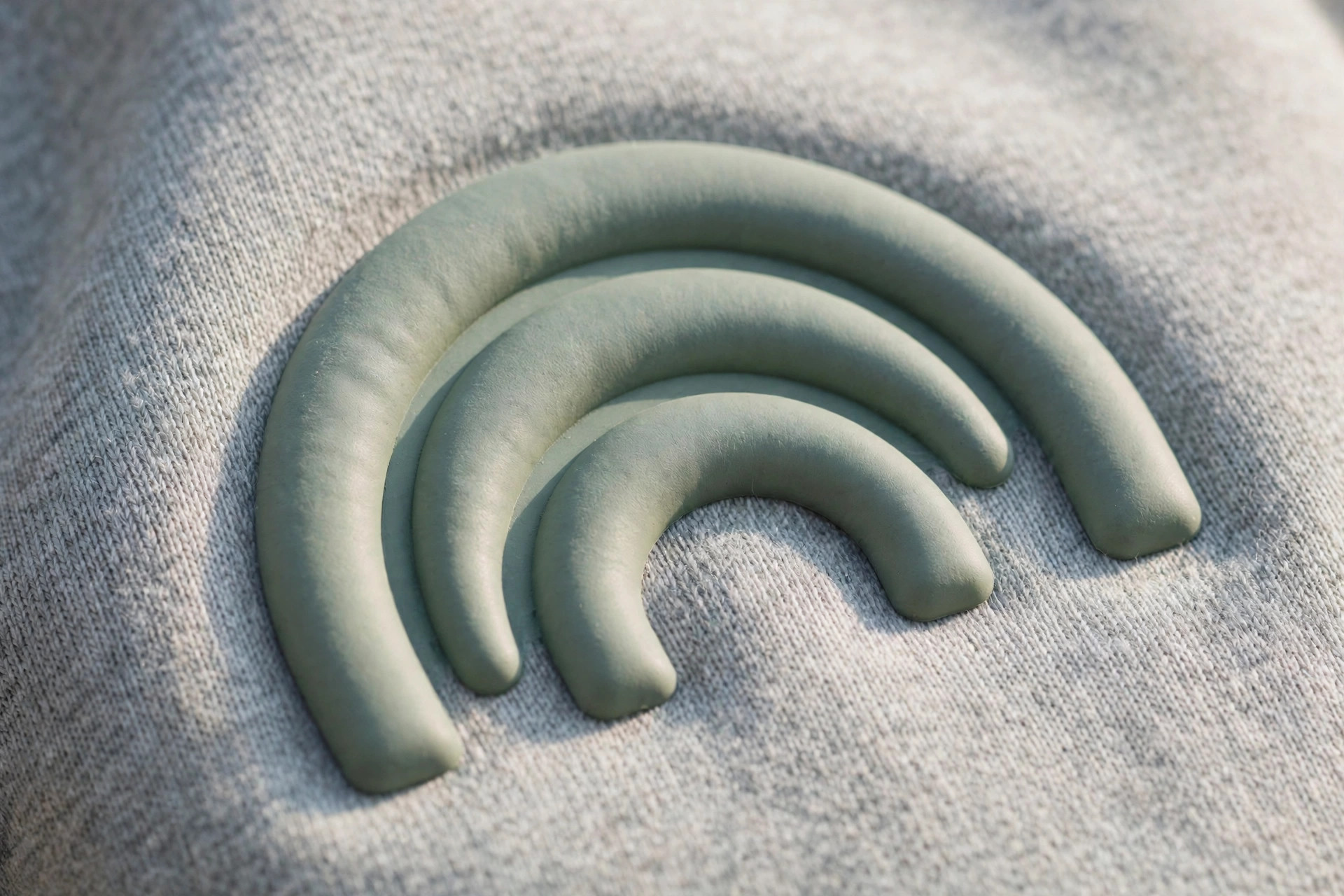
A puff print is a screen print made with a puff additive mixed into the ink. When the printed garment passes through the dryer, heat activates the additive and the ink expands, rising into a rounded, spongy, three-dimensional design. Puff is a staple of streetwear, collegiate, and retro graphics — anywhere a bold, tactile logo should literally stand off the garment.
Artwork Rules for Puff
Puff rewards bold shapes and punishes fine detail. As the ink expands it also spreads, so thin lines fatten, small gaps close, and tiny text turns to mush. Design with thick strokes, generous spacing, and type sized well above normal print minimums, and expect edges to round off. Printers often under-base or choke the artwork slightly to compensate for the spread. One or two colors is the practical range; multi-color puff designs need careful registration because each color expands against its neighbor.
The Curing Window
Puff lives or dies in the dryer. Under-cured, the print does not fully expand and the binder stays weak, so the raised surface scuffs and washes away. Over-cured, the expanded cells collapse or scorch and the print flattens and hardens. Each ink system has a temperature/time window, and garment weight changes how heat reaches the print, so a setting dialed in on tees will not transfer blindly to heavyweight fleece. Test, wash-test, and record the dryer settings on the production spec.
Durability and Best Uses
A well-cured puff print is durable but not invincible: the raised surface is more exposed to abrasion than a flat print, so expect gradual softening of the edges over many washes, and keep puff away from high-friction placements. It excels on sweatshirts, hoodies, tees, and caps for logos, wordmarks, numbers, and simple icons. For shimmer instead of height see foil print; for a velvet texture see flocking; both are alternative special-effect finishes a brand can combine with standard water-based or plastisol base prints.
FAQs
- How long does puff print last?
- A properly cured puff print lasts the life of the garment under normal washing, though the raised edges gradually soften with abrasion. Wash inside out and avoid high-heat drying.
- Can puff print do fine detail?
- No. Expansion spreads the ink, so fine lines and small text fill in. Puff artwork needs bold shapes, thick strokes, and open spacing.
- Is puff print the same as embroidery?
- No. Puff is printed ink expanded by heat; embroidery is stitched thread. Puff is cheaper at volume and lighter, embroidery is more durable and premium in feel.
- Why did my puff print come out flat?
- Usually heat: too little and it never expands, too much and it collapses. Dryer temperature, belt speed, and garment weight all have to be in the ink’s window.
More B2B Production Guides
This guide is part of the Apparel Search B2B production series on specifications, printing, dyeing, trade terms, and compliance. Browse the full series below, or start from the manufacturing guides hub.
Spec, Measure & Inspect
Print Methods
- Discharge Printing
- Water-Based Printing
- Puff Print (this guide)
- Foil Print
- Flocking
Dye Methods
Trade & Compliance
Apparel Search: explore the manufacturing guides hub and production & sourcing resources for the fashion industry.