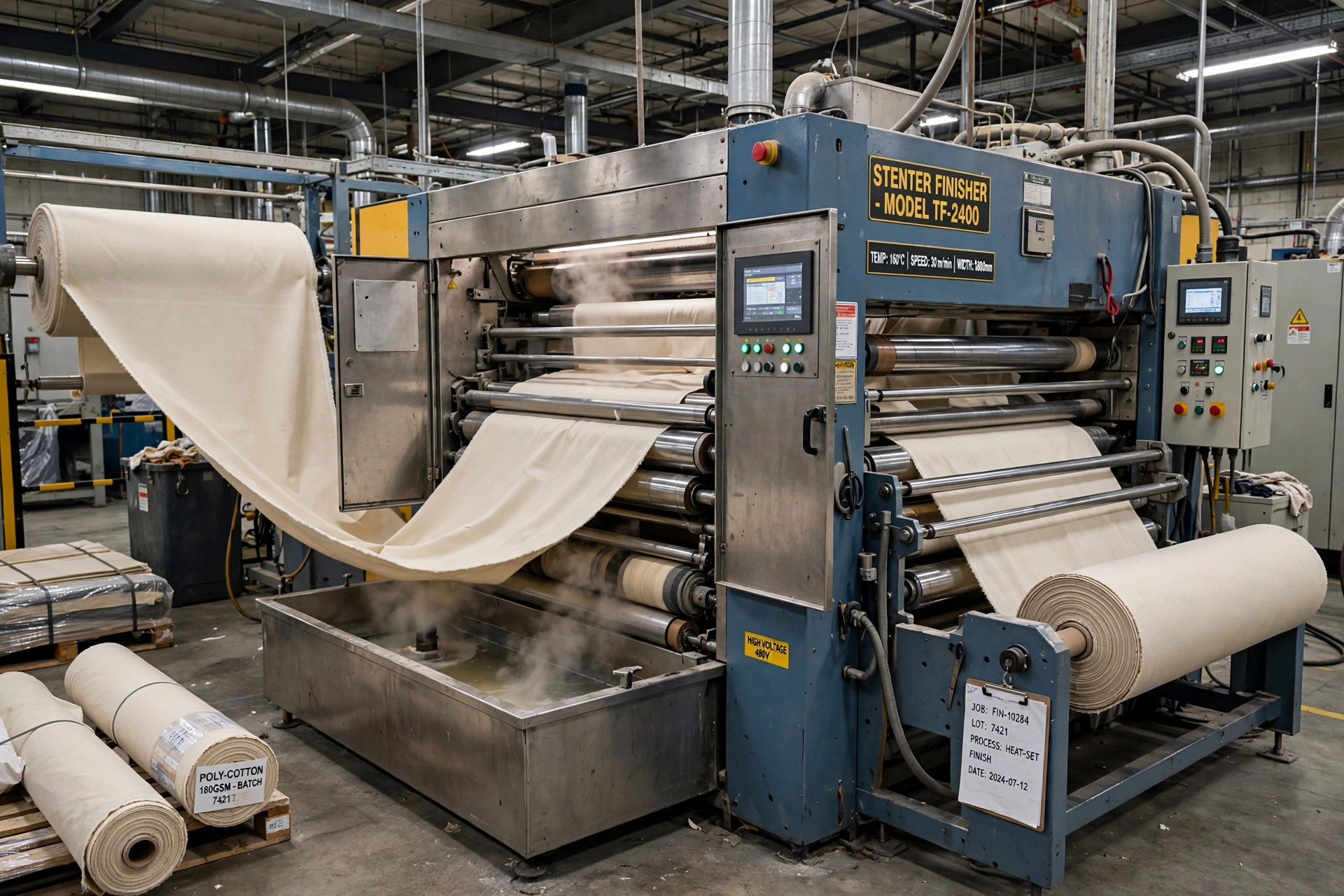
Fabric finishing transforms raw woven or knitted cloth into the material designers actually buy. Greige (unfinished) fabric is rough, shrunken, and dull — finishing gives it the color, hand feel, width stability, and performance properties a garment needs.
Mechanical Finishes
Singeing burns off surface fuzz for a clean face; calendaring presses fabric between heated rollers for smoothness or luster; raising/brushing lifts fibers for fleece and flannel; sanforizing pre-shrinks cotton so the garment won't. Each is a physical process — no chemistry involved.
Chemical Finishes
Mercerizing treats cotton with caustic soda for luster, strength, and dye uptake. Easy-care / durable-press resins give wrinkle resistance; water-repellent finishes (DWR) shed rain; flame-retardant and antimicrobial treatments serve workwear and medical markets. Always confirm finishes comply with your market's chemical regulations.
Why Brands Should Care
Two fabrics with identical fiber content can perform completely differently based on finishing — that's why lab dips and strike-offs must be approved on the finished cloth, not greige. Ask mills for a finish specification sheet and keep it with your tech pack; when reordering, it prevents nasty surprises.
FAQs
- What is greige fabric?
- Unfinished fabric straight off the loom or knitting machine — unbleached, undyed, and not yet given its final width or hand feel.
- Does finishing wash out?
- Some do — softeners fade with laundering, while durable-press and sanforizing are engineered to last the garment's life. Ask for wash-durability data.
- What is mercerized cotton?
- Cotton treated with caustic soda under tension, giving it a silky luster, greater strength, and better dye absorption — common in quality shirting.
- Are fabric finishes safe?
- Reputable mills certify to standards like OEKO-TEX. Some older chemistries (certain fluorocarbons, formaldehyde resins) face restrictions — specify compliant finishes.
Apparel Search: explore more production & sourcing resources for the fashion industry.