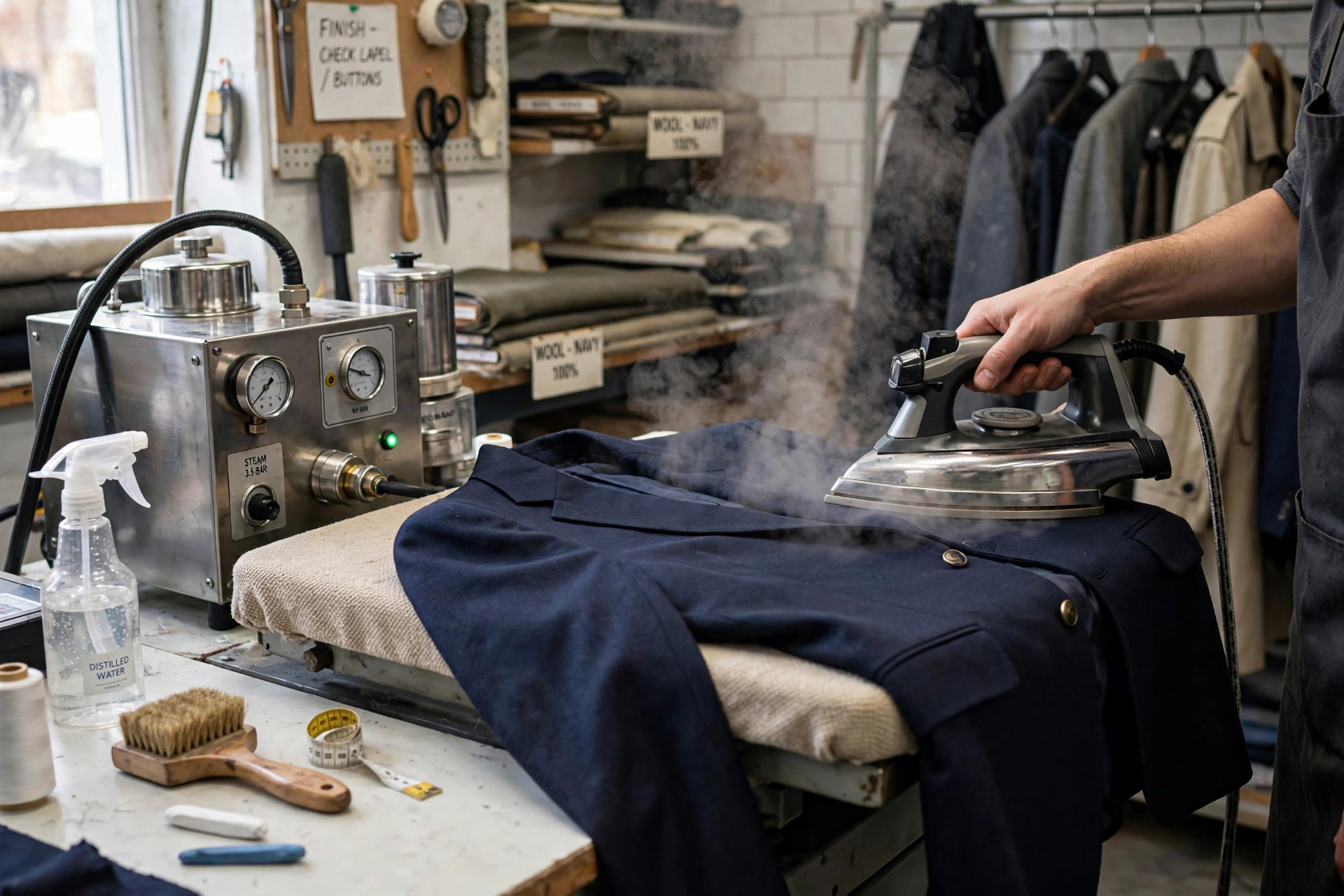
Garment finishing covers every step after sewing that prepares clothing for sale — pressing, washing, dyeing, trimming loose threads, and final inspection. Two identical sewn garments can look cheap or premium depending entirely on finishing.
Pressing and Shaping
Industrial pressing uses steam, pressure, and shaped bucks to set seams flat, crease trousers, and mold lapels and collars. Different fabrics demand different heat and steam settings — synthetics scorch where wool thrives. Tunnel finishers (steam tunnels garments pass through on conveyors) handle high volumes of shirts and knitwear fast.
Garment Washing and Dyeing
Washing after sewing softens hand feel and pre-shrinks garments; garment dyeing colors the finished piece rather than the fabric, giving rich, slightly varied tones popular in casual wear. Enzyme washes, stone washes, and vintage treatments all happen at this stage — and each adds cost, time, and a quality checkpoint.
The Final Touches
Thread trimming (by hand or suction machines), spot cleaning, button and snap function checks, size-label verification, folding or hanging, polybagging, and carton packing round out finishing. A disciplined finishing department is where brands earn their reputation for consistency — customers notice the details.
FAQs
- What is the difference between fabric dyeing and garment dyeing?
- Fabric (piece) dyeing colors the cloth before cutting for perfect uniformity. Garment dyeing colors the finished garment, producing softer, more casual color variation.
- Why do some garments need pre-washing?
- To remove shrinkage before the customer washes at home, soften the fabric hand, and remove excess dye that could bleed.
- What is a tunnel finisher?
- A conveyorized steam chamber that pressed garments pass through for high-speed finishing — standard equipment for shirt and knitwear factories.
- Does finishing affect cost much?
- Yes — washing, dyeing, and special treatments can add 10–30% to unit cost. Budget them in the costing sheet from the start.
Apparel Search: explore more production & sourcing resources for the fashion industry.