Apparel Search · Fabric Construction Guide
How Weaving Works: Warp, Weft and the Loom Cycle
Shedding, picking and beating-up — the repeating cycle, hundreds of times a minute, that interlaces two sets of yarn into a single cloth.
Weaving is one of the oldest manufacturing processes in the world, and its core action has not changed in thousands of years: hold one set of yarns taut, open a gap in them, pass a second yarn through the gap, close the gap, and repeat. What has changed is speed and precision — a modern loom performs that cycle several hundred times a minute. This page walks through the process in order, from yarn preparation to finished cloth; it is the foundation spoke of the Weaving & Woven Fabric Construction guide, and everything in the other five guides assumes it.
The Two Yarn Systems
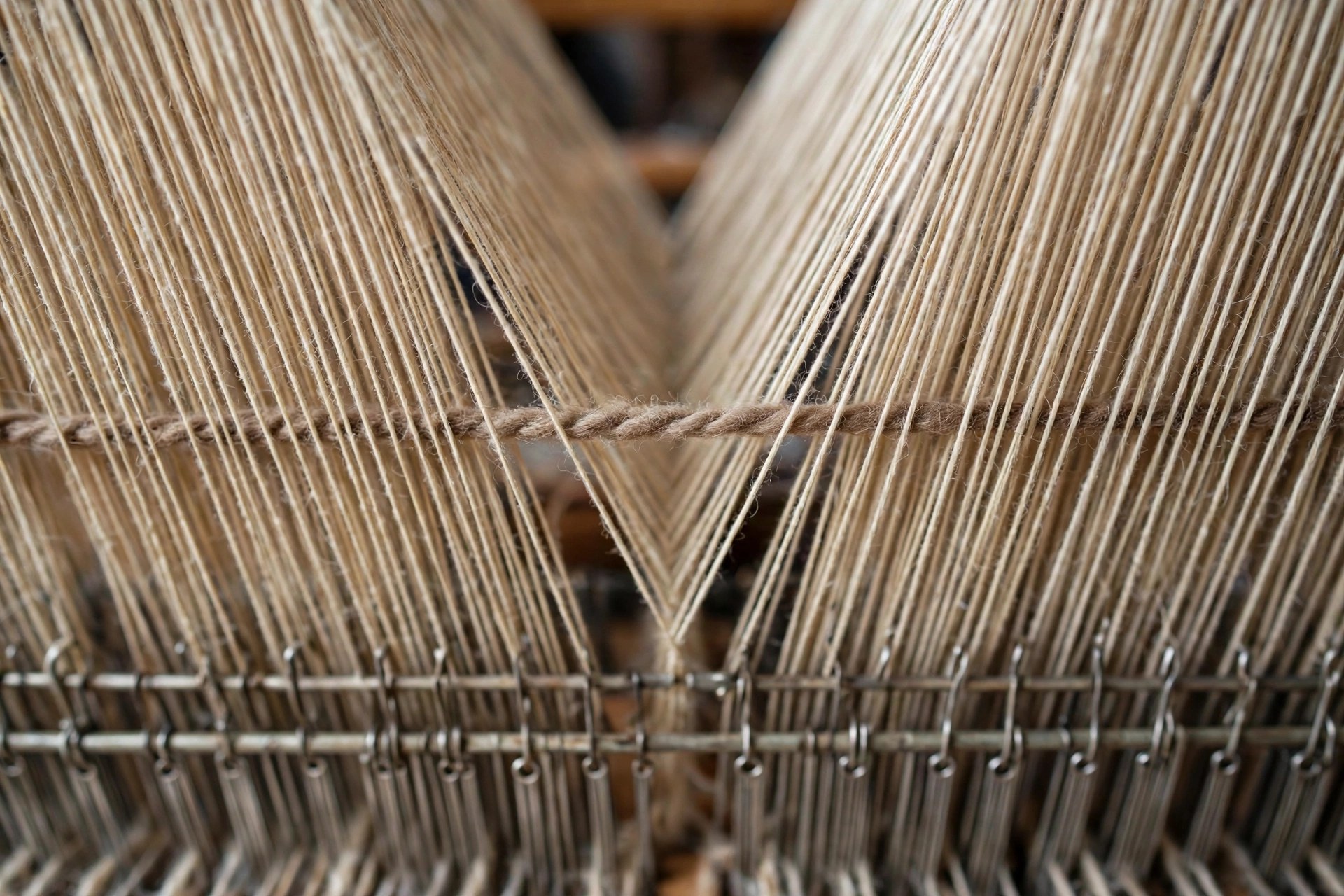
The lengthwise yarns are the warp. Thousands of individual warp ends are wound side by side onto a large cylinder called the warp beam, in exactly the order and spacing they will occupy in the fabric — the number of ends per inch (or per centimeter) is set here and largely decides the cloth's density and weight. The crosswise yarn is the weft, also called the filling or, for a single insertion, a pick. Picks per inch is the weft counterpart to ends per inch, and the balance between the two counts shapes how the finished fabric behaves: warp-heavy cloth is firm and stable; weft-heavy cloth is softer and fuller. The Yarn & Spinning Guide covers how both yarn sets are made and specified.
Key Terms
Shed — the V-shaped opening formed when some warp threads are lifted and others lowered, through which the weft passes. Fell of the cloth — the line where the newest pick joins the already-woven fabric. Selvedge — the self-finished edge formed where the weft turns back at each side. Greige goods — fabric straight off the loom, before dyeing or finishing.
Preparing the Warp
Before weaving can start, the warp must survive it. Each end is drawn through a heddle — a wire or flat steel strip with an eye — mounted on a harness frame (also called a shaft), and then through the reed, a comb-like grid that spaces the ends evenly and will later beat each pick into place. Because warp yarns are rubbed by heddles and reed thousands of times, spun warp yarns are usually sized: coated with a temporary starch or synthetic film that adds strength and smoothness, then washed out after weaving. Weaving preparation is invisible in the finished garment, but a poorly prepared warp stops the loom constantly with broken ends, and every stop risks a defect in the cloth.
The Loom Cycle, Step by Step
- Shedding. The harness frames rise and fall in the pattern the weave structure demands, separating the warp sheet into two layers and opening the shed. Which threads lift on each pick is the entire secret of weave structure — plain weave alternates two frames; complex patterns need many frames or individual thread control.
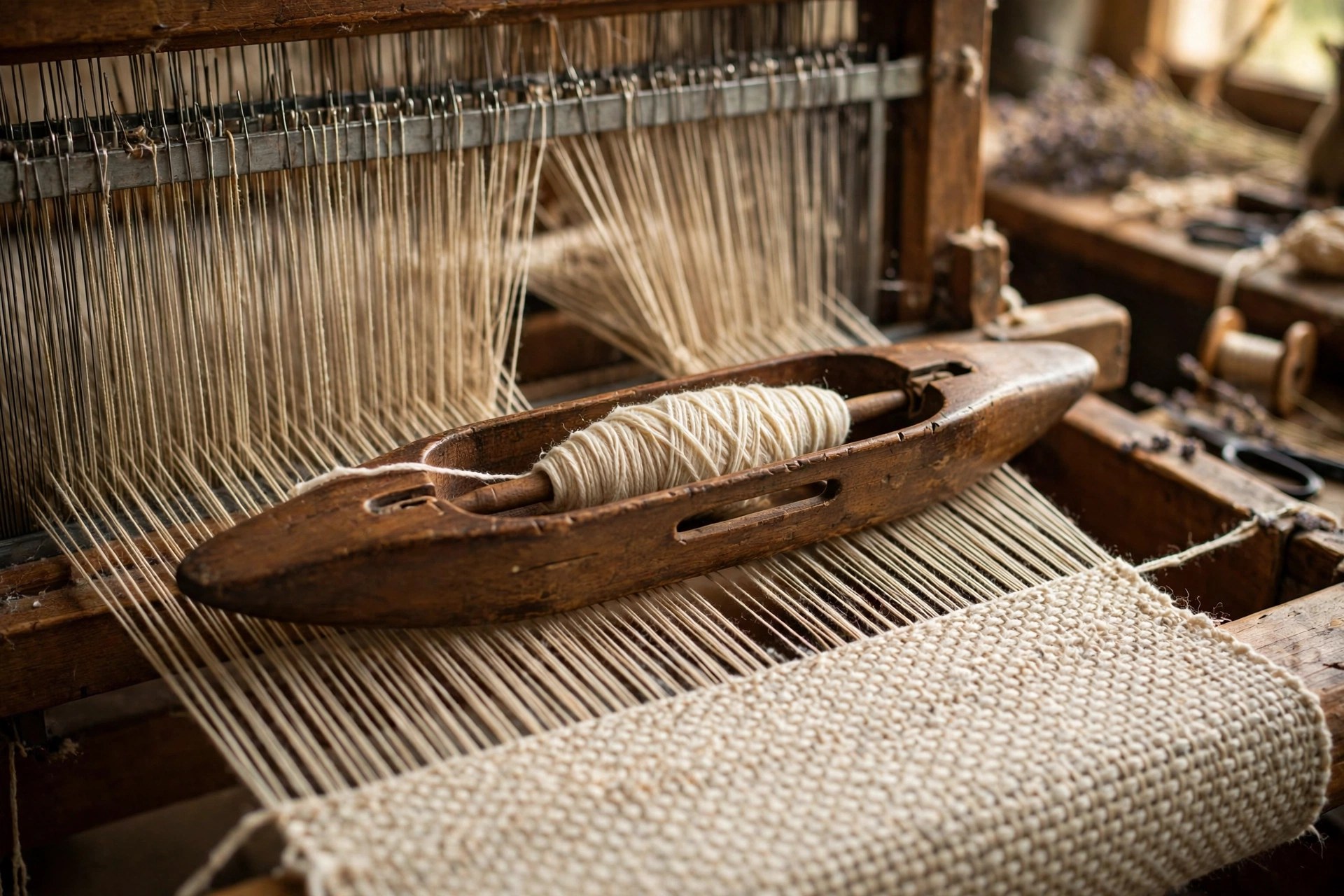
- Picking. A single weft yarn is carried or propelled through the open shed from one side of the loom to the other. How that journey happens — by shuttle, rapier, projectile or a jet of air or water — is what distinguishes the loom types in the Types of Looms guide.
- Beating-up. The reed swings forward and pushes the new pick firmly against the fell of the cloth, packing it into the structure before the shed closes on it. Beat-up force helps set the picks per inch and the fabric's compactness.
- Let-off and take-up. The warp beam releases a measured length of warp while the cloth beam winds the finished fabric away, keeping tension constant and advancing the fell by exactly one pick's worth of cloth. These two motions run continuously underneath the three headline steps.
Why the Selvedge Forms
On a shuttle loom the weft is one continuous yarn that turns at each edge, wrapping the outermost warp ends and locking the fabric's sides — a true woven selvedge. Shuttleless looms insert separate picks, so their edges are fringed and must be tucked, leno-bound or heat-sealed (for synthetics) to stop fraying. Cut edges of woven fabric always fray along the weft because the interlacing near a cut loses its anchors; the selvedge is the one edge that cannot. Garment makers exploit this: quality trousers and jackets often show selvedge outseams, and selvedge denim — covered in the Denim Fabric Guide — is woven on the shuttle looms that produce the neatest edges of all.
From Loom to Finished Fabric
Cloth leaves the loom as greige goods: correct in structure but often stiff with size, off-white, and carrying weaving faults that inspectors mark for repair. Desizing, scouring, dyeing or printing, and finishing then convert it into the fabric a garment factory cuts. Structure, however, is already final — which is why the next guides in this cluster focus on the decisions made at the loom: the basic weave structures the shedding pattern creates, and the dobby and jacquard mechanisms that let looms weave pattern as well as cloth.
Common Questions
What are the main steps of weaving?
The loom cycle has three main steps plus two continuous motions. Shedding lifts and lowers warp threads to open a gap called the shed; picking carries one weft yarn (a pick) through the shed; beating-up swings the reed forward to pack the pick into the cloth. Meanwhile let-off releases warp from the beam and take-up winds finished cloth away, keeping tension even.
Why is warp yarn sized before weaving?
Warp yarns are abraded by heddles and the reed on every cycle and held under tension for the whole run, so spun warp yarns are coated with size — a starch or synthetic film — to add strength and reduce hairiness and breakage. The size is washed out after weaving, during fabric preparation.
What is a pick in weaving?
A pick is a single weft yarn inserted across the warp. Picks per inch (or per centimeter) measures weft density, just as ends per inch measures warp density. Together the two counts describe how tight and heavy a woven fabric is.
What is the fell of the cloth?
The fell is the boundary line where the most recently beaten-up pick meets the woven fabric. Each new pick is pushed against the fell, so the fell advances steadily across the loom as cloth is produced.
Back to the Weaving & Woven Fabrics Guide
The Weaving & Woven Fabrics hub maps the whole construction story — loom types, the three basic structures, patterned weaving and the named fabrics they produce.