Apparel Search · Fabric Construction Guide
Dobby and Jacquard Weaving: How Patterned Wovens Are Made
Plain looms weave structure; dobby and jacquard looms weave design — from small geometric dobby patterns to the pictorial damasks and brocades that only individual warp-thread control makes possible.
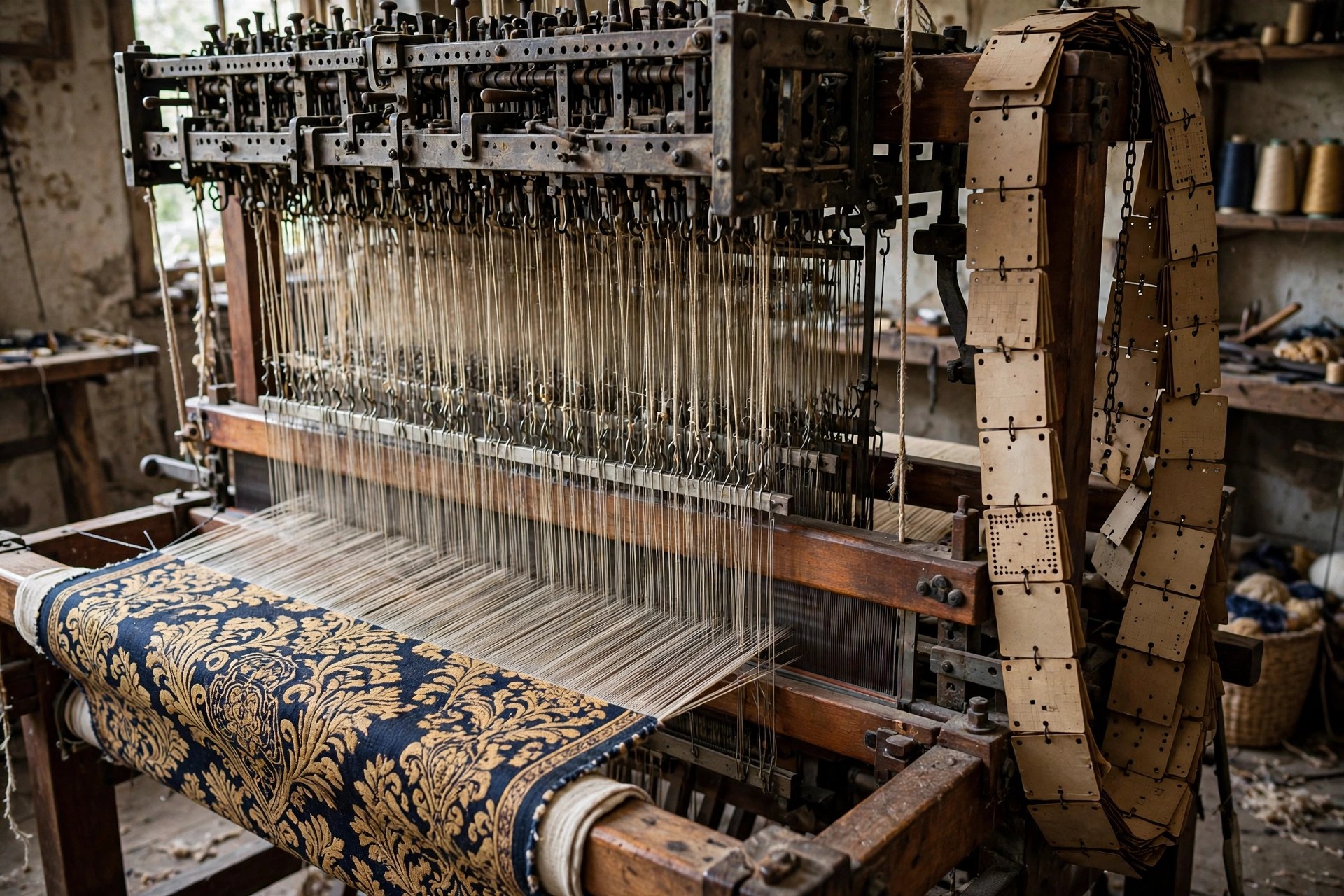
The shedding systems in the earlier spokes of this Weaving & Woven Fabric Construction guide — cams and simple harnesses — can only repeat what a handful of frames allow: the plain, twill and satin structures and their close derivatives. Pattern woven into the cloth, rather than printed on it afterward, needs finer control. Two mechanisms provide it, at two different scales: the dobby, which choreographs harness frames, and the jacquard, which conducts individual warp threads. Understanding which system made a fabric explains its pattern size, its price, and how the design survives washing and wear — because a woven pattern cannot fade, peel or crack the way a print can.
Dobby Weaving: Pattern by the Frame
A dobby head sits on top of the loom and selects, for each pick, which of the harness frames rise and which fall, following a programmed chain, peg drum or electronic pattern. Because every thread on a frame moves together, a dobby pattern is built from the weave structures the frames can make — blocks of plain weave, twill and satin arranged in small geometric repeats: stripes, checks, tiny diamonds, dots and bird's-eye figures. Frame counts limit complexity — dobby heads commonly run up to roughly two dozen shafts — but within that limit the system is fast, robust and economical.
The signature dobby fabric is dobby shirting and dobby cloth: cotton or blended cloth carrying small raised geometric patterns woven in, often with extra texture from clipped or unclipped supplementary threads. Dobby mechanisms also weave the figured borders of towels, the small all-over patterns of dress fabrics, and many of the textured stripes sold as plain cloth at a glance — look closely and the pattern is structural, not printed.
Jacquard Weaving: Pattern by the Thread
The jacquard machine abandons frames altogether. Each warp end (or small group of ends) is threaded through its own heddle, weighted by a lingo and governed by hooks and needles in the jacquard head above the loom, so the machine can lift any combination of threads on any pick. The original control medium was the famous chain of punched cards — one card per pick, the pattern literally punched in holes — and modern heads read electronic design files instead, but the principle is unchanged: with hundreds or thousands of individually controlled ends, the pattern repeat can be as large as the fabric width and as detailed as a photograph rendered in weave.
Damask and Brocade: The Two Great Jacquard Fabrics
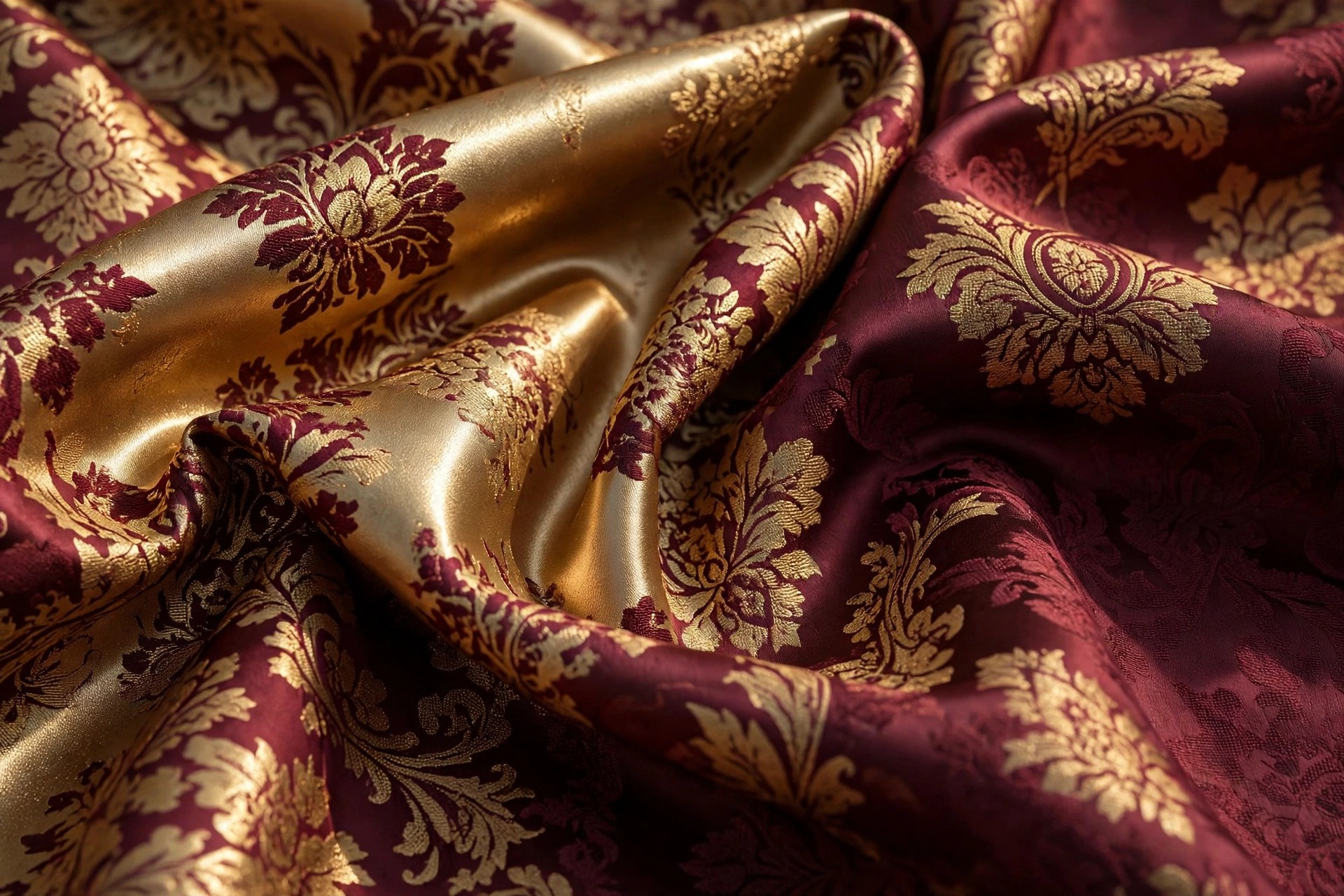
Damask is a single-structure jacquard fabric, classically in one color. Its pattern is drawn by contrast of structure alone: the motif is woven in warp-faced satin while the ground is weft-faced sateen (or the reverse), so design and background are the same yarns reflecting light in opposite ways. Tilt a damask tablecloth or upholstery fabric and the floral pattern appears and vanishes with the angle. Brocade goes further: on a plain, twill or satin ground it adds supplementary weft yarns — often in contrasting colors or metallic threads — that float on the surface only where the pattern needs them and are carried loosely behind elsewhere, giving brocade its raised, embroidered richness and its characteristically rougher reverse. Tapestry, matelassé and most figured upholstery and occasion fabrics are also jacquard products; the weaving definition traces the jacquard loom's history from punched cards onward.
Dobby or Jacquard? A Field Test
Look at the pattern's repeat. Small geometric figures that repeat every centimeter or two, built from visible blocks of plain, twill or satin weave, are dobby work. Large, curving, pictorial motifs — florals, paisleys, scenes — with long repeats and fine detail can only be jacquard. Then turn the fabric over: damask shows the same pattern in negative, while brocade shows loose supplementary threads floating behind the motif areas.
Why Mills Choose One Over the Other
Cost and flexibility pull in opposite directions. Dobby heads are comparatively inexpensive, run at full loom speed, and suit the short-to-medium runs of apparel shirting and dress goods. Jacquard heads cost more, historically slowed the loom, and demand skilled design preparation — every motif must be translated into a point-paper or digital weave plan assigning a structure to each area — but they let one loom weave an unlimited library of large patterns, and modern electronic jacquards have largely closed the speed gap. Either way, the result shares the virtue that defines this spoke of the weave structures family: pattern with the permanence of structure itself, tested for the abrasion and colorfastness demands described in the Textile Testing & Quality Standards guide.
Common Questions
What is the difference between dobby and jacquard weaving?
A dobby mechanism controls harness frames, so all warp threads on one frame move together; patterns are small geometric repeats built from blocks of plain weave, twill and satin, limited by the number of frames. A jacquard machine controls individual warp threads — hundreds or thousands of them — so patterns can be large, curving and pictorial, as in damask and brocade.
What is damask fabric?
Damask is a jacquard-woven fabric, usually in a single color, whose pattern is created purely by weave contrast: the motif is warp-faced satin and the ground is weft-faced sateen, or the reverse. Because both areas use the same yarns, the design appears and disappears as light hits the fabric from different angles, and the reverse side shows the pattern in negative.
What is brocade?
Brocade is a jacquard fabric with a patterned ground weave plus supplementary weft yarns that float on the surface to form raised motifs, often in contrasting colors or metallic threads. The extra pattern yarns are carried loosely across the back where they are not needed, which is why brocade reverses look rough compared with damask.
Are woven patterns more durable than printed patterns?
Generally yes. A dobby or jacquard pattern is the fabric structure itself, so it cannot crack, peel or wash off, and in damask it cannot even fade differentially since motif and ground are the same yarn. Prints sit on the surface and wear with it. Woven patterns cost more to produce, which is why printing handles most patterned apparel yardage.
Back to the Weaving & Woven Fabrics Guide
The Weaving & Woven Fabrics hub maps the whole construction story — the loom cycle, loom types, the three basic structures and the named fabrics they produce.