Denim Fabric Guide
Types of Denim Weave
Right-hand, left-hand and broken twill, stretch denim, colored denim and ecru — how weave structure changes the cloth
Every denim is a twill, but "twill" is a family, not a single fabric. Change the direction of the diagonal, alternate it, add an elastic yarn or dye the weft instead of leaving it white, and the same basic structure produces cloth that feels, fades and behaves quite differently. This page of the Denim Fabric Guide walks through the weave variations a spec sheet can name.
Twill weave: a weave in which the weft yarn passes over and under warp yarns in a stepped pattern, shifting by one thread on each row to create diagonal lines (the "twill line" or wale). Denim is usually a 3/1 warp-faced twill: each weft thread goes under three warp threads and over one, so the warp — and its indigo color — dominates the face.
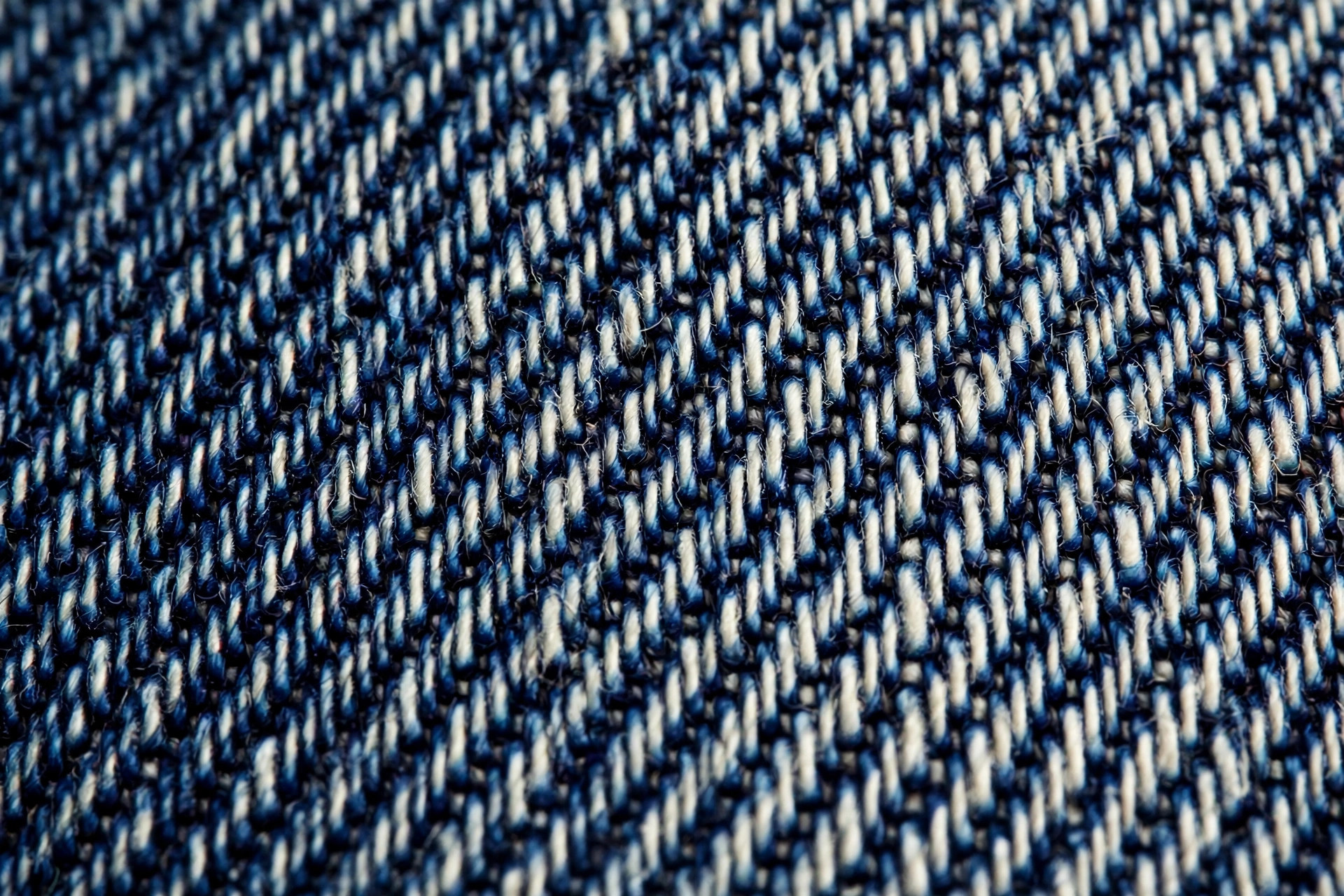
Right-Hand Twill
In right-hand twill the diagonal lines run upward to the right (a "Z" direction). It is the standard construction of modern denim and of most jeans ever made. Because the twill direction runs with the natural twist of typical warp yarns, right-hand twill tends to show a crisp, pronounced diagonal and a relatively smooth face. It is the reference fabric against which the other weaves are variations.
Left-Hand Twill
Left-hand twill runs the diagonal upward to the left ("S" direction) — the mirror image. Historically used by some heritage American makers, it weaves against the yarn's twist, which slightly opens the yarn and produces a fabric that feels softer and flatter after washing, with fades that read smoother and less streaky. Denim connoisseurs seek it out for exactly this handwriting: the same indigo, a different signature in wear.
Broken Twill
Broken twill interrupts the diagonal at regular intervals, reversing direction to form a subtle zigzag or herringbone-like pattern. It was developed for workwear — most famously by Wrangler — to solve a real problem: the directional torque of a one-way twill makes jean legs twist around the leg after washing. Alternating the twill direction cancels the torque, so broken-twill jeans keep their seams where they were sewn. The pattern also distributes abrasion more evenly across the surface.
Stretch Denim
Stretch denim weaves a small percentage of elastane — usually 1 to 2 percent, carried inside a core-spun cotton yarn — into the weft (for widthwise give) or both directions. The tiny elastic fraction transforms comfort and fit retention, which is why stretch dominates fashion denim; higher-elastane and polyester-blend constructions power jeggings and high-stretch styles. The trade-offs are a softer, less crisp fade character and, in cheap constructions, bagging at the knees as the elastic tires. Stretch is where denim meets technical textiles — the fiber blends and recovery standards behind it are covered in the Performance Fabrics Guide.
Colored Denim and Ecru
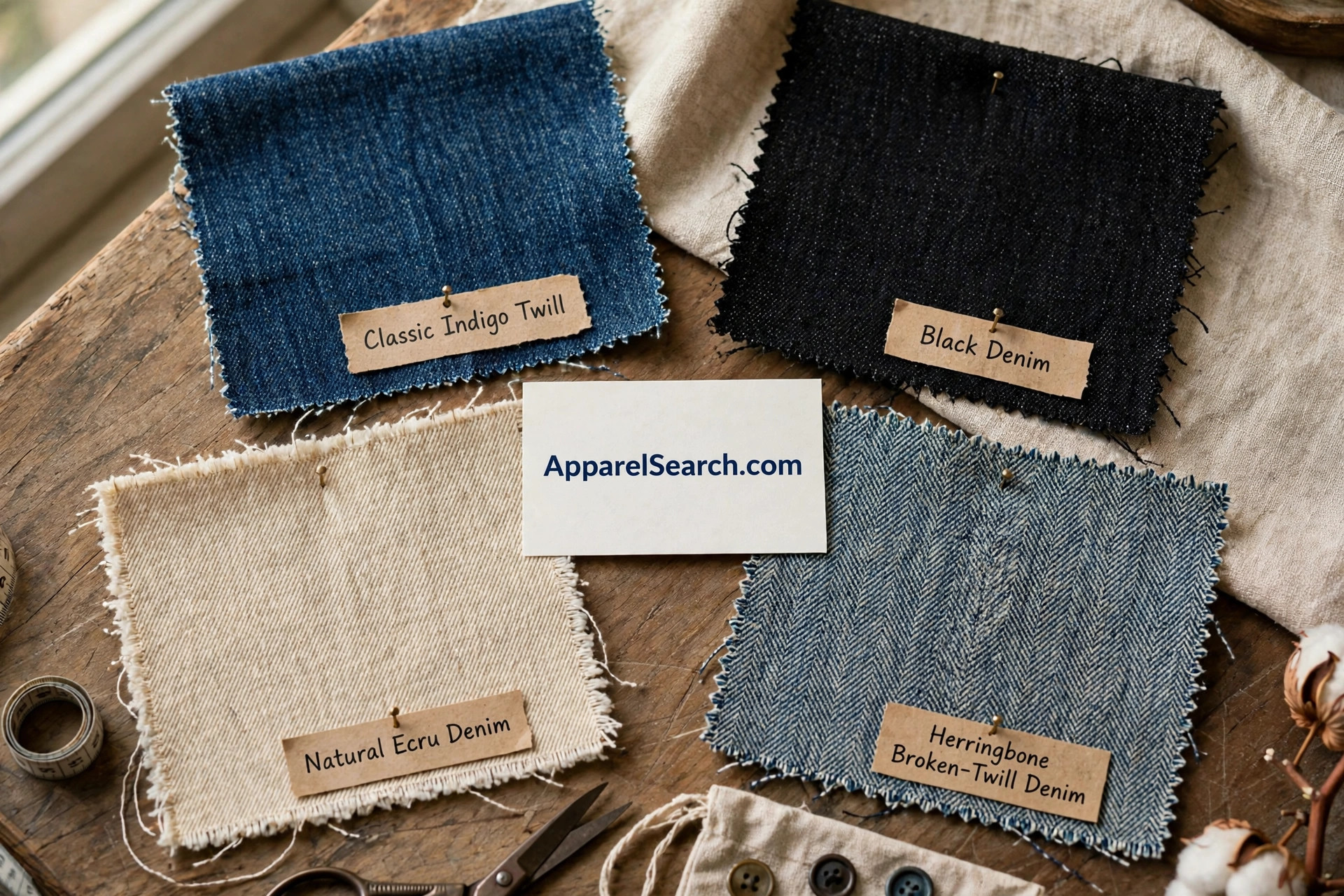
Indigo warp with white weft is the classic recipe, not the only one. Black denim is usually sulfur-dyed, in the warp only (black over a white weft, fading to grey) or in warp and weft both for a solid black that stays dark longer. Colored denims dye the warp in greens, browns, reds and beyond, and some constructions dye the weft as well for a cross-dyed, two-tone effect. Ecru (or natural) denim skips dye entirely: undyed cotton warp and weft, flecked with the natural variation of the fiber, often used for summer garments and as a base for garment dyeing. All of these share the twill skeleton — the weave, the weight and the loom type (including selvedge production) can be specified independently of color.
Not denim, despite the look: chambray is a plain weave — colored warp, white weft, one over and one under — and dungaree was historically a coarser work cloth. The twill structure is what makes denim denim.
More in the Denim Fabric Guide
Common Questions
Why do the legs of some jeans twist after washing?
Twill weave puts a directional torque into the fabric, and in a right-hand or left-hand twill garment that torque can pull the leg seam around toward the front or back after washing — the classic 'leg twist' of vintage jeans. Mills counter it by skewing the fabric before cutting, and broken twill eliminates it entirely by alternating the twill direction so the torques cancel.
Is chambray the same as denim?
No, though they look similar. Chambray is a plain weave in which colored warp and white weft alternate one-over-one-under, giving an even, lighter cloth. Denim is a warp-faced twill: the indigo warp dominates the face, the fabric is heavier and more durable, and the diagonal twill line is visible. A chambray shirt is not a lightweight denim shirt, however similar the color.
How much elastane is in stretch denim?
Usually only 1 to 2 percent, wrapped inside cotton yarns, is enough to give denim comfortable give and shape recovery. Higher percentages and polyester blends produce the very elastic fabrics used in jeggings and high-stretch skinny jeans. More elastane means more comfort but generally less of the crisp fading and durability of all-cotton denim.
Back to the Denim Fabric Guide
Weave is one of denim's four key specifications. Return to the hub for weights, raw and selvedge cloth, washes and finishes, and care.
Back to the Denim Fabric Guide