Denim Fabric Guide
Denim Care & Shrinkage
How to wash denim, how much it really shrinks, and how to live with indigo transfer — the site's denim care deep dive
Denim is famously forgiving, but it is not indestructible — and the two questions that follow it through life are how to wash it and how much it will shrink. This page is the denim deep dive within the Denim Fabric Guide: the fabric-specific care that follows from how denim is dyed and woven. For washing, mending and storing the rest of the wardrobe, the companion hub is the Garment Care Guide, which covers clothing care across all fibers and links back here for denim.
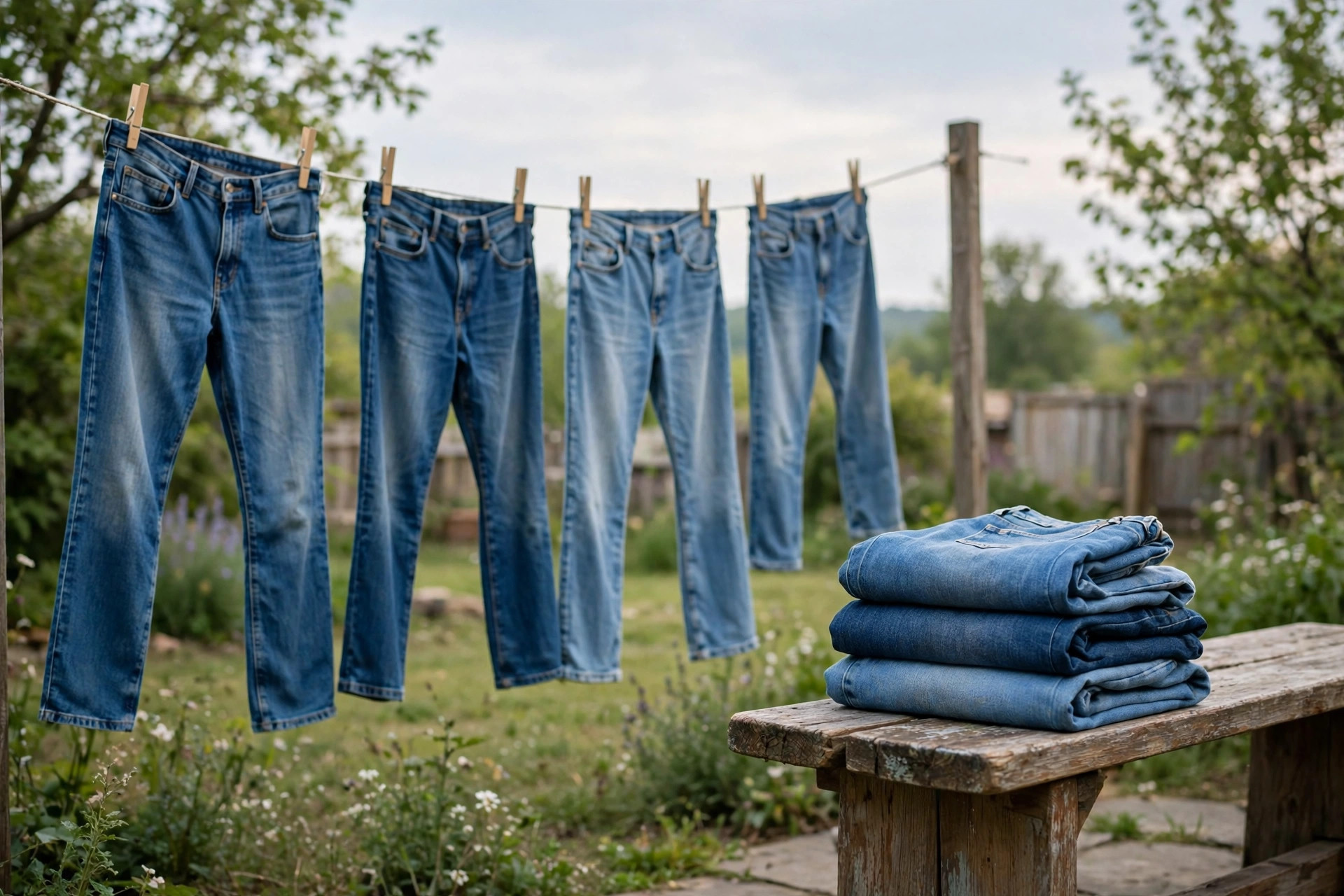
How to Wash Denim
The goals of washing denim are to remove soil and odor while keeping indigo and shape. A gentle routine does both:
- Turn the garment inside out. The indigo face is then protected from direct abrasion against other laundry and the machine drum — the single most effective step for keeping denim dark.
- Wash cold, on a gentle cycle (or by hand in a tub). Cold water limits both dye loss and shrinkage; warm or hot water does the opposite and is used deliberately only for shrink-to-fit first soaks.
- Use a small amount of mild detergent, ideally one made for dark colors. Skip bleach entirely, and go easy on fabric softener, which coats fibers and can dull the surface.
- Wash denim with denim, or alone for the first washes of a dark pair — loose indigo will tint a mixed load.
- Line dry in shade. A dryer costs dye, adds shrinkage and cooks any elastane in stretch denim; air drying keeps all three in check.
How often? Less often than other clothes, more often than folklore suggests. Jeans do not need washing after every wear, and raw denim enthusiasts delay the first wash to build fade contrast. But soil and body oils weaken cotton over time, so "never wash" is not a care strategy — wash when the jeans are dirty, smelly or stretched out, and they will outlast a pair that is never cleaned.
Shrinkage: What to Expect
Shrinkage (dimensional change): the reduction in a fabric's length and width when it is wetted and dried, as yarns relax from weaving tensions and cotton fibers swell. It is a measurable, testable property of every fabric — laboratories quantify it with standardized wash tests, as described in our Textile Testing & Quality Standards guide, where colorfastness to rubbing — the test behind crocking — is measured alongside it.
Cotton denim shrinks mostly in its first one to three washes. The amount depends on the cloth's state. Sanforized denim, pre-shrunk at the mill, typically gives up only 1 to 3 percent, chiefly in length. Unsanforized denim — the classic shrink-to-fit type — can shrink up to about 10 percent in length and several percent through the body at its first soak, which is why it is bought long and soaked before wearing. Pre-washed and finished jeans have already done most of their shrinking at the factory. Two softening facts: the waist of any cotton jean stretches back out with wear, often by an inch, so a post-wash snug waist is temporary; and length lost to a hot dryer is gone for good, which is why inseams are protected by line drying.
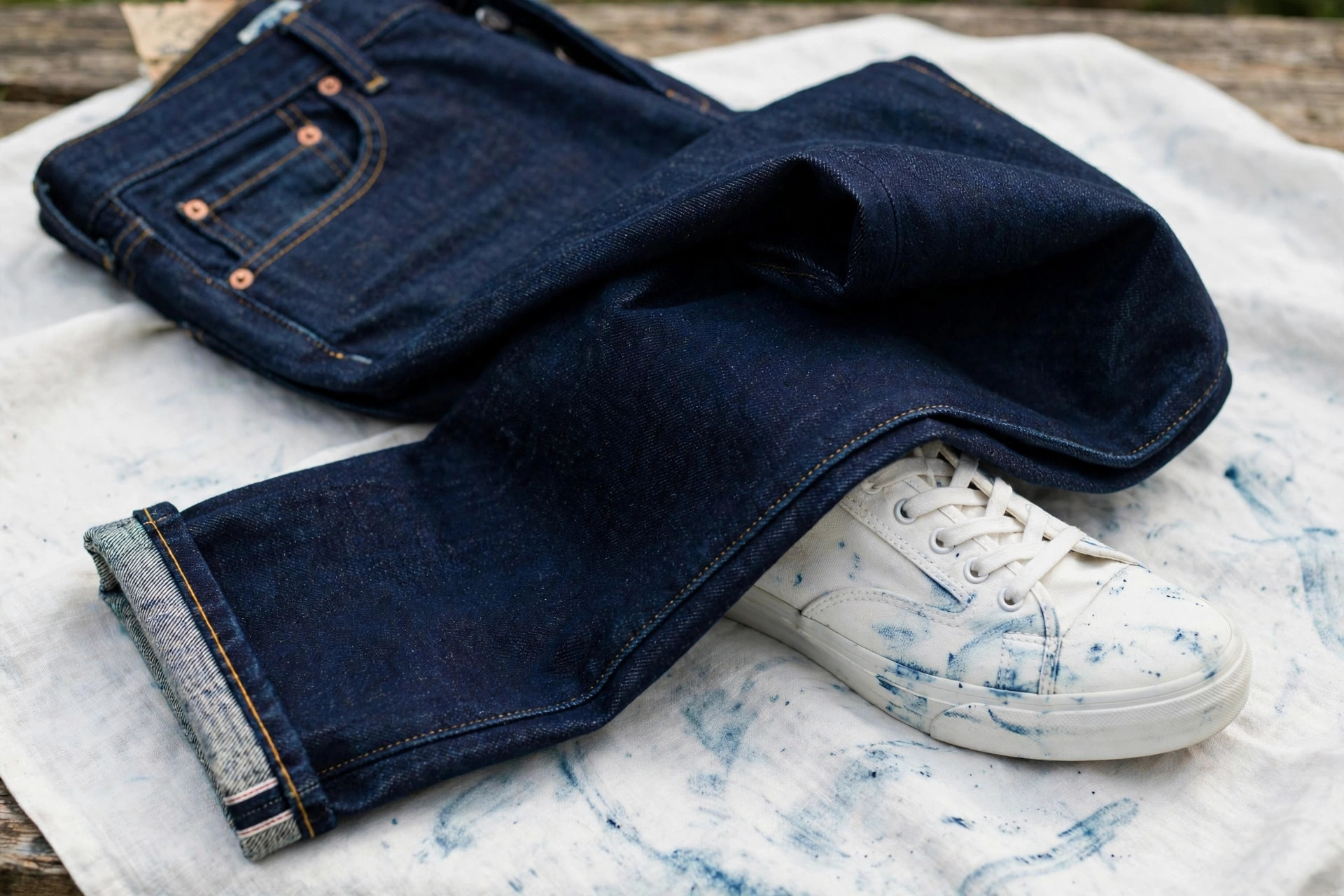
Crocking: Indigo Transfer
Because indigo sits on the yarn's surface rather than inside the fiber, dark denim sheds color by rubbing — a behavior called crocking. New dark jeans will blue the tops of white sneakers, the edge of a light handbag, car seats and pale upholstery. An initial cold soak or wash before wearing removes the loosest dye and cuts the worst of it, and the transfer declines steadily over the first several washes. Until then, cuff jeans above light shoes, keep new denim off light furniture, and warn the household: the blue smudge on the white chair is a known side effect, not a laundry accident. Crocking is harmless to the jeans themselves — it is the same surface dye loss that creates fades, just relocated.
Making denim last: wash cold and inside out, dry on a line, mend small holes and worn pocket corners early, and rotate between pairs so each rests. Repair and mending technique for denim and everything else lives in the Garment Care Guide.
More in the Denim Fabric Guide
Common Questions
How much will my jeans shrink in the wash?
Sanforized denim shrinks about 1 to 3 percent, mostly in length, and pre-washed jeans shrink very little more. Unsanforized (shrink-to-fit) denim can shrink up to about 10 percent in length and noticeably in the waist at its first wash. Waist shrinkage in any denim is partly temporary: cotton relaxes with wear and the waist typically stretches back out by up to an inch.
How do I stop indigo from rubbing off on shoes and bags?
You cannot stop crocking entirely on dark denim, but you can reduce it: give new jeans an initial cold soak or wash to remove loose surface dye, keep cuffs off light shoes until the denim has been washed a few times, and avoid pairing brand-new dark jeans with white bags and upholstery. The rubbing fades naturally as surface indigo depletes.
Does putting jeans in the freezer clean them?
No. Freezing may temporarily reduce odor, but it does not remove soil, oils or dye, and household freezer temperatures do not reliably kill the bacteria that cause smells — they revive as the jeans warm up. A gentle wash when the jeans need it is more effective and does not harm denim when done properly.
Back to the Denim Fabric Guide
Care keeps the cloth alive longest. Return to the hub for denim weights, raw and selvedge denim, washes and finishes, and weave types.
Back to the Denim Fabric Guide