Denim Fabric Guide
Selvedge Denim Guide
The self-finished edge of shuttle-loom denim — how it is woven, how to recognize it, and what the colored ID line means
Turn up the cuff of certain jeans and the outseam shows a clean, tightly woven white edge, often striped with color. That edge is the selvedge — the "self-edge" that gives this class of denim its name and much of its mystique. This page of the Denim Fabric Guide expands our shorter selvedge denim term entry into a full guide: the looms that make it, the marks that identify it, and an honest account of why it costs what it costs.
Selvedge (self-edge): the tightly woven, self-finished edge of a fabric woven on a shuttle loom. Because the weft yarn runs continuously back and forth without being cut, the edge is closed and cannot unravel or fray — unlike the cut, overlocked edges of fabric from modern wide looms. The general textile term is defined on our selvage definition page.
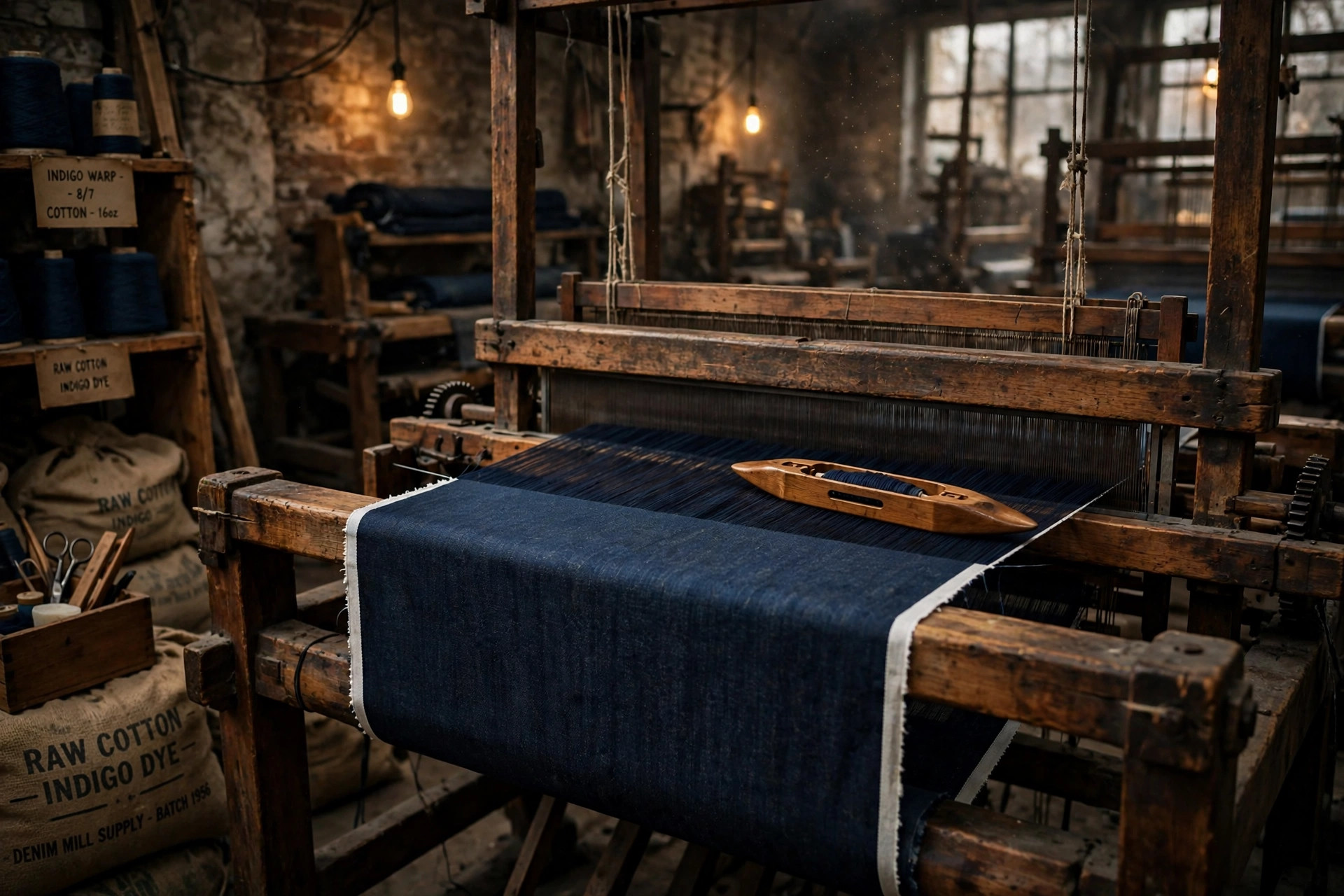
Woven on Shuttle Looms
Selvedge denim is a product of the shuttle loom, the weaving technology the industry used for centuries. A shuttle carrying the weft yarn travels back and forth across the warp, laying one continuous thread; at each edge the thread turns around and returns, binding the edge shut as it goes. Shuttle looms are narrow — selvedge denim is typically woven about 28 to 32 inches wide — and slow. Modern projectile, rapier and air-jet looms weave fabric twice as wide at many times the speed, but they cut the weft at each pass, leaving raw edges that must be overlocked in garment making. When the major mills modernized in the mid-twentieth century, selvedge nearly vanished; the vintage looms that survived, particularly in Japan's Okayama mills, became the foundation of the premium denim revival.
The ID Line
Woven into the white edge of many selvedge denims are one or more colored threads — the ID line. Mills adopted distinctive colors and patterns to identify their cloth on the bolt, and famous IDs became brand signatures in their own right: a red line is the most widely recognized, but pink, purple, green, gold and multi-color "rainbow" IDs all exist. The color says who made the fabric; it does not grade it. On a finished jean, the ID shows only where the outseam fabric is visible — most famously at a turned-up cuff, where the two edges of the seam display side by side.
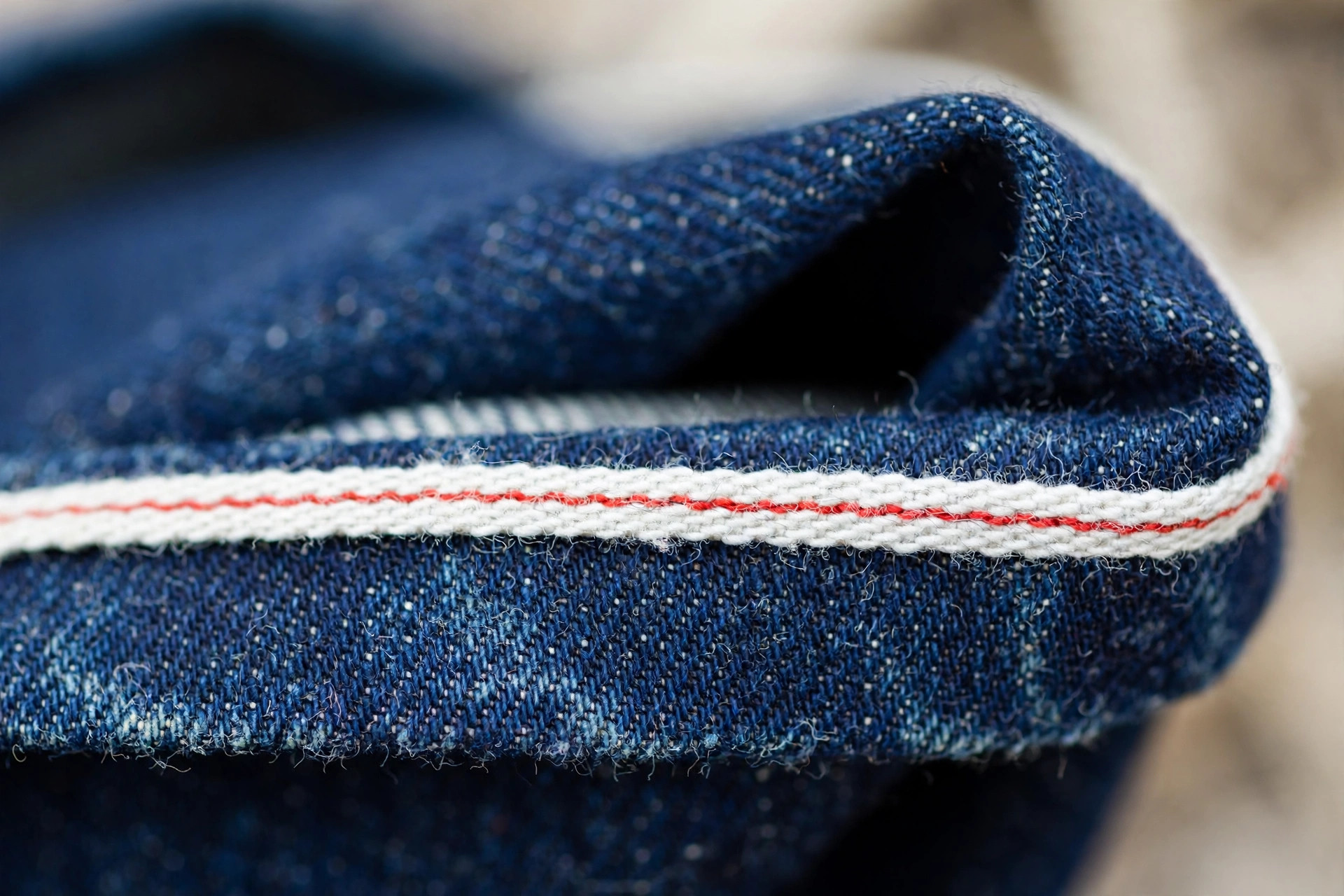
Character: Slub, Texture and Irregularity
Shuttle looms weave at lower tension and lower speed than modern looms, and the yarns used are often deliberately uneven. The result is a fabric with texture — vertical streaks called slub, a slightly hairy surface, and small irregularities that wide-loom production would reject as faults. Enthusiasts prize exactly this character, and it interacts with the weave and weight to produce fades with unusual depth. Selvedge denim is most often sold raw, because the same customers value both, but the two qualities are independent: the loom decides the edge, the finishing decides whether the cloth is raw.
Why Selvedge Costs More
The price premium is arithmetic, not magic. A shuttle loom produces a fraction of the yardage per hour of a modern loom, the narrow width means a jean consumes more length of fabric, and the surviving looms require skilled maintenance. Makers also tend to pair selvedge cloth with better yarns and more careful garment construction. What the premium buys is a self-finished edge that cannot fray, a distinctive texture, and a piece of pre-modern manufacturing — not an automatic guarantee that the cloth outperforms every wide-loom denim.
Spotting selvedge in a store: look at the inside of the outseam or turn up the cuff. A genuine selvedge edge is woven closed — white, tight and finished — where ordinary denim shows a serged (overlocked) seam with loose thread tails.
More in the Denim Fabric Guide
Common Questions
Is selvedge denim better quality than regular denim?
Selvedge describes how the fabric's edge is finished, not an automatic quality grade. Shuttle-loom denim is often woven from good yarn at low tension, giving it character and density that many wearers love, and the self-edge cannot fray. But an ordinary wide-loom denim from excellent cotton can be just as durable. Judge the cloth — weight, yarn and weave — not only the edge.
Why does selvedge denim have a colored line on the edge?
The colored threads woven into the edge are called ID lines. Mills and brands use distinctive colors and patterns — red is the most famous — to identify their fabric on the roll, the way a signature identifies a maker. Different colors do not indicate different quality levels.
Is all selvedge denim raw?
No. Selvedge and raw describe different things: selvedge is about the loom and the edge, raw is about the absence of washing. Selvedge denim is often sold raw because both appeal to the same enthusiasts, but washed selvedge jeans exist, and most raw denim is woven on modern wide looms without a selvedge edge.
Back to the Denim Fabric Guide
The selvedge edge is one thread of the denim story. Return to the hub for weights, raw denim, washes and finishes, weave types and care.
Back to the Denim Fabric Guide