Denim Fabric Guide
Denim Weights Explained
Lightweight, midweight and heavyweight denim — what the ounce number means, and what each range is built for
Ask a denim mill to describe a fabric and the first specification it gives is the weight. As the Denim Fabric Guide hub explains, denim is a family of fabrics rather than a single cloth, and weight is the quickest way to place a member of that family: it predicts stiffness, drape, durability, seasonality and even how dramatically a pair of jeans will fade.
Denim weight: the weight in ounces of one square yard of finished fabric. In metric terms, one ounce per square yard is roughly 34 grams per square meter, so a 12-ounce denim is about 405 GSM. Brands and mills quote the ounce figure; fabric buyers working in metric use the GSM conversion.
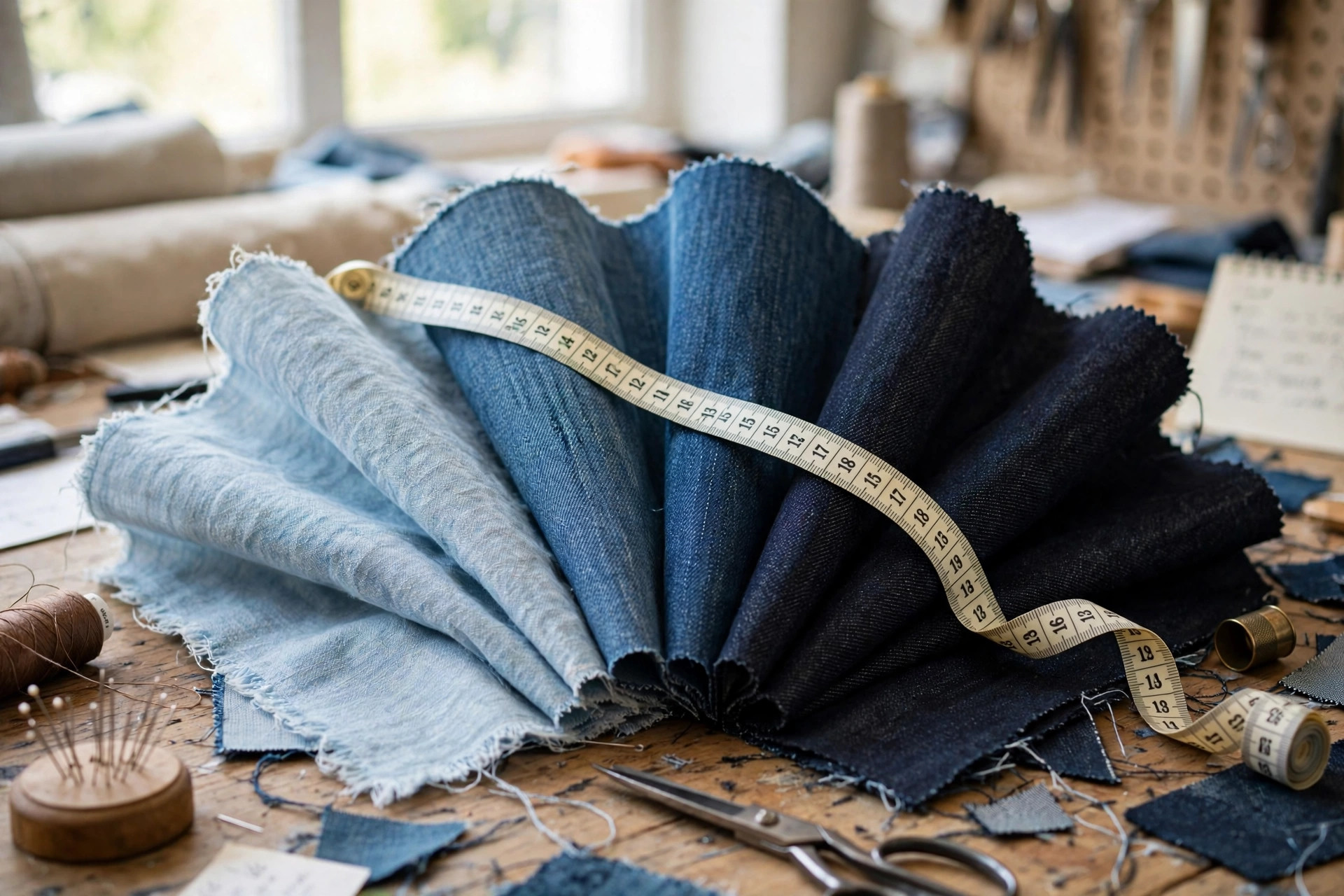
Lightweight Denim: Under 12 Ounces
Lightweight denim runs from about 5 to just under 12 ounces. The lightest cloth — 5 to 8 ounces — is shirting and dress weight: denim shirts, dresses, skirts and children's clothing, where a stiff cloth would overwhelm the garment. Lightweight jean denim, usually 9 to 11.5 ounces, makes summer jeans and soft, immediately comfortable fashion denim. It drapes rather than stands, breaks in almost at once, and breathes better in heat. The trade-off is longevity: thin cloth abrades through at knees and seat sooner than heavier fabric. Most stretch denim sits in this range or the low end of midweight, because elastane-blend yarns are typically woven lighter.
Midweight Denim: 12 to 16 Ounces
Midweight is the heartland of denim — the range of the classic five-pocket jean and the trucker jacket. A fabric of 12.5 to 14 ounces is what most people picture when they picture denim: substantial in the hand, able to hold a crease, tough enough for years of wear, yet flexible once broken in. Historically, the great American work jeans were woven around 13 to 14.5 ounces after the 1960s (earlier cloth was lighter still). Raw denim commonly starts here, and most of the world's jeans — fashion and workwear alike — are cut from midweight cloth.
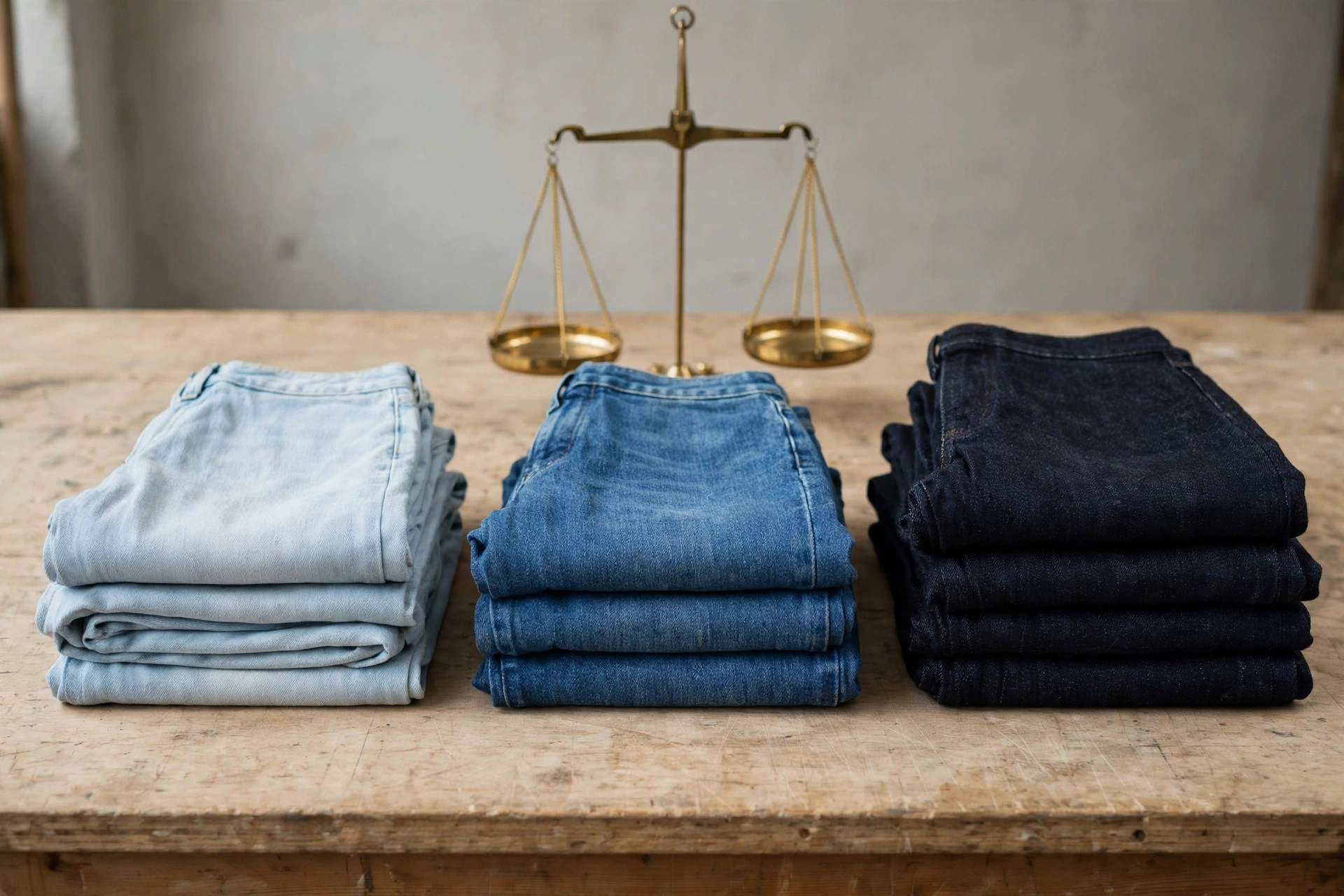
Heavyweight Denim: Over 16 Ounces
Above 16 ounces, denim becomes a specialist's fabric. Jeans of 16 to 21 ounces are stiff enough to stand up on their own when new, demand a real break-in period, and reward it with deep, high-contrast fades and exceptional abrasion resistance. Beyond 21 ounces the cloth becomes a novelty and a challenge — 23-, 25- and even 32-ounce denims exist, woven slowly with very coarse yarns. Heavyweight denim insulates in cold weather, resists wind, and is prized by motorcyclists and raw-denim enthusiasts; it is correspondingly hot and heavy in summer, and its weight strains sewing equipment, which is one reason it stays a niche product.
Weight Is Not the Whole Story
Two fabrics can share an ounce weight and feel entirely different. Yarn size and weave density trade against each other: a tightly woven fabric of finer yarns can match the weight of an open weave of coarse yarns while feeling smoother and denser. Long-staple cotton makes a stronger, smoother cloth at any weight than short-staple cotton. Weight also interacts with the weave — a loose broken twill drapes softer than a tight right-hand twill of the same ounces — and with finish: a washed 14-ounce jean feels far softer than the same cloth raw. Mills verify the figure in the laboratory by weighing conditioned samples cut to a known area; the methods behind that kind of fabric measurement are covered in our Textile Testing & Quality Standards guide.
Choosing a weight, quickly: under 12 oz for shirts, dresses and hot-weather jeans; 12–14 oz for an everyday jean that must do everything; 14–16 oz for jackets and hard-wearing jeans; over 16 oz when durability and fading character matter more than comfort on day one.
More in the Denim Fabric Guide
Common Questions
What weight of denim is best for jeans?
For an all-purpose jean, midweight denim around 12 to 14 ounces is the classic choice: substantial enough to hold its shape and wear well, comfortable enough for year-round use. Lighter denim suits hot weather, and heavyweight denim over 16 ounces suits wearers who want maximum durability and pronounced fades and are willing to break it in.
Is heavier denim always better quality?
No. Weight measures how much material is in the fabric, not how well it is made. A well-woven 12-ounce denim from quality cotton will outlast a poorly made 16-ounce cloth. Heavier denim is generally more durable and fades with higher contrast, but yarn quality, weave density and construction matter just as much.
What denim weight is best for summer?
Lightweight denim under 12 ounces — commonly 8 to 11 ounces for jeans, and 5 to 8 ounces for shirts and dresses — breathes and drapes better in heat. Many stretch jeans for warm weather sit at the light end because elastane blends are usually woven lighter.
Back to the Denim Fabric Guide
Weight is one of denim's four key specifications. Return to the hub for the full picture — weave, raw and selvedge cloth, washes and finishes, and care.
Back to the Denim Fabric Guide