01 — The Measures
What Makes Outerwear Heavyweight
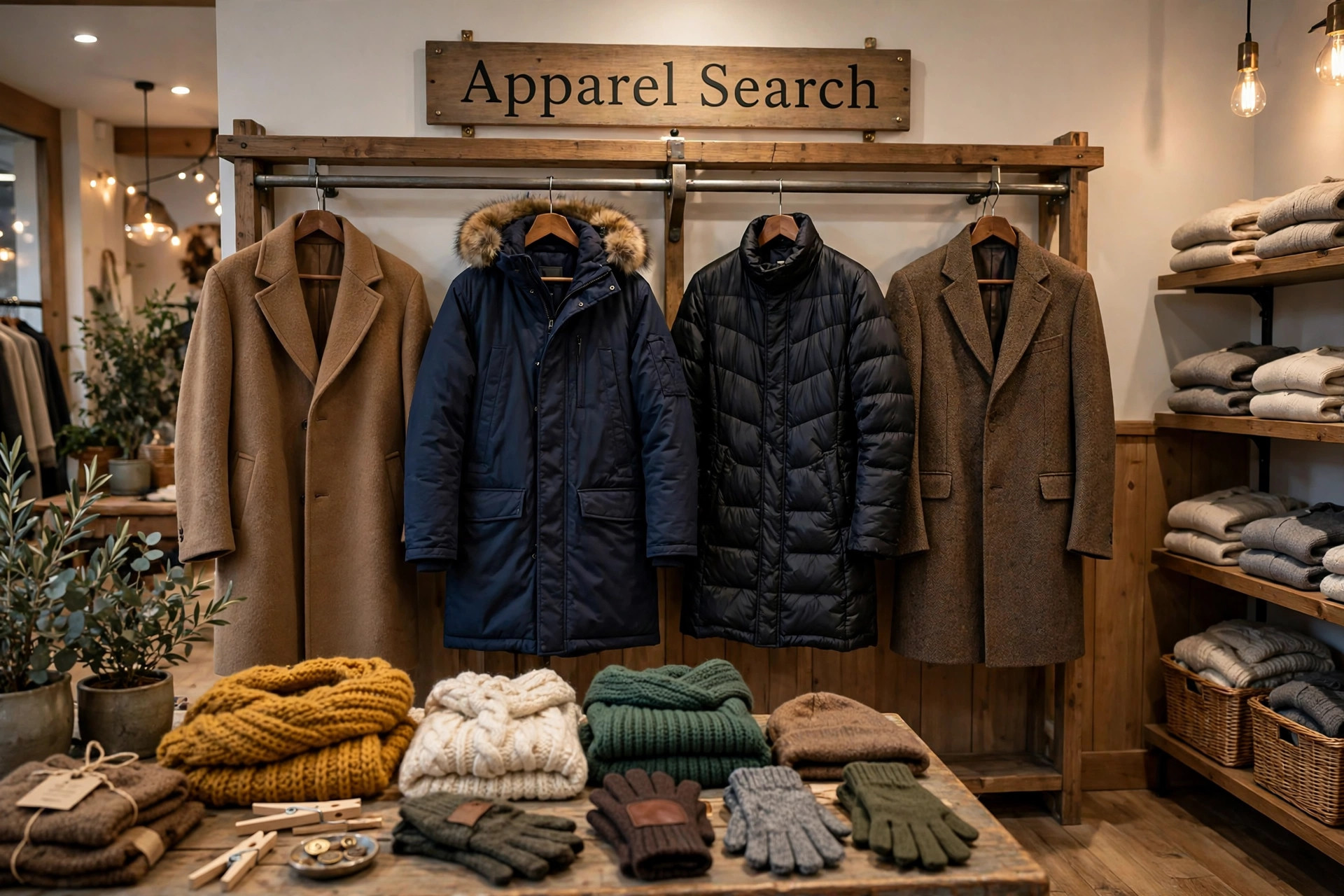
“Heavyweight” in outerwear is not a marketing mood — it describes measurable substance in three places. The first is the shell: a winter wool coating at 600–900 grams per metre, a heavy cotton canvas, a dense technical nylon. Shell weight brings wind resistance, durability and the drape that makes a long coat hang like a garment rather than a wrapper. The second is the insulation. In down, that means two numbers multiplied: fill power (the loft one ounce of down occupies — 550 is serviceable, 700 good, 800-plus premium) and fill weight (how many ounces are actually in the coat). A 900-fill coat with two ounces of down is a cool coat wearing an impressive number; a 650-fill coat with eight ounces is a warm one. In synthetics, insulation is quoted in grams per square metre — 100 gsm is a light jacket, 200-plus gsm is deep-winter territory. In wool and shearling, the material is both shell and insulation, and warmth tracks thickness and density.
The third measure is coverage and closure: a heavyweight coat that ends at the hip, gaps at the neck and leaks at every seam performs below its materials. Length to the knee, a storm placket over the zip, cuffs that seal, a collar that closes to the chin — these unglamorous details are where heavyweight warmth is actually delivered. The coat families compare as follows.
| Coat type | Typical substance | Warmth character | Best for |
|---|---|---|---|
| Expedition parka | 200+ gsm synthetic or 6+ oz down, windproof shell, thigh length | The warmest category made | Severe cold, standing outdoors, northern winters |
| Heavy puffer | 4–8 oz down or equivalent synthetic, mid-thigh | Very warm, light on the body for its warmth | Everyday deep winter, commuting |
| Wool overcoat | 700–900 g/m melton or tweed coating, full lining | Warm and wind-resistant; less insulation than down | City winter, dressed occasions, layering over tailoring |
| Shearling coat | Full sheepskin, wool side in | Extremely warm and windproof; heavy to wear | Dry severe cold; a lifetime garment |
| Waxed canvas / field coat | Heavy waxed cotton, blanket or quilt lining | Moderate warmth, outstanding weatherproofing | Wet cold, work and country wear |
02 — Reading the Numbers
Warmth Ratings, Honestly Read
Unlike sleeping bags, coats carry no universal warmth standard, and the temperature ratings some brands print are measured on different bodies, activity levels and layering assumptions — one maker’s −20°F assumes a walking wearer in full layers, another’s assumes standing still. Treat any printed rating as a comparison inside that brand’s own range, never across brands. The transferable numbers are the material ones from the previous section: fill power times fill weight, synthetic grams, coating weight. Two coats can be compared honestly on those figures even when their marketing cannot.
One factor outweighs most of the arithmetic: wind. Still air trapped in insulation does the warming, and wind strips that air away — a midweight coat with a genuinely windproof shell routinely outperforms a heavier coat whose shell breathes like a sweater. The second factor is moisture. Down loses most of its loft when wet; synthetics and wool keep working damp. In wet-cold climates the “warmest” coat on paper can be the coldest coat in the rain, and the right answer is a synthetic fill or a wool coat under a shell. These trade-offs are worked through as a complete dressing system in Dressing for Extreme Cold, and the same weight-per-area thinking that governs coats is explained for a single fabric in Denim Weights Explained — the ounce scale there is the shell-weight idea in miniature.
Judge a winter coat by its fill weight, its shell and its closures — in that order — and let the temperature rating say whatever it wants.
03 — The Decision
When Heavyweight Is Worth It — and When It Is Not
A heavyweight coat is worth its money and its closet space when three conditions line up: the wearer’s winters are genuinely cold, time outdoors is measured in more than door-to-car minutes, and the coat will be worn for years, because a heavyweight garment’s cost per wear only collapses across a decade of winters. City commuters in cold climates are the classic case: the coat is worn twice daily for four months a year, and nothing else in the wardrobe works as hard. The audience-specific guides take the same framework into each closet — the women’s outerwear guide, the men’s outerwear guide and the big and tall outerwear guide each weigh weight against fit for their readers.
It is not worth it when the climate is merely chilly — a midweight coat over a real mid layer (the system in the layering pieces guide) is warmer in use than a heavy coat over a shirt, because the layered system adjusts and the single coat cannot. Nor when the wearer overheats easily, travels constantly to mild places, or would wear the coat six times a year: an expedition parka worn rarely is insulation stored, not used. Weight itself is a cost — a shearling or heavy melton coat is a physical load across a long day, and down’s warmth-to-weight advantage exists precisely because some wearers should not carry the heavier answer. The honest question is never “what is the warmest coat?” but “what is the warmest coat I will actually wear, in my weather, over my layers?”
04 — Ownership
Buying Checks, Care and Storage
- Fit over layers. Try the coat over the thickest mid layer it will meet. You should be able to raise both arms and sit without the front straining; insulation that is compressed by a tight fit loses the loft it was bought for.
- Closures first. Work every zip, snap and button with gloves on. A storm placket, sealed cuffs and a collar that closes to the chin deliver more real warmth than an extra ounce of fill behind an open neck.
- Weight on the shoulders. Wear the coat in the store for ten minutes, not ten seconds. Heavyweight coats distribute load differently, and shoulder fatigue is a fit fault no tailor can fix.
- Lining and pockets. A smooth lining lets the coat slide over knitwear; hand-warmer pockets should sit where hands actually fall, fleece-lined if the coat is for standing weather.
Care follows the fill. Down needs loft: wash rarely and gently, dry thoroughly with agitation to break clumps, and store uncompressed — a down coat kept all summer in a stuff sack emerges with its insulation permanently diminished. Synthetics tolerate washing better and are the practical choice for work coats. Wool overcoats want brushing, airing, and protection from moths in storage; a cedar-lined closet or a breathable garment bag does the work, and the coat should rest a day between wearings so the wool releases moisture and recovers its shape. Shearling is professional-cleaning territory. Across all types, one rule holds: a heavyweight coat is a decade-scale purchase, and an hour of care a year is the rent it charges.
05 — Good to Know
Common Questions
How warm is a heavyweight coat, in plain terms?
A true heavyweight coat — expedition parka, heavy puffer or shearling — is built for sustained time outdoors in temperatures from about 20°F (−7°C) down to well below zero, worn over normal winter layers. A heavy wool overcoat sits a step below: the right coat for a cold-climate city winter with layering, roughly to 15–25°F depending on wind. Printed temperature ratings vary too much between brands to compare; fill weight, shell and closures are the honest measures.
Down or synthetic fill — which is warmer?
Per ounce carried, high-grade down is warmer and compresses smaller, and it lasts for decades if kept dry and stored uncompressed. Synthetic fill is warmer per dollar, keeps insulating when wet, and tolerates washing and hard use. In dry severe cold, down wins. In wet cold, work wear, or a coat that will be washed often, synthetic is the more honest warmth. Wool plays a third role: less insulating than either puffy fill, but wind-resistant, damp-tolerant and far more formal.
Is a heavier coat always a warmer coat?
No. Warmth lives in trapped air, windproofing and coverage, not in mass. A heavy but loosely woven coat leaks heat; a lighter coat with a windproof shell, sealed cuffs and a closed collar can outperform it. Physical weight also has a downside: a very heavy coat fatigues shoulders and gets left behind on marginal days — and the warmest coat is always the one actually worn.
How should a heavyweight down coat be stored for summer?
Clean it first, dry it completely, then store it hanging or loosely folded in a large breathable cotton bag — never in its compression stuff sack and never in plastic, which traps moisture. Down stored compressed for months loses loft permanently; stored loose, a good coat recovers full loft with a shake and a day of airing when winter returns. Wool coats store the same way, with moth protection added.
More to Explore
Search Apparel Search