Women's Outerwear Guide
Outerwear is the clothing worn over everything else outdoors — coats and jackets that carry the weather, the silhouette and the first impression of every cold-season outfit.
Shop Women's Outerwear Now
Shop Women's Outerwear on Amazon Shop Women's Outerwear on eBayThe Amazon and eBay links on this page are affiliate links. If you make a purchase through them, Apparel Search may earn a commission.
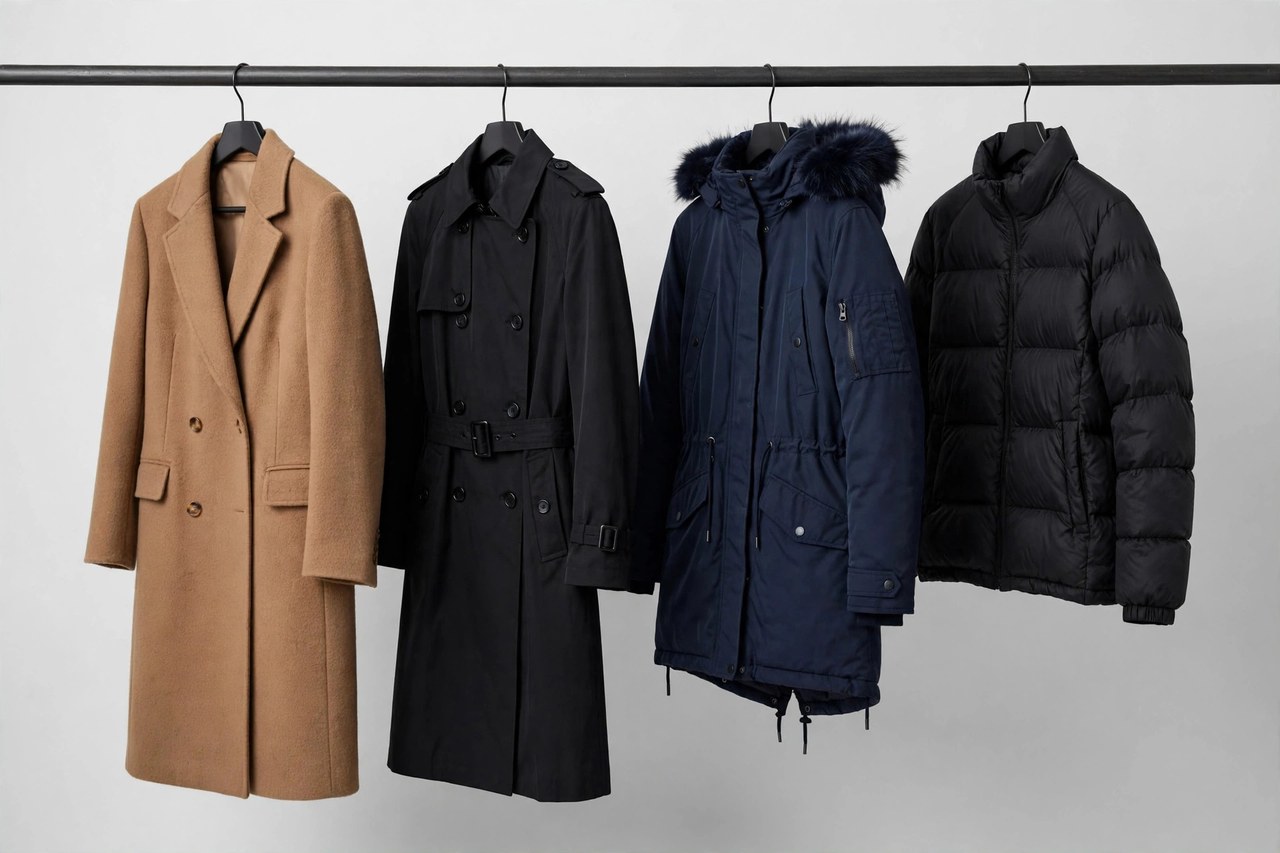
Outerwear is the collective name for the garments worn outdoors over the rest of the outfit: coats, jackets, parkas and everything in the coat closet. It is the most engineered everyday clothing most women own, because it must do three jobs at once — protect against cold, wind and rain; fit over unpredictable layers beneath; and present the public silhouette, since for half the year the coat is the outfit everyone sees. This umbrella guide organizes the category; its largest member, the overcoat, has a detailed guide of its own linked below.
The category divides by length, by warmth system and by weather duty, and the sections below take each in turn: the coat families, the jacket families, how warmth is actually made (it is rarely the fabric you think), and how to fit and buy a garment that will be worn hundreds of times and judged every one of them.
The Coat Families
The overcoat is the formal foundation: a long, tailored coat, traditionally wool, worn over everything including suits — see our dedicated overcoats guide for its styles and history. Beside it stands the trench coat, the belted, storm-flapped raincoat descended from officers' wear, now the classic mid-season coat. The parka is the deep-winter coat: long, insulated and hooded, built for serious cold. The puffer or down coat trades tailoring for loft, its quilted chambers of down or synthetic fill giving the most warmth per pound in the category. The pea coat, duffle coat and wrap coat cover the tailored-wool middle ground, and the cape and poncho remain the category's romantic edge.
Length is the first coat decision because it sets both warmth and proportion. Hip-length coats suit driving and mild winters; knee-length is the versatile classic that covers most dresses and trousers; midi and maxi lengths give the most warmth and the strongest silhouette, and they ask for a confident stride and a staircase strategy. As a wardrobe plan, most women need two coats: one tailored (the overcoat family) and one weatherproof (the parka or puffer family), with the trench as the classic third.
Jackets and Where Warmth Comes From
Jackets are outerwear's short game: the blazer-adjacent tailored jacket, the leather jacket, the denim and utility jackets of the shoulder seasons, the bomber and aviator descendants, and the rain jacket, from waxed cotton to technical shells (whose high-performance end is covered in our outdoor apparel guide). Jackets layer where coats envelop; a wardrobe usually holds more of them, at lower individual stakes, and they are where personal style in outerwear mostly lives.
Warmth, in any of these garments, comes from still air trapped by insulation, not from the shell fabric. Wool insulates by its crimped fibers; down by loft; synthetic fills by engineered hollow fibers; fleece by pile. The shell's job is to stop wind and water from stealing that trapped air. So judge a winter coat by its fill (down fill-power, or the weight of synthetic fill), its windproofing (tight weave, storm placket, close cuffs and hem), and its coverage (length, collar, hood) — in that order. A thin, expensive wool coat is a fashion garment for mild cold; a well-filled, wind-sealed coat at half the price will be warmer, and honest buying means knowing which one an occasion needs.
Fit Over Layers, and Care
Fit outerwear over the thickest layer you will genuinely wear under it — for a coat, a sweater; for tailoring, a blazer. The tests: raise both arms without the hem climbing past decency, sit and drive without the front straining, and fasten every closure, because coats are bought open and worn closed. Shoulders are the unforgiving measurement: a coat's shoulder seam should sit at your shoulder, since every other adjustment is alterable and that one is barely so. Sleeves should cover the wrist bone over a sweater cuff. Leave a little glamour in the allowance: a coat that fits like a glove in October is a straitjacket by January's layers.
Care is seasonal and simple. Brush wool coats after wear, rest them a day between wearings on a sturdy shaped hanger, and empty the pockets (weight distorts the hang). Clean once at season's end, before storage, since moths prefer soiled wool; store in a breathable bag with cedar or lavender, never sealed plastic. Treat leather annually, re-wax waxed cotton when it lightens, wash technical shells by their maker’s instructions, and mend linings early. Outerwear is the wardrobe's longest-lived category — a good coat serves a decade — and its care is the highest-return laundry habit you can keep.
Related Women's Guides
Photos

More to Explore on Apparel Search
- Women's coats
- Women's jackets
- Women's Outerwear on eBay
- Women's Shearling Outerwear
- Coat Definition
- Ski Jacket
- Windbreaker
- Sportscoat
- Waistcoat
- Flak Jacket
- Safari Jackets
- Peacoat
- Parka Definition
- Anorak
- Poncho
- Petticoat
- Frock Coat
- Morning Coat
- Bekishe
- Mandilion
- Straightjacket
- Duster
- Black Coats
- Blue Coats
- Brown Coats
- Green Coats
- Orange Coats
- Pink Coats
- Purple Coats
- Red Coats
- Tan Coats
- White Coats
- Yellow Coats
- Fashion Designer Directory
Looking for Women's Clothing Stores?
This guide helps you choose women's outerwear. To browse where to buy, visit our women's clothing store directory, where you can find retailers that carry them.