Women's Occasion Dresses Guide
An occasion dress is the dress bought for a date on the calendar — a wedding, a gala, a graduation, a party — and chosen to be exactly right for that one day, not for every day.
Shop Women's Occasion Dresses Now
Shop Women's Occasion Dresses on Amazon Shop Women's Occasion Dresses on eBayThe Amazon and eBay links on this page are affiliate links. If you make a purchase through them, Apparel Search may earn a commission.
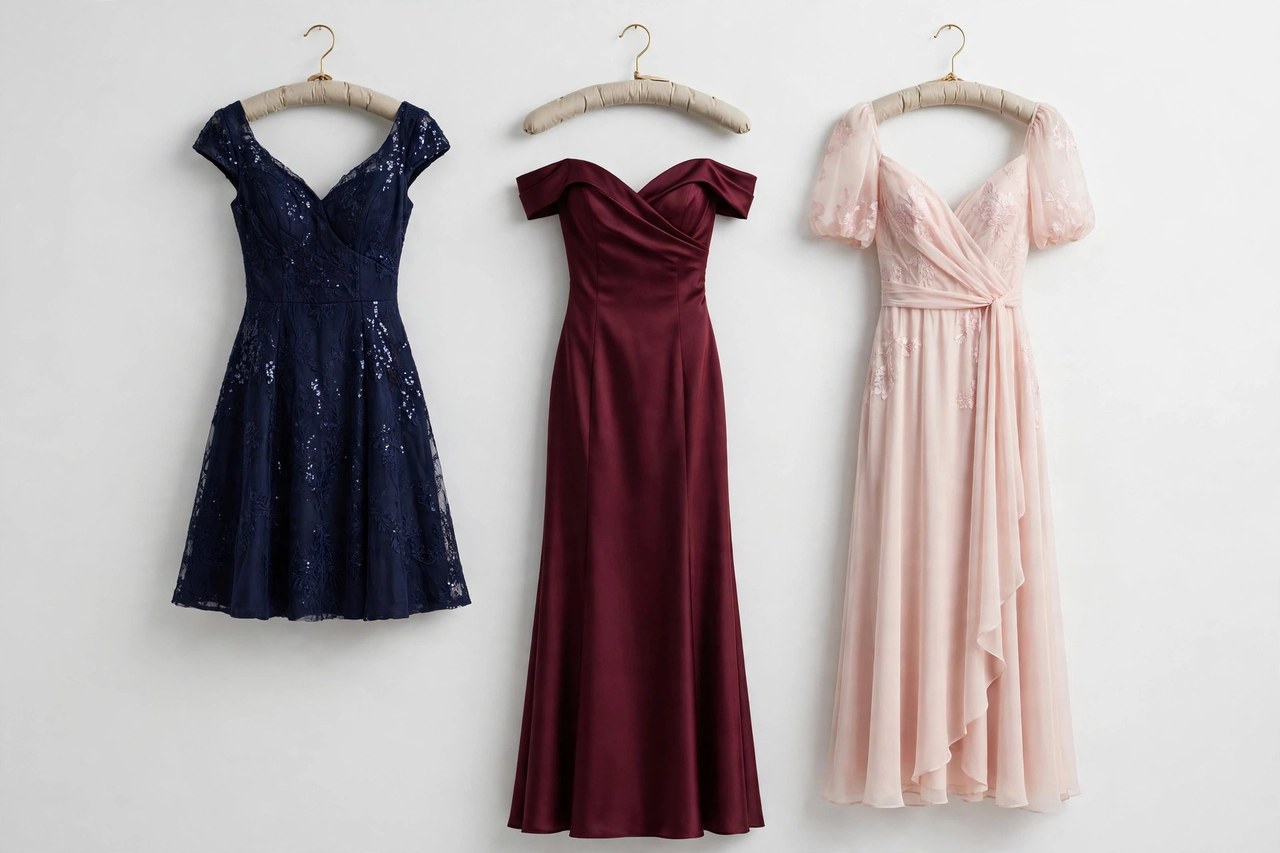
Occasion dresses are the formal branch of the dress family: garments bought for a specific event, where the dress code, the photographs and the company all raise the stakes above everyday dressing. The category spans a wide ladder of formality, from the smart day dress worn to a christening or a graduation ceremony to the full-length gown worn to a black-tie gala, and the skill of buying one is mostly the skill of placing your event on that ladder correctly.
This guide decodes the ladder. It covers the main occasion families — cocktail, evening, wedding guest and the all-important mother-of-the-bride dress — then works through the practical questions that decide whether the dress succeeds on the day: fabric behavior, fit and alterations, undergarments and shoes, and how to store a dress so it can serve at the next occasion too.
The Occasion Families
The cocktail dress is the workhorse: knee-length or just above, in fabrics with some polish — crepe, satin, lace, structured cotton — worn to evening parties, receptions and most weddings that start after five. The evening gown is the floor-length formal dress for black-tie events, charity galas and formal balls; its fabrics run to silk, chiffon, velvet and sequins. Between them sits the midi occasion dress, the mid-calf length that has become the modern default for guests who want formality without a gown.
The wedding guest dress is its own discipline: festive but never competitive with the bride, which in Western tradition means avoiding white, ivory and anything bridal in silhouette, and reading the invitation's dress-code line carefully. The mother of the bride or groom dress is traditionally coordinated (gently) with the wedding palette, often sold as a dress-and-jacket set for ceremonies that move between outdoors and air conditioning. Day occasion dresses — for christenings, graduations, race days and garden parties — trade the evening fabrics for lighter ones and often add a sleeve, which evening styles frequently skip.
Dress Codes, Fabrics and Color
Invitations compress a lot of instruction into two words. Black tie means a gown or a very dressed-up cocktail dress. Cocktail attire means the cocktail dress, or an elegant midi. Smart or dressy casual means a polished day-to-evening dress, no gown required. When in doubt, the midi dress in a rich fabric is the safest garment in the category: it is almost never the most formal or the least formal thing in the room, which is exactly the safe position for a guest.
Fabric decides how the dress photographs and how it feels at hour four. Crepe drapes and forgives; satin shines and shows every seam underneath, so it demands smooth undergarments; chiffon floats and breathes but snags; lace reads formal at any length; velvet is winter's shortcut to richness; sequins are pure celebration but heavy and fragile at the straps. Color follows the same logic as fabric: deep jewel tones and navy flatter in evening light and photographs, pastels belong to daytime and spring, and black — once questionable at weddings — is now standard guest wear in most circles, styled with color in the accessories.
Fit, Alterations and the Day Itself
Occasion dresses are the category where alterations earn their money. Formal dresses are cut to a standard the body rarely matches exactly, and the three classic adjustments — hem to the shoe you will actually wear, straps shortened so they stay, waist taken in so the dress sits rather than hangs — transform a nearly-right dress into a made-for-you one. Budget the alteration when you budget the dress, and schedule it at least two weeks before the event, with a final fitting in the event shoes and undergarments.
On the day, plan the engineering: the right bra or bodysuit for the neckline, tape for straps and necklines that gap when you sit, a wrap or jacket for evening chill, and shoes you can stand in through a receiving line. Afterward, have the dress cleaned promptly — champagne and perspiration stains set invisibly and yellow later — then store it hanging in a breathable garment bag, or boxed in acid-free tissue if it is beaded or silk. An occasion dress cared for this way is not a one-wear purchase; it becomes the reliable answer to the next invitation, which is the real economy of the category.
Related Women's Guides
Photos

Looking for Women's Clothing Stores?
This guide helps you choose women's occasion dresses. To browse where to buy, visit our women's clothing store directory, where you can find retailers that carry them.