Women's Dresses: The Complete Guide
One piece, whole outfit — use this umbrella guide to decode silhouettes, lengths, necklines and fabrics, then choose the right dress for any occasion.
Shop Women's Dresses Now
Shop Women's Dresses on Amazon Shop Women's Dresses on eBayThe Amazon and eBay links on this page are affiliate links. If you make a purchase through them, Apparel Search may earn a commission.
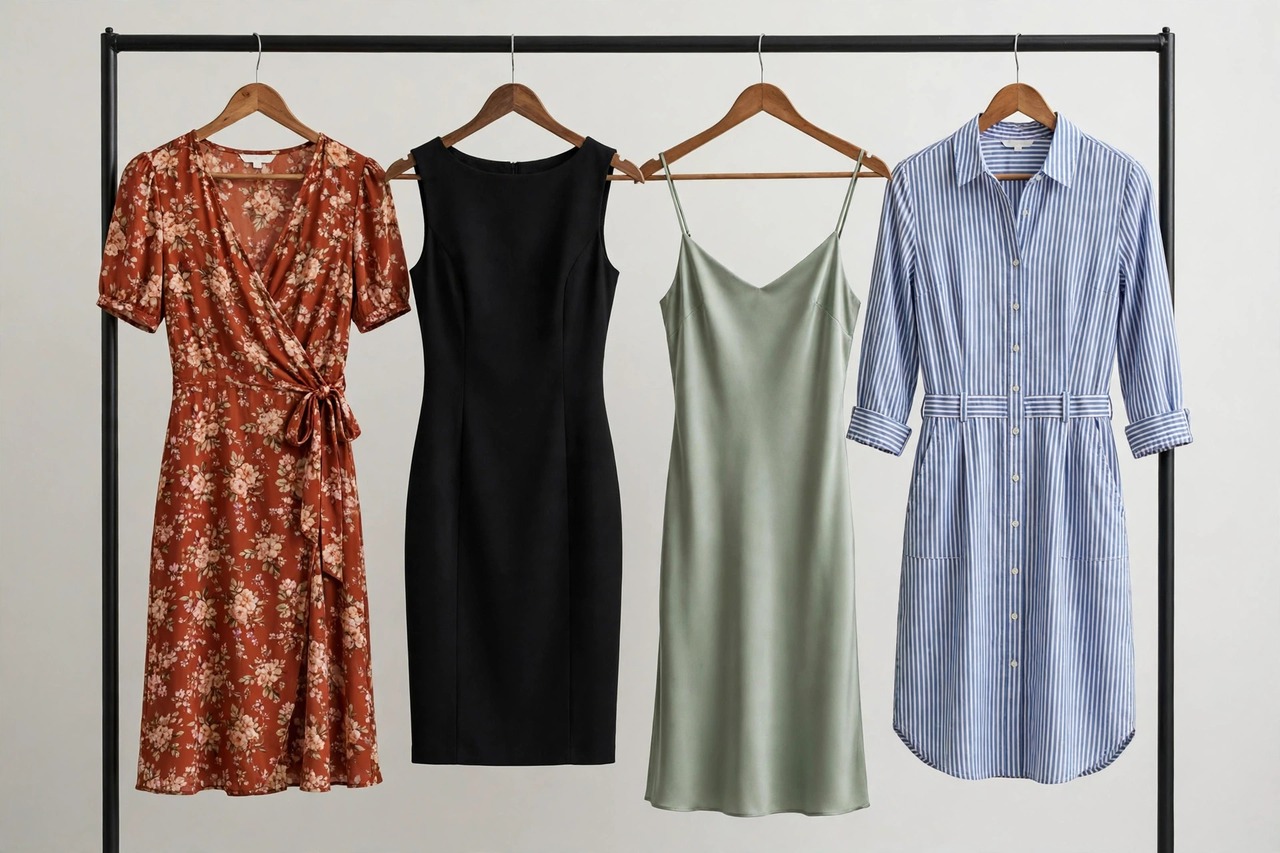
The dress is the hardest-working idea in a wardrobe: a single garment that answers what to wear, top to hem, in one decision. This umbrella guide is your map to the whole territory — the silhouettes, lengths, necklines, and fabrics you will meet everywhere else in the Clothes Guide — so you can name what suits you, shop with a vocabulary, and understand why one dress feels effortless and another fights you all day.
Start with silhouette, because shape decides mood. Then refine by length, neckline, and fabric for the season and occasion. Our companion guides go deeper on single styles, from casual day dresses to the adjustable drawstring dress, but everything connects back to the framework here. Once you know your best two or three silhouettes, dress shopping stops being guesswork and becomes editing.
Dress Silhouettes A to Z
The sheath is a close, tailored outline, usually sleeveless or short-sleeved, that follows the body without squeezing — the classic work and occasion dress. The shift is its relaxed cousin, hanging straight from the shoulders with minimal waist definition, easy and modern. The wrap dress crosses over and ties at the waist, creating a V-neck and an adjustable fit that famously flatters many figures, while the fit-and-flare nips in at the waist and opens to a fuller skirt, giving movement and a defined shape.
The slip dress is bias-cut or straight, with fine straps and a fluid fall borrowed from lingerie, ideal layered or alone in heat. The shirt dress borrows a shirt's collar, placket, and cuffs, belted or loose, and reads polished yet relaxed. Add the A-line, which flares gently from the shoulder or waist, the empire line with its high under-bust seam, the column or maxi with its long unbroken line, and the smock or tiered dress with gathered volume, and you have the core family from which most styles are variations.
Lengths, Necklines and Fabrics by Season
Length changes the message. Above-the-knee and mini lengths read youthful and casual, knee-length is the versatile classic, midi, falling between knee and ankle, is the modern workhorse for day to evening, and maxi or floor length brings drama and ease in equal measure. Choose by occasion, venue, and how much you will walk or sit, and remember that a midi that ends at the widest part of the calf is less flattering than For a fuller breakdown of every standard length, from mini to floor-length, see our dress lengths guide, and for the most versatile length of all, our midi dress guide.one ending just above or below it.
Necklines frame the face and balance the silhouette: V-necks lengthen and suit fuller busts, scoops and square necks showcase collarbones, high necks and mock necks feel sleek and modern, and off-the-shoulder or sweetheart styles suit evenings. Fabrics follow season: breathable cotton, linen, and rayon for summer, silk and satin for occasion shine, ponte, crepe, and fine wool for structured cooler-weather dresses, and jersey or sweater knits whenever comfort leads. A lined dress in a substantial fabric will almost always hang and last better than an unlined thin one.
Choosing for Occasion and Body
Work backwards from the occasion. For work, sheath, shirt, and wrap dresses in ponte, crepe, or cotton blends give polish with sleeves or layering options. For weddings and parties, fit-and-flare, slip, and column dresses in silk, satin, or lace carry the dress code, matched to the invitation's formality. For everyday, jersey, shirt, and tiered dresses you can move, sit, and wash easily will earn their place fastest. When in doubt, a knee-length or midi wrap or fit-and-flare in a solid, seasonless colour is the most repeatable choice in most wardrobes.
For your body, aim for balance rather than rules. Define a waist with a belt, wrap, or seam if you like shape, or choose a shift or smock if you prefer ease through the middle. Fuller skirts balance broader shoulders, V-necks and vertical seams lengthen, and a hem ending at a narrow point of the leg flatters almost everyone. Fit the largest measurement first, especially bust and hip, and tailor the rest — dresses are among the easiest garments to adjust, and a small alteration often transforms the result.
The One-Piece Outfit, Care and Storage
The joy of the dress is completion: add shoes and one layer and you are dressed. Build small formulas you trust — slip dress plus blazer and loafers, shirt dress plus belt and ankle boots, knit dress plus long coat — and vary them with jewellery or a bag. Keep dresses that work with the same shoes and jacket, and packing and busy mornings become simpler. That reliability is what makes dresses wardrobe capital.
Care follows fabric: washable jersey, cotton, and many synthetics go cold and gentle, hung or dried flat to protect shape; silk, embellished, and structured dresses usually need specialist or dry cleaning and a rest between wears. Store knit dresses folded to avoid hanger stretch, hang woven dresses by their hanging loops on padded hangers, and keep occasion dresses in breathable garment bags away from light. Check straps, hems, and closures when you put a dress away, and it will be ready the next time you reach for it.
Related Women's Guides
Photos


More to Explore on Apparel Search
- Dress Stores
- Women's Dress Wholesalers
- Women's Fashion
- Cotton Dresses
- Short Dresses
- Leopard Print Dresses
- Printed Dresses
- Maxi Dress Guide
- Black Dress
- Blue Dress
- Brown Dress
- Green Dress
- Orange Dress
- Pink Dress
- Purple Dress
- Red Dress
- Tan Dress
- White Dress
- Yellow Dress
- Women's Floral Dresses
- Special Occasion Dress
- Prom Dress
- Empire Dress
- bridal dresses
- Wedding Dress
- Used Wedding Dress Guide
- holiday party dress
- Fashion Designers
- Popular Brands
Looking for Women's Clothing Stores?
This guide helps you choose women's dresses by label, style and fit. To browse where to buy, visit our women's clothing store directory, where you can find retailers that carry them.